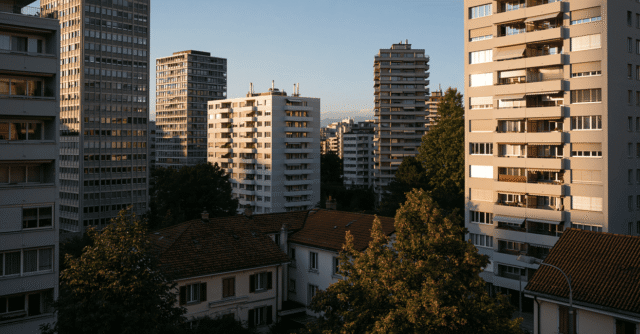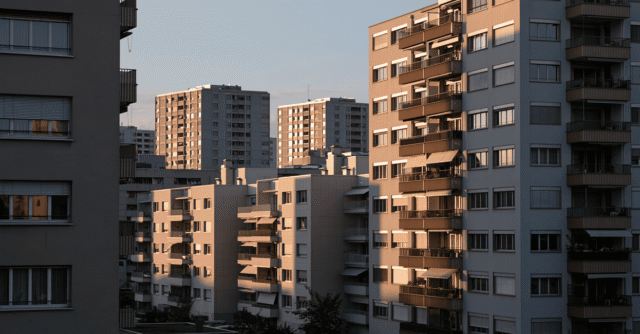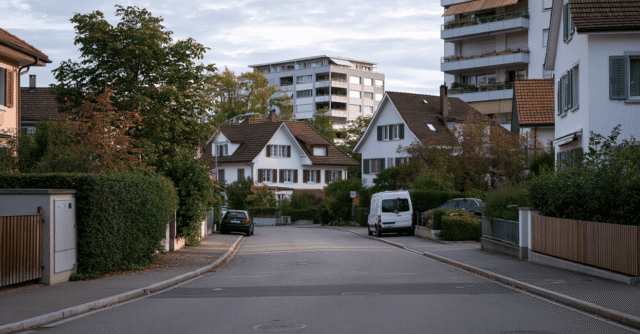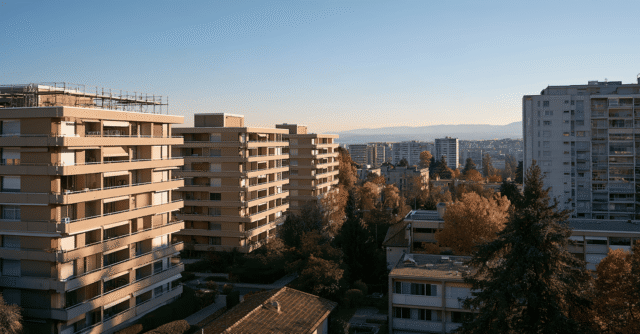
Baden is putting the brakes on affordable housing in the Oberstadt
In Baden, a housing project run by the municipal housing foundation is coming under pressure because the town council wants to list the old metalworks in the Upper Town. This brings housing development and heritage conservation into direct conflict at a small but politically sensitive

Bern secures loans for affordable housing
The National Council and the Council of States have secured the key federal instruments for social housing construction until the early 2030s. CHF 150 million has been approved for the Fonds de Roulement, along with guarantees totalling CHF 1.92 billion for EGW

Zurich’s Kirchland District to Make New Housing Available
Six smaller properties owned by the Reformed Church Parish of Zurich are to be leased under building rights. The parish is seeking organizations that will create additional housing on the sites at reasonable costs, while existing leases will continue for the time

Viererfeld Raises the Bar for Cooperative Housing
In Bern’s Viererfeld neighborhood, the cost of purchasing a cooperative apartment is rising significantly. Following the decision on June 1, 2026, the minimum equity contribution will rise to 2,000 francs, plus share certificates totaling approximately 40,000 francs, depending on the size of the

Geneva Rent Hike Case Ends Before the Federal Supreme Court
In Geneva, a landlord failed in his attempt to have a rent—which had quadrupled following unauthorized renovations—recognized as a permissible luxury rent. The Federal Supreme Court upheld the order to repay 193,609 francs and pay a fine of 32,000

Aargau Cannot Stop Higher Assessed Rental Values
In Aargau, the increase in imputed rental values remains in effect. An external legal opinion supports the cantonal government’s position and rules out a freeze or a retroactive adjustment. For property owners, the debate has thus shifted from the valuation to the question of possible tax

Three projects make up the new center
Dietikon is experiencing a remarkable construction boom. Three projects in the city center symbolize this new era: the historic Krone site, the Löwenzentrum, and the Florahof. All three are located in close proximity to one another, and all three are permanently changing the face of the

Webermühle Plans to Increase Density to Accommodate 1,000 Residents
A new residential neighborhood for about 1,000 people is set to be built on the peninsula in Neuenhof starting in 2030. However, the project in Webermühle is contingent on a cooperative planning process, which—following the rejection of a loan—will not be restarted until the end of

Arbon Lake Project Remains Stalled for Now
On the shores of Lake Arbon, the development of the former Metropol site continues to face delays. The design plan for the two 43-meter-tall Riva Towers will still not be legally binding by July 2026, as the proceedings regarding the objection filed by Thurgau Heritage Protection have now been

Isleren Takes a Step Forward in Rudolfstetten
In Rudolfstetten-Friedlisberg, the public participation process for the development plan for the Isleren area has been completed. The plan calls for 17 apartment buildings with approximately 300 units for about 660 residents. The next step in the process—the public review period—is still

Zurich Struggles with Regulations for City Apartments
In Zurich, 18.4 percent of the evaluable urban rental agreements exceed the income limit. This is above the permitted 15 percent threshold. However, immediate action is not required because the rent regulations are based on a three-year average, and a move is only required if the limit is

Lex Koller Pits Housing Policy Against the Capital Market
On April 15, 2026, the Federal Council launched a public consultation on tightening the Lex Koller. The draft proposal addresses primary residences owned by third-country nationals, vacation homes, commercial properties, and publicly traded residential real estate companies, thereby sparking debate

Residential buildings are driving the market, while older properties are coming under pressure
In 2026, Swiss residential real estate will remain the preferred source of stability for many institutional portfolios. At the same time, ESG requirements, renovation costs, and location quality are having a greater impact on valuations than in the past, particularly for older office and

The City in the Village
For a long time, Urdorf was considered a quiet suburban community in the Limmat Valley. But anyone walking through the Nordquartier today can immediately sense that something is changing here. On a former industrial site, an urban living and working space is gradually taking shape—one that has

Subingen Can Redevelop Its Village Center
Following the Solothurn Cantonal Council’s decision on the appeal, the comprehensive revision of Subingen’s local land-use plan is now legally binding. This brings an end to a process that has lasted more than ten years, and the municipality can once again proceed with plans for infill

Lucerne’s Right of First Refusal Goes to Court
In Lucerne, the new municipal right of first refusal for real estate is the subject of a legal dispute. Following the voters’ approval on June 14, 2026, an appeal has been filed with the cantonal court to determine whether the measure is permissible without a cantonal legal basis and whether the

Zurich scraps the old rule on renting and buying
In the canton of Zurich, home ownership became even more expensive in the second quarter of 2026. At the same time, rents for existing apartments are falling slightly. As a result, buying is no longer automatically the better option. Those who stay in the same apartment for a long time often end up

Time pressure weighs on project values
Housing remains in short supply, but lengthy procedures, new regulations, and political uncertainty are hampering development. This is putting increasing pressure on valuations, particularly for new construction and replacement projects, because delays and safety margins directly reduce the

Emmen Will Implement Rüüssegg Starting This Fall
After years of planning and multiple delays, things are finally taking shape. Construction of the Rüüssegg neighborhood—one of the largest residential development projects in northern Lucerne—will begin in the fall of 2026 at Seetalplatz in Emmen. By the end of 2029, 344 apartments and

Biel to Vote on Stricter Housing Regulations
In Biel, two municipal housing initiatives have been submitted with approximately 2,600 signatures. They call for a significant increase in the number of nonprofit and municipal housing units by 2055, as well as mandatory quotas for affordable housing on privately owned

Zurich is driving the market for condominiums
Asking prices for residential real estate continue to rise in Switzerland, but the picture is becoming more uneven. In June 2026, condominium prices nationwide rose by 4.5 percent compared with the previous year. The Zurich region saw particularly strong growth, while single-family homes are

Josef-Areal Remains at the Center of the Dispute Over the Number of Housing Units
On the Josef site in Zurich-West, the city is sticking to its plan for 140 to 170 new affordable housing units following an additional round of planning. Together with 135 senior housing units, this would total up to 305 units—significantly fewer than what politicians and planners had called

Germany’s rental market is outpacing incomes
In major German cities, asking rents have been rising significantly faster than real wages since 2023. At the same time, housing construction fell to 206,600 completions in 2025. This is increasing the pressure on project developers, investors, and cities to provide affordable

350 flats, a high-rise block, a bakery
In Schlieren, a new neighbourhood is taking shape on a former industrial site, offering a glimpse of what urban life in Switzerland might look like in the future. Two projects by the same developer take contrasting approaches that complement each other perfectly. On the one hand: wood, bread and


Zurich Struggles with Housing in Its Existing Stock
The Canton of Zurich expects its population to reach approximately 1.9 million by 2055. However, new zoning designations are not a priority. The main bottlenecks increasingly lie in mobilizing existing reserves, in administrative procedures, and in resistance to

Habeck Strengthens Urban Partners in Germany
Robert Habeck will join Urban Partners effective August 1, 2026. For the Danish urban development investor, this is more than just a personnel change: The company is expanding its presence in Germany and forging closer links between affordable housing, brownfield development, and institutional

Zurich Eases Protection Rules for Historic Buildings
In the future, a building will be considered a historic monument only if it meets at least two of four strict criteria. On July 2, 2026, the Zurich Cantonal Council approved a revision of the Planning and Building Act for submission to the Cantonal Assembly, which will significantly simplify


Zurich is easing restrictions on the old building
The Zurich Cantonal Government is making sweeping changes to a delicate system. In the future, it will be easier to renovate protected buildings; conservatives are celebrating, while the historic preservation society is sounding the alarm. A new tension is emerging between historic heritage and