
Urban Partners is bringing Robert Habeck on board as a senior advisor effective August 1, 2026, and is framing this appointment specifically within a German context. The Copenhagen-based investor aims to expand its presence in Germany and links the former German Vice Chancellor’s appointment to the question of how institutional capital can be channeled more effectively into affordable and climate-friendly housing, as well as into the revitalization of large urban areas.
For the real estate industry, this move is particularly significant because Urban Partners is currently and visibly expanding its activities in Germany. According to the company, it manages more than 25 billion euros, now employs over 36 people in Frankfurt, Munich, and Berlin, and just in mid-June unveiled a Regeneration Fund with an initial investment capacity of up to 650 million euros. The focus is on transforming brownfield sites into mixed-use neighborhoods in growing cities.
Germany Is Becoming a Growth Area
The new advisor is not expected to develop projects at the operational level, but rather to sharpen the strategic direction. According to available information, Urban Partners intends to work with Habeck in particular to advance research and thought leadership on urban development, affordable housing, and the role of private investors. The fact that the company explicitly links this role to its expansion in Germany shows what matters most: political visibility, access to urban transformation issues, and credibility at the intersection of regulation, sustainability, and capital.
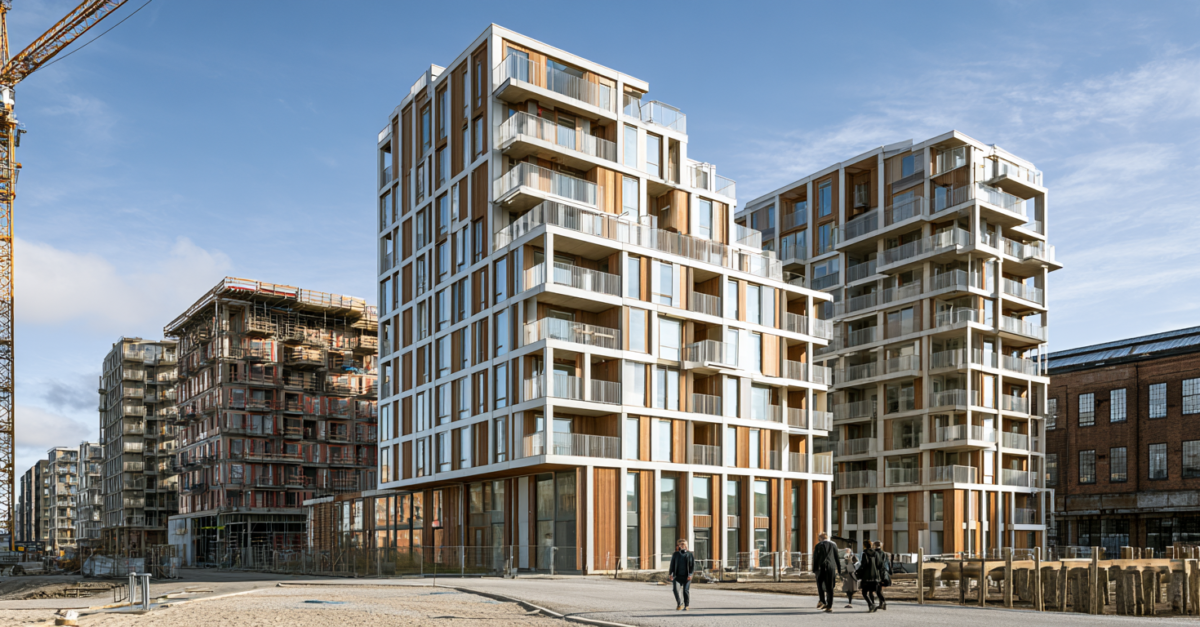
This aligns with the investor’s current product portfolio. The new fund targets railway, industrial, and other brownfield sites intended to be redeveloped into robust, mixed-use neighborhoods. Cities in the Nordic countries, Germany, and the United Kingdom are mentioned, with a pipeline that includes projects in Hamburg and Munich, among others. For municipalities and property owners, this means that Urban Partners is not just looking for individual assets, but rather complex urban renewal projects on a larger scale.
Affordable Housing as a Key Investment Theme
The focus on this specific issue is noteworthy. Habeck is expected to help refine models through which private capital can help finance affordable housing in growing urban areas. This is a sensitive issue for Germany, as a housing shortage, high construction costs, and scarce public funds are increasing the pressure for new financing partnerships. Urban Partners is clearly drawing on the Scandinavian model of closer integration between cities, investors, and long-term institutional capital.
The appointment also comes after the relevant waiting and notice periods for former top politicians have expired. Politically, the move is thus primarily a signal that urban development, decarbonization, and the housing issue are no longer separate fields. For investors, they are becoming a shared platform for capital allocation. This is precisely where Urban Partners clearly intends to grow more rapidly in Germany.