Webermühle Plans to Increase Density to Accommodate 1,000 Residents
A new residential neighborhood for about 1,000 people is set to be built on the peninsula in Neuenhof starting in 2030. However, the project in Webermühle is contingent on a cooperative planning process, which—following the rejection of a loan—will not be restarted until the end of 2025.
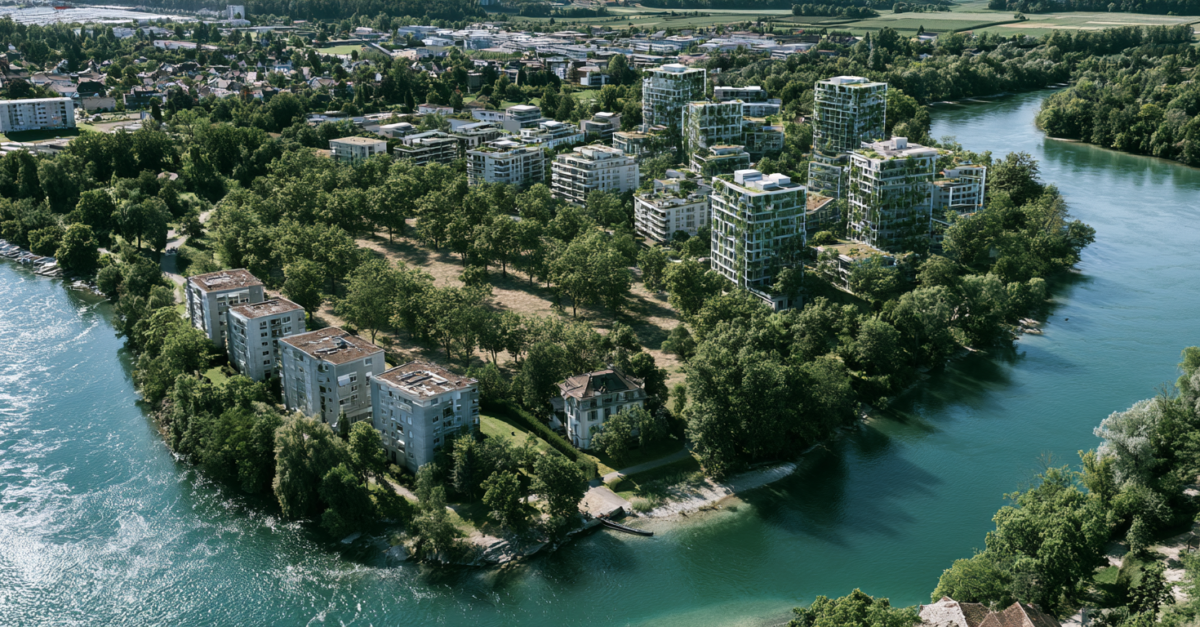

On the Webermühle-Ermitage site in Neuenhof, approximately 15,000 square meters are available for extensive densification. The plan calls for a neighborhood with several hundred apartments, complementary uses, and a significantly higher building density than exists today. However, before a design plan can be developed, the collaborative planning process with the municipality and the public must be properly completed.
The political timeline for this is clear. On June 23, 2025, the municipal assembly rejected a commitment credit of 220,000 Swiss francs. The municipal council subsequently submitted a revised credit proposal for 250,000 Swiss francs on October 7, 2025. The new proposal explicitly includes landscape architecture and workshops with the affected residents as part of the process.
A Large-Scale Project with Neighborhood Ambitions
According to previous reports, the owner, Altura RE AG, holds six parcels totaling 15,234 square meters in the Webermühle and Damsau areas. These sites are slated to be developed into a new construction project for approximately 1,000 residents. The plan calls for high-quality housing, several hundred apartments, and neighborhood-supporting amenities such as shops, restaurants, childcare, and educational facilities. This is significant for the real estate development because the project goes beyond a purely residential development and aims for a self-contained neighborhood model with a greater mix of uses.
The planning framework for this is still undecided. As early as 2024, the cooperative process had been projected to be completed by early 2026. However, following political rejection, the municipality had to restart the process. This has delayed the actual project timeline, although the intention to develop the site remains.
Asylum housing blocks early start of construction
In addition, a temporary use is planned for part of the area. At Villa Ermitage, a container settlement for refugee families will be built for five years. It is intended to accommodate 120 people. At the same time, classrooms for small classes are planned in the villa and the tennis clubhouse. This interim solution ties up space and precludes a short-term start of construction across the entire development perimeter.
The area is already reflected in the municipal budget as well. The 2025–2034 financial plan includes both 200,000 Swiss francs for the Webermühle competition and 2 million Swiss francs for the Webermühle-Damsau infrastructure development. This shows that, from the municipality’s perspective, the development is not merely a private construction project but can also trigger subsequent public investments in planning and infrastructure development.
The next step lies in the process
The key question now is whether the revised process will result in a design plan capable of securing a majority. Only then can it be assessed which building densities, building heights, open spaces, and land uses on the Limmat Peninsula are politically and urbanistically viable. For Neuenhof in particular, the project is therefore less a matter of image and more a test of how extensively an existing residential area can be reorganized with the community’s input.