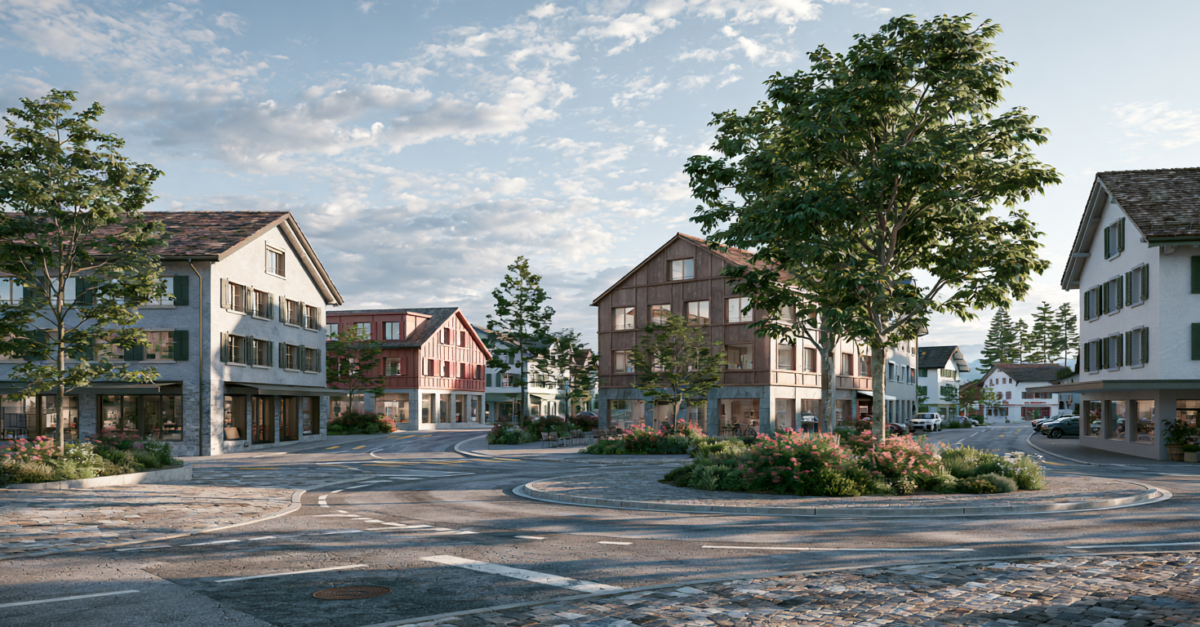

In its decision of June 30, 2026, the Solothurn Cantonal Council addressed the pending appeals regarding the Subingen local planning. After years of delays, this decision once again provides the municipality with a solid legal basis for building permits, changes of use, and further development in the town center.
This is particularly important for the central zone. The published zoning regulations describe these areas as districts designated for the development and creation of a village center. In its 2013 spatial vision statement, Subingen had already stipulated that the amenities in the village center should be preserved and that the town center should be aesthetically enhanced.
Densification in the village center is once again possible
The political and legal resolution is particularly relevant for real estate practice because stalled projects can now be brought back into the regular planning process. Under Solothurn planning law, every land-use plan must be approved by the cantonal government. Appeals may be filed against municipal decisions. Only once approval becomes legally binding can property owners, investors, and developers once again have planning certainty.
The case also illustrates how protracted legal appeals can significantly slow the implementation of local development goals. In Subingen, the revision process took more than a decade, while the previously valid local plan dated back to 2002. For projects in the town center, the conclusion of this process is therefore more than just a formal step. It lays the groundwork for reorganizing land uses, infrastructure, and building density in the town center.
The Center Remains the Most Contentious Issue
According to the available documents, the dispute centered on the development of the village center around the central zone and the planned revitalization of the area near the Kreuz Restaurant. Such locations are particularly sensitive from a real estate perspective in smaller municipalities, because property interests, land-use claims, infrastructure, and buildings that define the townscape all intersect directly there.
The question now is no longer whether the plan is legally binding, but how quickly it will translate into concrete projects. For the municipality, the decision means that building permit applications and development steps in the village center can once again be assessed on the basis of a valid plan.