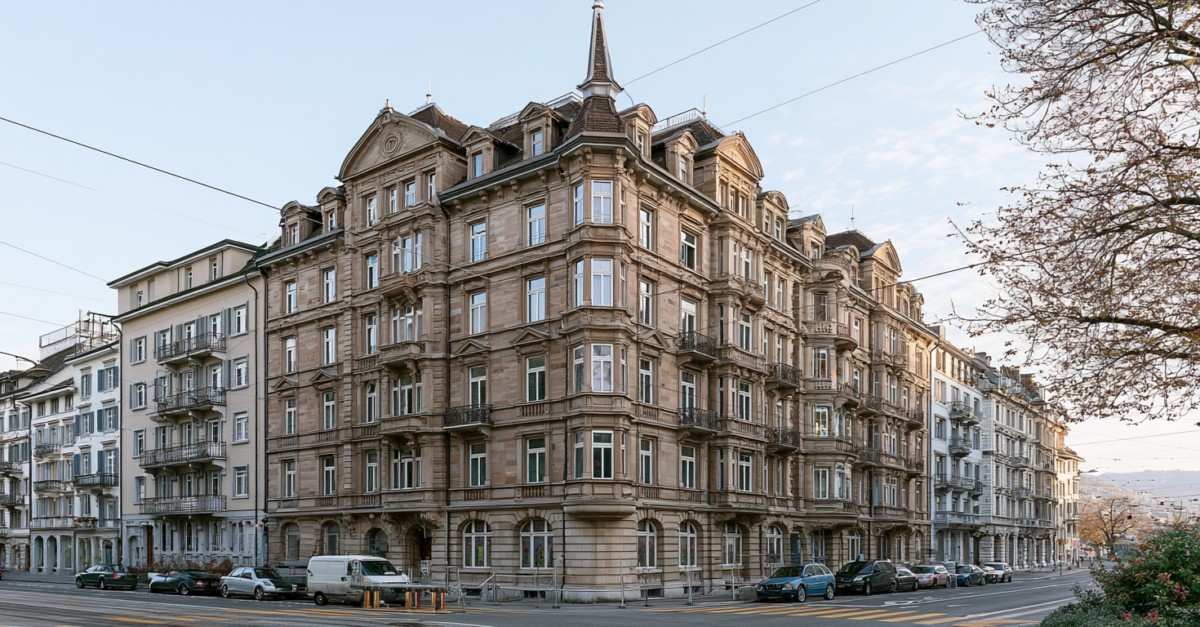

The bill originated from a motion by SVP cantonal council member Pierre Dalcher, supported by the FDP, the Center Party, and the EVP, which was passed against the wishes of the cantonal government and the Left-Green coalition. The motion called for a forward-looking historic preservation law that places greater emphasis on energy-efficient renovation, contemporary use, and accessibility. The government is now implementing this political mandate.
Higher Thresholds for Protected Status
In order for a building to qualify as a protected site in the future, it must meet at least two of four criteria. It must be “significant” as a political, economic, social, or architectural landmark. The previous distinction between regional and cantonal historic buildings has been eliminated; from now on, there are only municipal and cantonal properties.
The Decisive Clause
The real driving force behind the reform lies not in the list of criteria, but in an additional clause. When weighing interests, public and private interests are to be given greater weight in the future. In practice, this means that objections to alterations to protected properties will be significantly more difficult to enforce—and in many cases, virtually futile.
Agreements Instead of Orders
Designation as a protected property is to be achieved primarily through administrative agreements with property owners rather than through unilateral official orders. In addition, owners must be notified in the future if their building is added to an inventory. Minor renovations that have an insignificant impact on the preservation objectives can also be handled directly through the standard building permit process without a separate preservation decision.
Municipalities remain responsible but will share costs
Following widespread opposition during the consultation process,the cantonal government has decided not to transfer responsibility for municipal inventories to the canton. The municipalities remain responsible but will receive guidelines to ensure more uniform practices. In return, they must in the future contribute 10 percent of the maintenance costs for municipal protected sites, which the canton estimates will result in annual additional costs of around 3 million francs.
Mixed Reactions from the Field
The center-right majority in the cantonal council strongly supports the proposal. FDP representative Sonja Rueff-Frenkel praises the sensible balancing of interests, while centrist politician Marzena Kopp emphasizes that only usable historic buildings remain vibrant. The Homeowners’ Association views the higher hurdles as a strengthening of property rights that will enable the creation of additional housing. Martin Killias, president of Zurich’s Historic Preservation Society, while welcoming the fact that historic preservation is not being abolished, warns that filing complaints against renovation projects would effectively become impossible in the future.