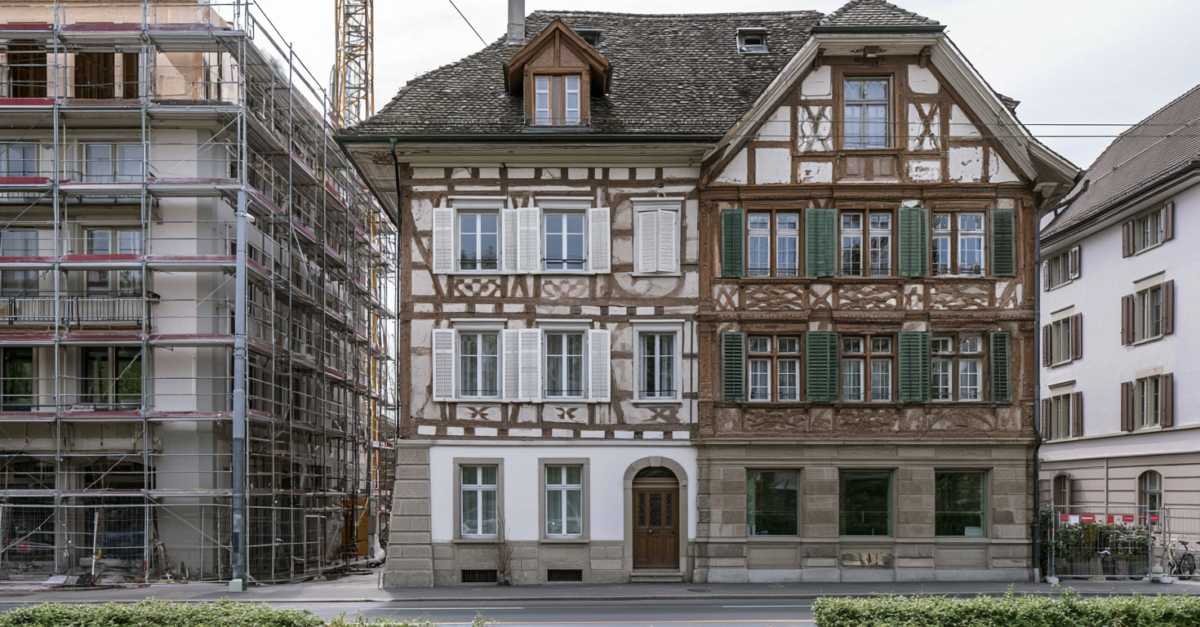

As early as 2019, the canton of Zug took the first step and significantly raised the bar for property protection. Zurich politicians were inspired by this; SVP cantonal council member Pierre Dalcher submitted a motion in 2020 together with the FDP, Mitte, and EVP. The cantonal government and the Left-Green coalition initially opposed it but were defeated in the cantonal council.
Higher Barriers, More Rights
Under the new rules, a building must meet two out of four criteria to qualify as a protected property. In the future, protection status will be granted through a partnership-based agreement rather than by administrative order. Renovations will be significantly simplified for public buildings, energy-efficiency upgrades, accessible entryways, and modern housing needs.
Private Interests Carry Greater Weight
The key provision in the new law states that private and public interests are to be “given greater weight” in the balancing of interests. This makes it much more difficult to file complaints against renovations. Approval procedures will also be streamlined; smaller renovations are to be approved without a separate preservation decision, now even at the municipal level.
Funding for Owners, Transparency for All
In the future, municipalities must contribute 10 percent toward preservation measures for municipally protected buildings. This will cost them approximately 3 million Swiss francs annually. At the same time, a public online inventory will be created, making all protected properties in the canton visible.
24,000 Buildings in Focus
Of the 300,000 buildings in the canton of Zurich, around 24,000 are listed in inventories, and 2,400 are formally protected. A special clause for buildings under 70 years old was omitted; the Federal Supreme Court had overturned a similar regulation in Zug due to the Granada Convention.
Applause and Concerns
The SVP, FDP, Center Party, and EVP are pleased; Sonja Rueff-Frenkel praises the “reasonable balancing of interests.” The Homeowners’ Association sees this as a step toward greater densification and urgently needed housing. Martin Killias of Zurich’s Heimatschutz is grateful that the protection is not being abolished, but warns against installing elevators in historic towers such as those of the Kyburg or the Grossmünster, against poorly renovated 17th-century houses, and against the loss of historic interior features.
Heimatschutz has long taken a liberal stance on repurposing, such as converting old barns into apartments or transforming the Wipkingen church into a school. Killias considers the new cost-sharing arrangement with the municipalities to be fair; it existed previously but had effectively disappeared under the former Director of Public Works, Dorothée Fierz. Now the ball is in the cantonal council’s court.