
Innovative materials in construction
In the Speakers Corner at Swissbau, ICSC Beton AG, KLARK, KohlenKraft and Timber Structures 3.0 showed how building materials are becoming active levers for the climate transition. From CO₂-storing concrete to large-scale wooden ceilings. The speakers presented concrete projects that demonstrate

Relocation creates development opportunity with lake view
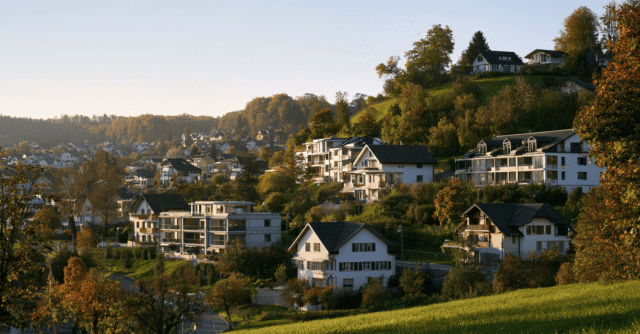
The Lucerne Cantonal Hospital is being relocated from Sursee to Schenkon. As a result, the canton of Lucerne and the town of Sursee are planning to repurpose the site. With the help of the local population, a residential and commercial district is to be built on the 47,000 square metre site with

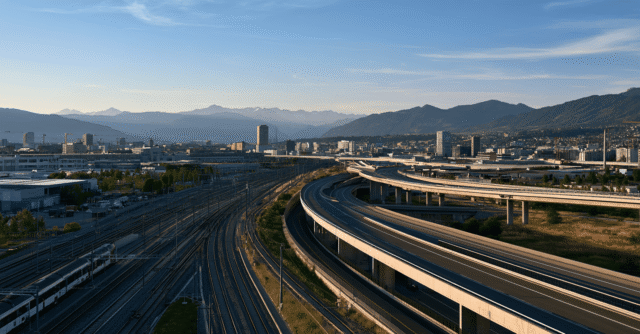
Co-operation to leverage the potential of the Silbern industrial estate
A new alliance is forming in the Silbern working area in Dietikon ZH. Under the title "Alliance Future Silbern", players from politics, business, infrastructure and nature conservation have committed themselves to a common goal. The aim is to transform the previously functional but underdeveloped

Building a house from plastic waste
Researchers are developing 3D-printed floor beams made from plastic waste that meet building regulations and could replace wood in housing construction in the future. The approach is aimed at lightweight, modular constructions and making plastic waste usable as a resource in global housing

From industrial heritage to innovation campus
Step by step, the traditional industrial site is being transformed into a future-oriented location for work, technology and innovation. The focus is clearly on productive uses and on the idea of sustainably strengthening Töss with a strong, open economic

Green living in Basel Dreispitz Nord
Dreispitz Nord is emerging as a new, vibrant district just three tram stops away from Basel's SBB railway station. With around 800 apartments, two public parks, an innovative secondary school on the roof of the MParc and a wide range of uses, the project is shaping the future development of the

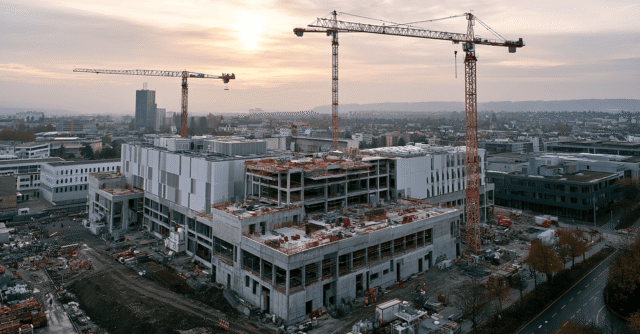
From freight station to urban district
Wolf Basel stands for the intelligent repurposing of a historic logistics site. In the heart of Basel, a model neighborhood is being built on over 160,000 square meters. Here, living, working, leisure, and innovative logistics come together to create an urban living space for future

Densification of housing stock is unpopular with the population
According to a survey by Comparis, almost two-thirds of people in Switzerland feel the housing shortage. Experts believe that taller buildings in cities could provide a solution. However, women in particular reject this idea. Overall, 68 per cent are against increasing the density of the housing

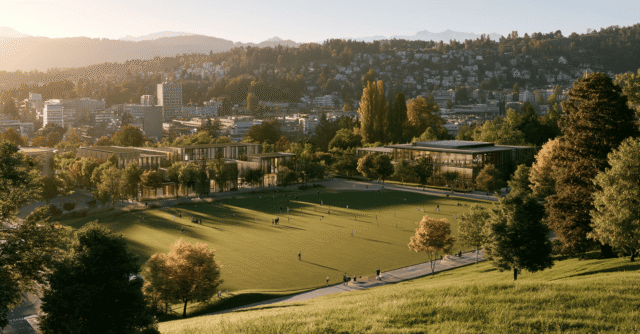
The Sursee hospital site – new prospects from 2034
The relocation of the Lucerne Cantonal Hospital to Schenkon will create a rare open space in Sursee from 2034. On the hospital site above Lake Sempach, a lively quarter with housing, living and meeting places is to grow. Carefully planned, broadly supported and with a clear view to the


Rankstrasse residential tower block
The canton of Basel-Stadt is developing a high-rise residential building on the Rank site that will send out a signal. Under the title "Miranda", 126 affordable apartments are being built that combine exemplary urban planning innovation, social sustainability and ecological construction. The

Roche site development Basel
Roche is shaping the future of pharmaceuticals at its headquarters in Basel. By the end of the decade, state-of-the-art research and production buildings will be built on the north and south sites, which will not only strengthen the innovation location, but also set new standards for sustainable

Research and practice are moving closer together in the property market
The ERNE Group and the HWZ Foundation Swiss Real Estate Institute (SwissREI) will honour the best scientific work in the field of real estate at the Best of Research Congress 2026. Research teams from nine Swiss universities will present their projects and compete for the

How artificial intelligence secures the construction process
Benetics AI presents the first automatic recognition and analysis of construction plans in emails at Swissbau. The Benetics AI email assistant analyses construction plans in Outlook attachments and automatically assigns updated plans to the relevant personnel. Outdated versions are

Electricity industry warns of declining security of electricity supply
The security of electricity supply will decline in the coming years. This is according to the Swiss Electricity Supply Index, which has been published for the first time by the Association of Swiss Electricity Companies (VSE). According to the index, supply will be particularly critical in

Joint development for the Silbern working area
In Dietikon, various interest groups have formed a joint alliance called Zukunft Silbern (Future Silbern). In future, the economy, mobility, environment and nature in the Silbern municipal area will no longer be considered in isolation, but will be planned and managed

Senior citizens sell their homes late and downsize only slightly after moving out
The Zurich Cantonal Bank's real estate barometer has analysed voluntary moves out of owner-occupied homes. It is striking that moves usually involve couples, do not involve a change of location, and become more frequent from the age of 85 onwards. After moving out, the number of rooms per person

Nidwalden pools its blue light forces
A security competence center for the police, prison, rescue services and other cantonal services is being built on the Kreuzstrasse site in Stans. The canton is replacing existing buildings in need of renovation with new buildings, thereby creating the basis for a sustainable, concentrated security

Mobile networks must receive emergency power
From 2031, Swiss mobile network operators will have to back up their networks with emergency power so that emergency calls, telephony and the Internet can continue to function in the event of power failures. An amended Telecommunications Services Ordinance stipulates how long which services must

Improve quality, streamline processes
Switzerland needs to grow inwards, but many building permit procedures take too long and are unnecessarily complex. What is needed is early cooperation between all parties involved, clear responsibilities and digitally supported processes so that high-quality inner-city development becomes a

More living space from the system
Serial construction is a response to the housing shortage, cost and climate pressure and opens up new opportunities for quality, sustainability and the circular economy. The decisive factor will be whether it is possible to combine standardization with architectural diversity and social

Choice of materials to combat the urban heat
The material catalog "Building materials for cities in a changing climate" is now available in an expanded new edition. It shows how the right choice of materials can specifically influence heat stress, urban climate and quality of stay in densely built-up areas and provides planners with a

Startups that are turning construction upside down
Six start-ups competed in the final of the Swissbau Startup Challenge in the Swissbau Lab. They showed how CO₂ can be reduced, processes streamlined and resources circulated. An expert jury selected the winners, Basel Circular presented the Circular Award for the first time and one thing was

Klybeckquai and Westquai as a hinge between the city and the future
Basel is setting new standards in urban planning with the development of Klybeckquai and Westquai. A newly conceived quarter on the Rhine, flexible uses on Westquai and generous open spaces define the face of a dynamic, complex urban

Canton of Zurich presents design plan for Limmattal Energy Centre
The canton of Zurich will be presenting the design plan for the Limmattal Energy Centre for a period of 60 days starting on 20 January. In future, this centre, located on the site of the current waste incineration plant, will also include wastewater treatment. Wastewater treatment at Antoniloch

Modernization and building mobility: Why we need to build on the existing infrastructure
Cities of all sizes face a common challenge: their key infrastructure was never designed for the relentless pace of modern life. Millions of people rely on systems that are decades old, well past their intended lifespan and incompatible with climate