The Limmat Valley Is Building Its Future
Six years of dialogue, two white papers, an architectural competition featuring six teams—and now the design plan is on the table. The Limmattal Energy Center (LEZ) is no longer just a promise. It is a project that will shape Dietikon and the Limmattal for generations to come. Anyone who wants to understand the infrastructure of the future should look to Dietikon today.
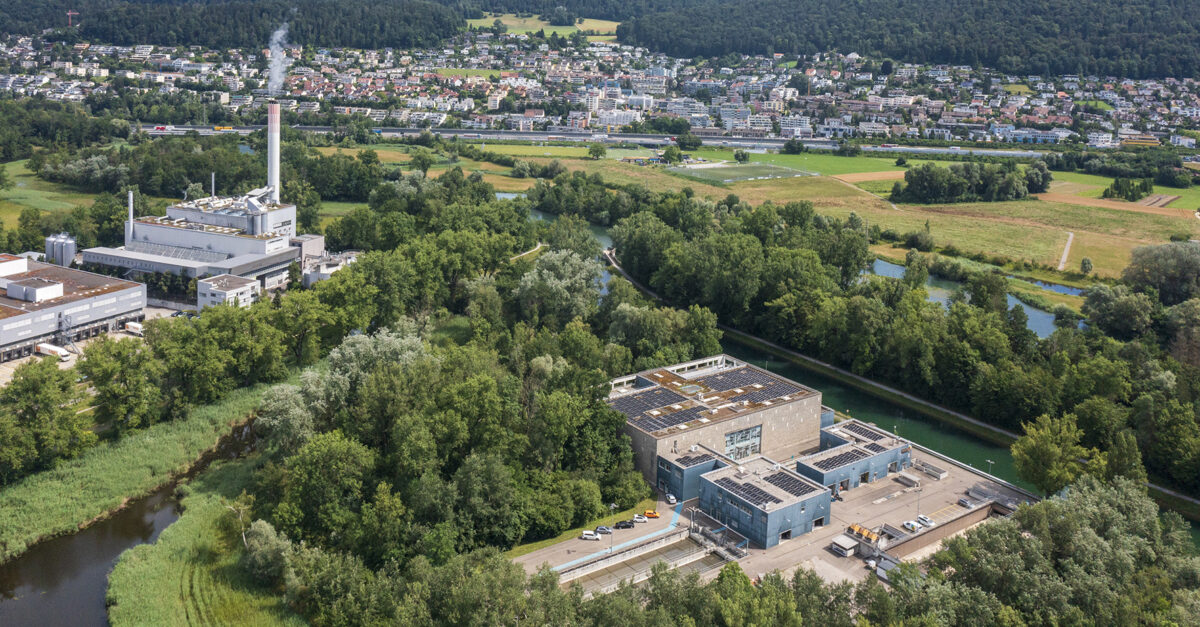
The Dietikon waste-to-energy plant will reach the end of its technical service life in 2034. The facility will no longer meet future standards and technical requirements, and there is simply not enough space. The wastewater treatment plant is located in Antoniloch, a nature and bird sanctuary of national importance, and must be relocated by 2050. Limeco plans to renovate both facilities at their current location at the confluence of the Reppisch and Limmat rivers and expand them into the Limmattal Energy Center.
Eight municipalities are backing the project
The LEZ is not a project of a single city, but of an entire region. Limeco is owned by eight supporting municipalities in the Limmattal: Dietikon, Geroldswil, Oberengstringen, Oetwil an der Limmat, Schlieren, Unterengstringen, Urdorf, and Weiningen. Regiowerk has been firmly rooted in the region for over 65 years, and this is the largest joint investment in its history.
Six Years of Dialogue
Limeco did not develop the project on the drawing board. Since 2020, a participatory process has been underway involving the supporting municipalities, the public, the canton, and nature and environmental protection organizations. Water, energy, nature, and community life—these four equally important perspectives emerged. In 2022, a pilot planning phase followed, involving three interdisciplinary teams. The findings were incorporated into two white papers, which included approximately 250 pieces of feedback from the participatory committees. This process built trust.
A floodplain embankment instead of a concrete block
The results of the pilot planning phase, along with feedback from the public, formed the basis for the architectural design competition. Six teams specializing in architecture, landscape architecture, and civil engineering submitted designs. A panel of experts evaluated the projects and selected the winning team. The six designs were presented to the public at an exhibition.
The Zurich-based firm Penzel Valier AG, in collaboration with landscape architects Krebs and Herde, won the competition. Their design organizes the site—which spans over 43,000 square meters—into three longitudinal strips that promote connectivity. At its heart is a floodplain embankment, one to eight meters high, which serves as a natural boundary and a multifunctional access structure. An urban plaza featuring the main entrance and a cascading parking ramp connects the various levels. ETH Professor Kees Christiaanse summarized it this way in the evaluation committee: “The challenge was to harmonize the large scale of the overall volume with the surrounding urban and natural landscape.”
The Planning-Law Foundation
The cantonaldesign plan was available for public review for 60 days starting at the end of January, and interested parties could examine it. On January 21, Limeco and the Canton of Zurich answered questions from the public at a public information event in Dietikon. The development plan serves as the legal basis for all subsequent steps. Without it, there can be no construction project, no new building, and no LEZ.
Two construction phases, one goal by 2050
In September 2023, voters clearly approved a project planning loan of 41.4 million Swiss francs by a margin of over 80 percent and authorized the purchase of the Hasler site for 18 million Swiss francs as a strategic land reserve.
By 2034, the new waste-to-energy plant will be built further west on the site, and the wastewater treatment plant will be expanded at the same time. In the second phase, by 2050, the wastewater treatment plant will be completely rebuilt at the current waste-to-energy plant site.