Brienz is fighting to delay the move for the time being
Ten objections are holding up the preventive resettlement project in Brienz/Brinzauls. However, the municipality of Albula/Alvra only gave its clear approval for the loan of 82.56 million Swiss francs on 10 July 2026. For property owners, this means that not only the financing but also the valuation mechanism for their properties is now under discussion.
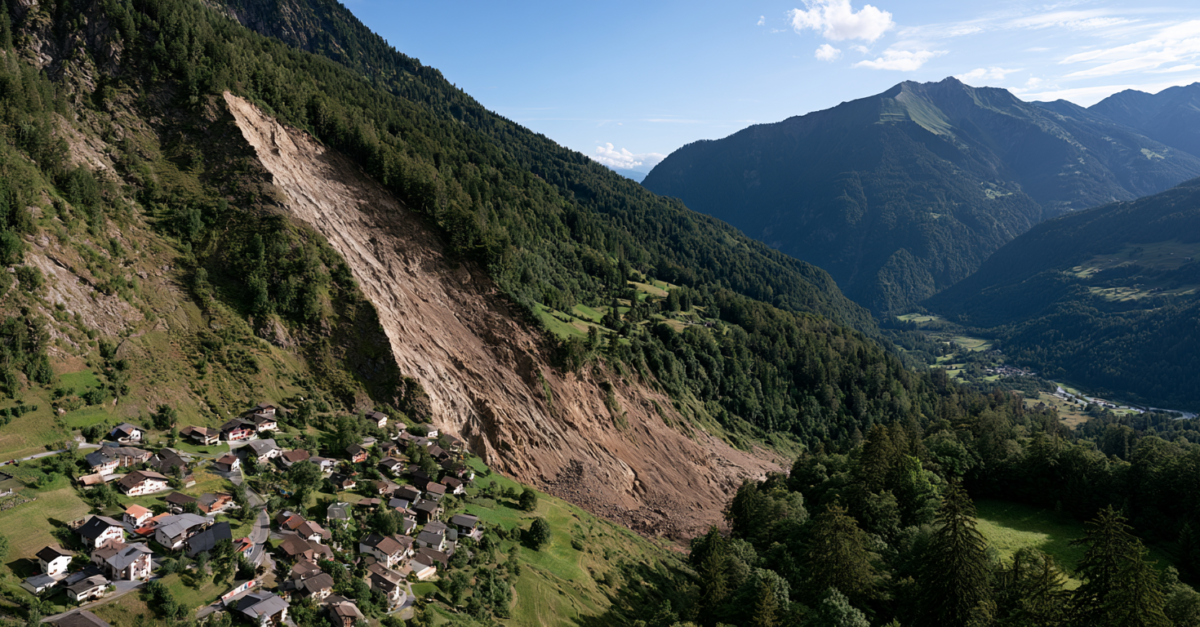

With these objections, the focus has now shifted to the very issue that is crucial to the project. How land, houses, demolition and alternative sites are valued will determine whether voluntary relocation is a viable option for those affected, or whether the process will stall politically and legally. The cantonal public consultation process for the preventive resettlement ran from 22 May to 22 June 2026.
The project comprises 42 applications for preventive resettlement. According to the cantonal project documents, 44 applications were initially received by 9 March 2026, two of which were subsequently withdrawn. The municipal assembly of Albula/Alvra approved the gross loan of 82.56 million Swiss francs on 10 July 2026 by 41 votes to 3. The federal government and the canton will cover 90 per cent of the resettlement costs, with those wishing to move bearing the remaining 10 per cent themselves.
Valuation becomes the sticking point
The conflict therefore centres less on the aim of the project than on the logic behind its calculations. According to consistent reports, the objections criticise the fact that compensation is set at a flat rate and does not adequately reflect differences in the location, condition and replaceability of individual properties. This is a sensitive issue for property owners, as even minor variations can have major consequences for the compensation for residential property, particularly in a small mountain village.
The official project description lists, amongst other things, the value of the existing building in Brienz/Brinzauls, the value of access infrastructure and the excavation pit, the land value of a new plot in the replacement building zone, as well as demolition and site restoration as eligible costs. At the same time, it states that submitting the application does not create an obligation to implement the project. The project is therefore voluntary, but remains dependent on a robust and legally secure compensation model.
Partial relocation rather than abandonment of the villageof
The canton’s documents explicitly describe the measure as a preventive partial relocation. It is intended to relocate buildings at risk to safe locations, reduce risks to people and property, and at the same time preserve a habitable village for the remaining population. In parallel, safety measures such as the drainage tunnel and monitoring will continue until 2028.
From a property law perspective, the Brienz case is therefore more than just a local dispute over natural hazards. Discussions are taking place on how voluntary relocations from high-risk areas can be financed, assessed and legally processed when market values, safety interests and the principle of equal treatment come into conflict. As a next step, the Graubünden cantonal government must rule on the objections and thus on whether the project is eligible for approval.