Zoning plan paves the way for site development at the station
Following the ‘yes’ vote at the ballot box, the development plan for the Metalli site in Zug has come through the public consultation period without any objections. This means that development of the site can now proceed. The next concrete step will be an architectural competition for the residential high-rise and the outdoor spaces.
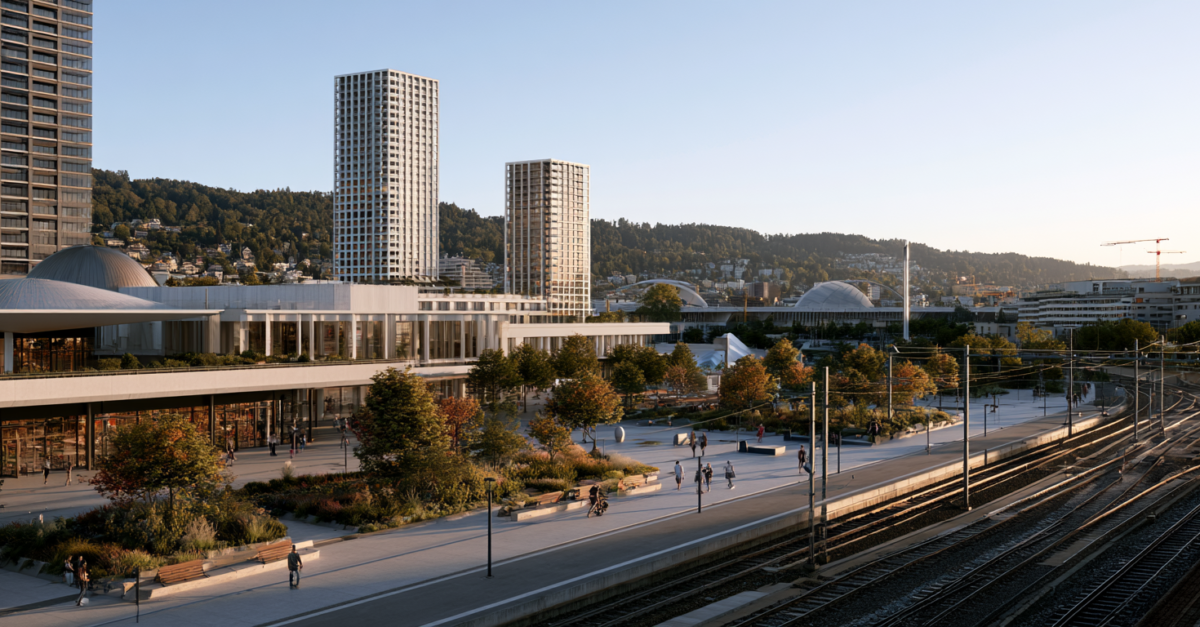

The local development plan was approved on 14 June 2026 by the voters of the city of Zug, with 57.77 per cent voting in favour. This provides the municipal planning framework for the further development of the 27,000-square-metre site near the railway station. The next step in ensuring quality will now be a design competition for the planned high-rise and the new urban space.
A total of 160 flats are planned, 64 of which will be affordable. The high-rise building may be no more than 80 metres high. In addition, there will be a square measuring around 900 square metres with a direct link to Zug railway station. The retail and catering spaces are to be largely retained, and the shared Metalli/Bergli underground car park, with 900 parking spaces, will remain unchanged. Also planned are green spaces and around 550 new cycle parking spaces.
Competition to precede planning applications
The specific architectural design has not yet been finalised. According to the project documentation, the design of the high-rise will only be determined in a subsequent architectural competition. Separate planning permission procedures will then be required for the individual buildings. Before implementation can begin, the development plan must also be approved by the Zug Cantonal Government.
Densification at Zug railway station
The project is particularly relevant to urban development due to its location. The current shopping centre, built in 1987, is to be transformed into a more densely used area with additional housing, more public spaces and improved pedestrian links to the railway station. The City of Zug had held the vote as a referendum on the adoption of a development plan, subject to an optional referendum.
Next steps to be phased
The political ‘yes’ vote therefore does not yet mean that construction will begin. First, the design competition, cantonal approval and the project-specific planning permission procedures must be completed. Only then can the owner implement the project in phases.