Two Areas, One City, One Vision
A residential town, a business hub, a transportation hub—Dietikon has many faces. In this interview, Mayor Roger Bachmann explains how the Niderfeld and Silbern projects are becoming key initiatives for the entire region and what modern urban development means in the Limmat Valley today.
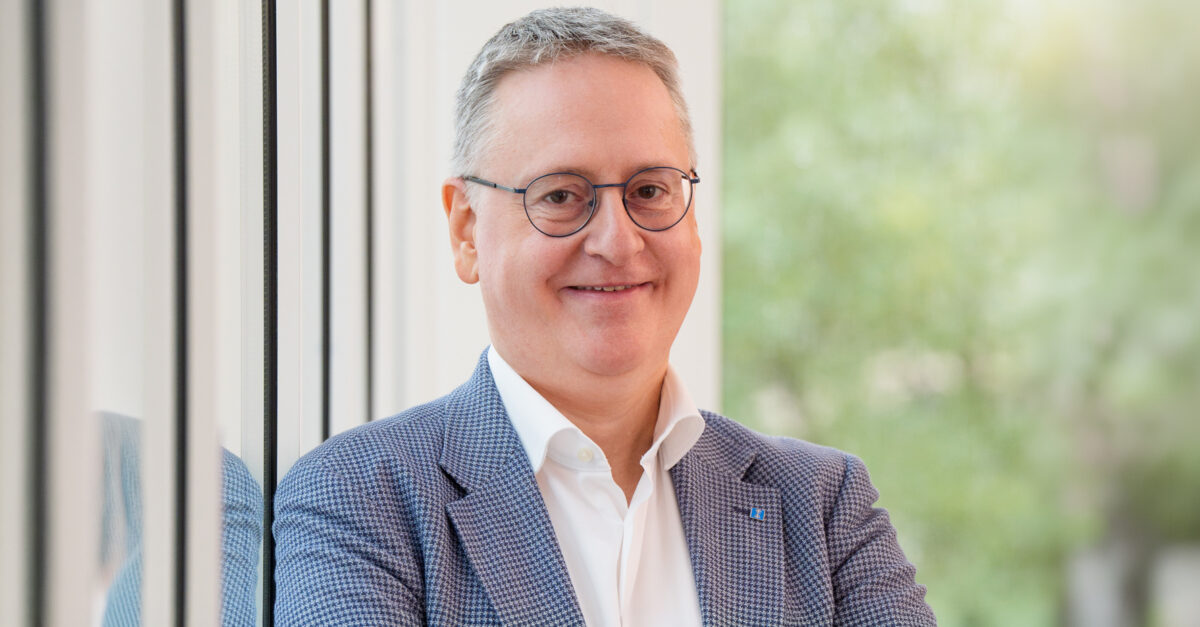
Arun Banovi: Mr. Bachmann, Schlieren has a very high profile in the Limmat Valley. What is Dietikon’s unique strength within the region, and where should the city stand in the Limmat Valley and the greater Zurich area by 2035?
Roger Bachmann: Dietikon has a different starting point than Schlieren, but that doesn’t make it any less prominent. Our strength lies in the fact that we are simultaneously a business hub, a residential city, a regional center, and, last but not least, an important supraregional transportation hub. We have large development areas, excellent transportation connections, and, at the same time, a high quality of life thanks to the Limmat and Reppisch rivers, local recreational areas, and a well-established urban structure.
The good mix of housing, work, shopping, education, culture, and leisure makes us attractive. By 2035, Dietikon will continue to transform into a modern and diverse city and become even more attractive. This is now gradually becoming evident in the city center, among other places, where various construction projects are underway, such as the Florahof, the Löwenzentrum shopping center, and the Kronenareal. However, the city should not simply grow; rather, it should create quality—with attractive public spaces, good schools, diverse housing options, continued excellent transportation access, and urban development that fosters a sense of identity.
Arun Banovi: What is still possible in Dietikon today that may have already become more difficult in other cities in the Limmat Valley?
Roger Bachmann: On the one hand, Dietikon still has significant areas available for development. This is hardly the case anymore in many municipalities in the canton. We have areas—particularly Niderfeld, but also Silbern—where we can actively shape urban development rather than relying solely on infill within existing neighborhoods. In this respect, we can plan and shape its future on a larger scale.
On the other hand, Dietikon boasts great diversity in a wide range of areas. Dietikon is socially, culturally, and economically well-rounded. This openness is a strength because it fosters innovation and dynamism.
And last but not least, it’s worth mentioning that even within the city administration, we try to make things happen that might not be possible elsewhere.
Arun Banovi: Silbern is a major employment hub, but not yet a classic urban location. What does it take for Silbern to become more appealing?
Roger Bachmann: Silbern is a very economically significant area today, but it’s still strongly defined by its functional character. For it to become a more urban location, it needs a better quality of life, improved public spaces, and better public transportation connections.
An area doesn’t become urban solely through buildings, but through the life and activities within and between them. This includes restaurants, gathering places, attractive walking and biking routes, as well as amenities that function even outside traditional working hours.
At the same time, it needs a clear identity. Silbern should not simply remain an industrial area but should develop into a modern business district that accommodates innovation, services, production, and new ways of working.
Arun Banovi: Niderfeld isn’t just becoming a new neighborhood—it’s becoming a major new district. What do you hope this will mean for Dietikon and the Limmat Valley?
Roger Bachmann: The Niderfeld area is one of the most important development sites in the entire canton of Zurich. It offers the opportunity to build a new urban district—with housing, jobs, schools, public spaces, and a distinctive city park.
For Dietikon, this represents an enormous opportunity for high-quality growth. There, we can demonstrate how modern urban development works: sustainably, diversely, climate-friendly, and well-connected to public transportation.
The Niderfeld area is also significant for the Limmat Valley because it’s not just an isolated development—it has the potential to become a new regional hub. The project’s impact extends beyond municipal boundaries.
It will be crucial that Niderfeld not only impresses architecturally but also functions well socially. A neighborhood is only successful when people feel at home there.
Arun Banovi: Dietikon has two very different development areas in Silbern and Niderfeld. How can the city ensure that both areas are not developed in isolation, but rather fit into the overall picture of Dietikon while also creating added value for the Limmat Valley?
Roger Bachmann: The key task is connectivity. Silbern and Niderfeld must not be viewed as standalone projects, especially when it comes to mobility: there needs to be good pedestrian, bicycle, and public transit connections between the two areas and to the city center. Equally important, however, are shared quality standards for architecture, open space, and sustainability.
The two areas complement each other perfectly: Niderfeld will be more residential and neighborhood-oriented, while Silbern will continue to build on its strength as a business district. Both areas should complement each other and together shape a modern image of Dietikon.
From a regional perspective, it seems important that these developments do not create competition but rather strengthen the Limmat Valley as a whole. This requires regular dialogue and close, coordinated collaboration with neighboring municipalities and the canton—even beyond cantonal borders.
Arun Banovi: Which companies and jobs will be a good fit for Dietikon in the future, and how important is coordination with the surrounding municipalities in this regard?
Roger Bachmann: Dietikon needs a diverse mix of industries. Logistics has traditionally been a strong sector, as has the energy sector, where a wide range of opportunities for Dietikon as a business location will arise in the future. However, companies in the CleanTech and healthcare sectors are also of interest. Dietikon is also synonymous with innovation and, accordingly, aims to provide a home for innovative companies. It’s important that we don’t just aim to attract as many jobs as possible, but rather high-quality jobs with opportunities for growth. Dietikon should be a location where companies can grow and skilled workers enjoy working.
Regional coordination is key here. The Limmat Valley has long functioned economically as a single region. Companies don’t think in terms of municipal boundaries. That’s why we, too, must think more regionally—for example, when it comes to transportation issues, sports and recreational offerings, employment zones, or location profiles.
Not every municipality has to offer everything. What matters is that their strengths complement one another.
Arun Banovi: You view the Limmat Valley both as mayor and as president of the ZPL. Does the region already have a shared vision today, or does each municipality still think too much in terms of its own interests?
Roger Bachmann: The Limmat Valley has grown significantly closer together in recent years. With the Limmat Valley Railway, joint planning, and regional projects, a new regional mindset has emerged. In addition, the regional economic development agency, Limmatstadt AG, contributes to networking and cooperation.
But of course, there are still differing interests. Every municipality has its own history, its own structure, and its own political priorities. That’s normal, especially since the population understandably also identifies with and feels at home in smaller-scale structures. That doesn’t preclude us from thinking collectively when it comes to the big issues: transportation, urban development, the economy, open spaces, and energy supply can no longer be meaningfully addressed within the boundaries of individual municipalities.
I believe that awareness of the need for a shared perspective and cooperation is much stronger today than it was ten or fifteen years ago. At the same time, regional cooperation always requires trust and a willingness to think beyond one’s own municipality—without necessarily having to talk about municipal mergers right away.
Arun Banovi: When it comes to transportation, you really feel the limits of growth very directly. Where are the biggest bottlenecks in the Limmat Valley today, and what needs to be better coordinated at the regional level?
Roger Bachmann: We clearly see the biggest bottlenecks in the transportation infrastructure. This applies to both road traffic and public transportation.
In the road sector, major thoroughfares regularly reach their capacity limits. At the same time, pressure on neighborhoods is growing due to detour traffic. When it comes to public transit, the main issues are capacity and good connections, especially to larger networks. Transportation cannot be planned in isolation at the municipal level. Coordination between urban development and mobility is crucial.
We must strengthen public transportation and create attractive connections for non-motorized travel without pitting individual modes of transportation against one another, because—especially in the area of motorized private transportation—commercial traffic, for example, must not be overlooked. Especially in a dynamic region like the Limmat Valley, a balanced overall transportation system is needed, and new technologies and forms of mobility offer many opportunities here that must be seized.
Arun Banovi: What do you expect more from private owners, developers, and investors in the future to ensure that large sites give rise not only to projects but also to good urban and economic locations in the long term?
Roger Bachmann: We expect investors and developers to have a long-term understanding of socially responsible and high-quality urban development. It is no longer enough today to simply construct individual buildings. What matters most is the contribution a project makes to the entire surrounding area.
This includes high-quality public spaces, sustainable construction methods, effective ground-floor uses, social diversity, and a long-term perspective.
Partnerships between the public sector and private actors are particularly important for large sites. Good urban development doesn’t happen in opposition to one another, but rather through collaboration.
Ultimately, investors also benefit when neighborhoods remain attractive, vibrant, and identity-forming over the long term. Quality is therefore not at odds with economic viability, but rather a prerequisite for sustainable success.
About the Person
Roger Bachmann has been mayor of Dietikon since 2018. He is also president of the CleanTech Hub Dietikon Limmattal support association and of the Zurich Limmattal Planning Group, and he serves on the board of directors of Limmatstadt AG. He completed an administrative apprenticeship with the Dietikon municipal administration and subsequently worked as an administrative clerk in the Dietikon tax office. In the years that followed, he gained extensive experience in public administration in various municipalities, particularly in finance and municipal management. With his many years of administrative experience, his regional network, and his commitment to sustainable urban development, Roger Bachmann has played a decisive role in shaping Dietikon’s development since taking office as mayor.