When immigration causes wealth to explode
Switzerland has become a nine-million society at full throttle. Anyone who bought a home in the right place during this time is now sitting on a wealth effect of historic proportions. Property prices and land values have multiplied in many centers, while wages have only increased moderately.
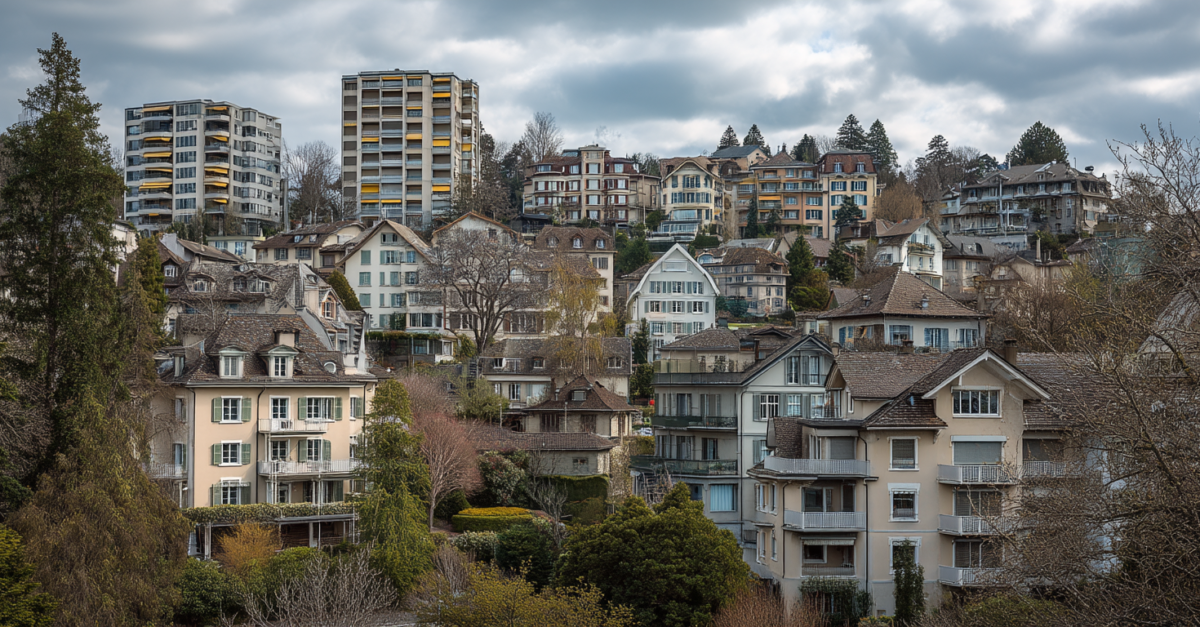

Since the introduction of the free movement of persons with the EU, the population has grown faster than in almost any other European country. New workers are flocking to the economically strong centers, companies are expanding their locations and the demand for living space is increasing year on year. In regions such as Zug or Zurich, these additional influxes are coming up against scarce land and limited building land. The result is rising rents and sales prices, first in prime locations and then across the board.
The leverage effect on equity
Anyone who bought a condominium in a booming region in the early 2000s financed a large part of their purchase with mortgages. Even a tripling of the market value is enough to increase the equity invested tenfold. This is because the debt remains relatively constant while the market value rises. This is exactly what has happened in many municipalities along Lake Zurich, in the Zug area or in popular conurbations. Six-figure equity turned into millions on paper.
Switzerland’s balance sheet
According to the SNB, the market value of real estate held by private households now stands at just under CHF 3,000 billion. This corresponds to almost half of all private assets. Together with financial investments and pension fund assets, the net wealth of households totals more than CHF 5,000 billion. Over the last 25 years, this figure has roughly doubled, driven primarily by rising property prices and lower interest rates.
Winners, losers and the housing shortage
In economic terms, the boom is strengthening the quality of Switzerland’s balance sheet, while systemic risks remain rather muted thanks to falling loan-to-value ratios. For many young households, however, the picture is changing. In the cities, rent is eating up a growing proportion of income, while the entry threshold for home ownership is getting higher and higher. Without inheritance or a gift, owning your own home is becoming the exception. In terms of spatial planning, objections, conditions and lengthy procedures exacerbate the shortage because elaborately planned projects are realized too late or not at all.
Silent participation via the second pillar
Nevertheless, tenants do not come away completely empty-handed. Pension funds hold a considerable proportion of their assets directly or indirectly in Swiss real estate, often in the same centers where prices have exploded. This means that almost all working people are indirectly involved in the appreciation boom via the second pillar. Higher real estate income supports the funding base of the funds in the long term and thus the pension promises. However, the direct jump in assets is reserved for owners who were correctly positioned early on.