

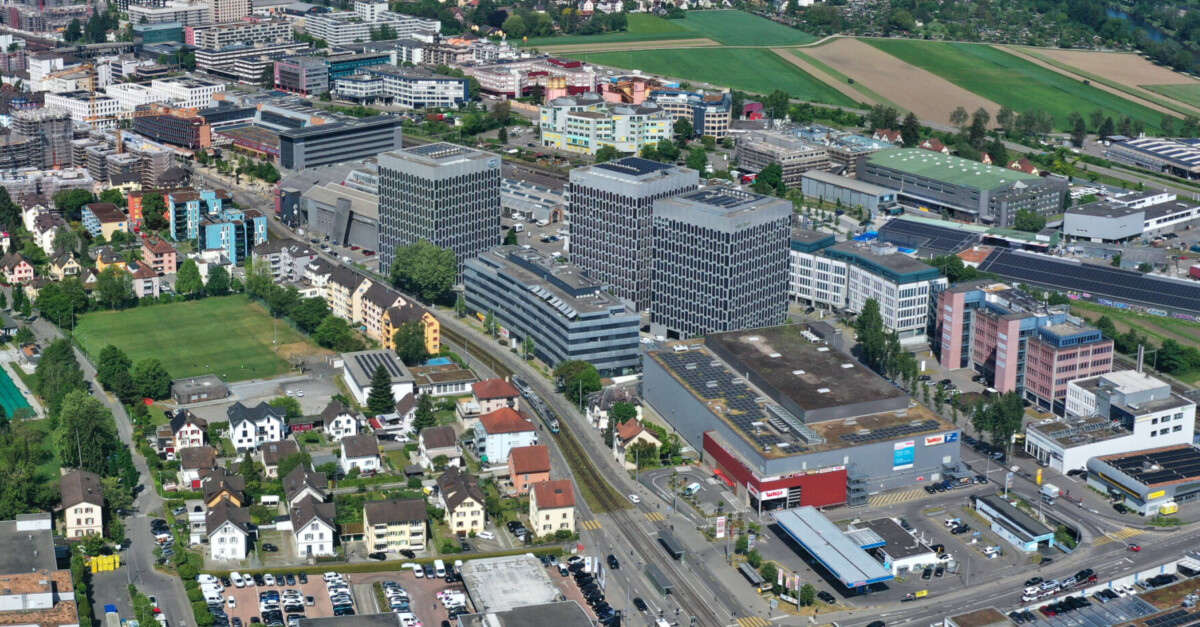
Anyone travelling through Schlieren by train is unlikely to even notice the Wagi site. It blends so seamlessly into the urban landscape. Yet behind its façades lies one of the densest life sciences clusters in Switzerland: across some 100,000 square metres of lettable space, around 60 companies and institutions, as well as 80 university research groups, conduct research, development and production, together accounting for some 2,000 jobs. Research and production here cover the entire spectrum of modern life sciences: from antibody therapy and regenerative medicine to diagnostic procedures. At least one active ingredient developed on the site has achieved ‘blockbuster’ status – a benchmark which, in the pharmaceutical sector, corresponds to an annual turnover of more than one billion US dollars.
Strategic positioning: the 4L strategy
With this acquisition, Swiss Life Asset Managers is strengthening its strategic focus on the so-called ‘4L’: Living, Logistics, Light Industrial and Life Science & Tech. The latter represents the newest segment within the 4L strategy and is benefiting most from structural tailwinds.
Drivers of this development include demographic and supply-side factors: the ageing population in OECD countries is leading to rising healthcare costs – largely regardless of interest rate levels. At the same time, highly specialised laboratory and GMP-compliant production space in Switzerland is in short supply and only scalable to a limited extent; research and development require specific infrastructure and cannot be accommodated in just any commercial property.
Swiss Life Asset Managers’ investment horizon – shaped by the long-term benefit commitments in its insurance business – is consistently focused on the long term. This perspective is a key prerequisite for investments in life sciences property, whose value creation potential typically only unfolds over a longer period.
Added to this is the strong network dynamics of life sciences clusters, which strategically favour such investment: once a tenant is established within a functioning cluster, they tend to stay, meaning tenancies are generally more stable than in many other property segments – provided the cluster in question remains competitive.
A location that is no coincidence
Schlieren is at the heart of development in the life sciences sector. With the Bio-Technopark Schlieren-Zurich, the Wagi site has been home to an established incubation and networking platform since 2003. Roche operates its Innovation Centre Zurich on the site, which emerged from the ETH spin-off Glycart. Over 40 spin-offs from Zurich’s universities have set up shop on the site. Industrial groups have so far invested an estimated 10 billion Swiss francs in these companies through licensing partnerships. Globally, this concentration of research is surpassed only by the Boston region.
Continuity as a principle
A key element of the acquisition of the Wagi site is operational continuity. Walter Krummenacher and his team will continue to run the company, and the Schlieren site will remain in operation. Life sciences properties are not standard premises – the requirements for ventilation, cleanrooms, security levels, hazardous substances and electrical load differ fundamentally from those of a conventional office building. The GHZ team has built up this expertise over four decades. This expertise will be retained at the site.
The next stage
The acquisition marks the start of an active development phase. GHZ has drawn up a design plan in close consultation with the town of Schlieren, which is currently undergoing the planning approval process. It forms the planning framework for the site’s development over the next twenty years or so and envisages four construction phases.
In substance, the plan continues the transformation from an industrial site to a laboratory and research hub that began in the 1980s. Outdoors, green open spaces, pocket parks and social areas are being created to highlight the site’s campus-like character. Most of the ground-floor spaces will be open to the public; with cafés, the Wagi Museum and new social spaces, the site will open up to the neighbouring neighbourhood. In addition, a connection to the Baden–Zurich cantonal cycle highway is planned.
Author: Hardy Rohr, Co-Head of Business Development Real Estate Switzerland, Swiss Life Asset Managers
From a railway carriage factory to a research centre
More Articles
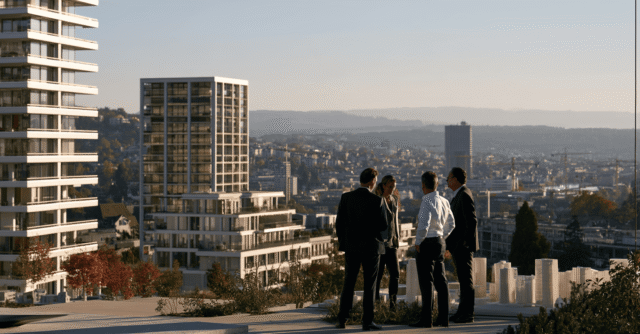
Zurich’s development volume jumps to 450 million
With the acquisition of Lebensraum Schweiz, Admicasa is significantly scaling up its property development business in the Greater Zurich area. According to the company, the agreed transaction involves projects worth…
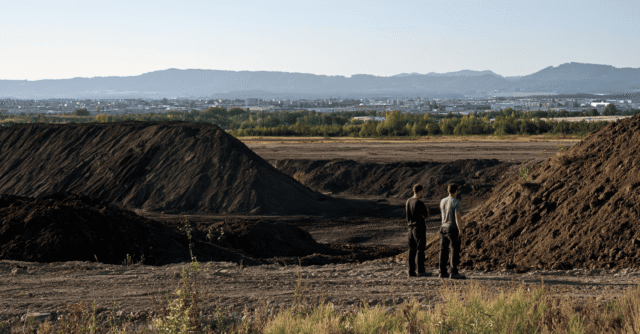
Renens gives construction waste a new lease of life
At the Les Palettes site in Renens, excavated material from building sites is processed into fertile substrate. The project utilises 7,000 square metres of a development site that has been…
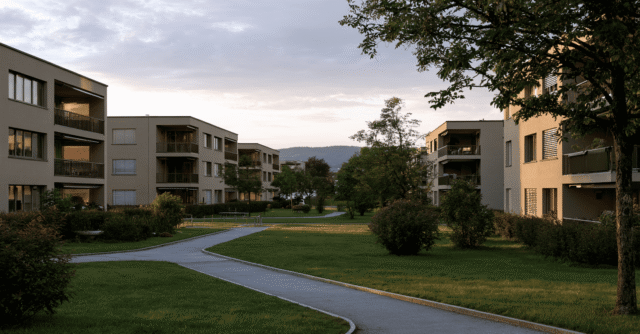
Wädenswil is increasing its density without displacing residents
On Neudorfstrasse in Wädenswil, a housing estate is set to expand from 103 to around 160 flats, without the existing tenants having to move out. The plans include extensions, refurbishments…
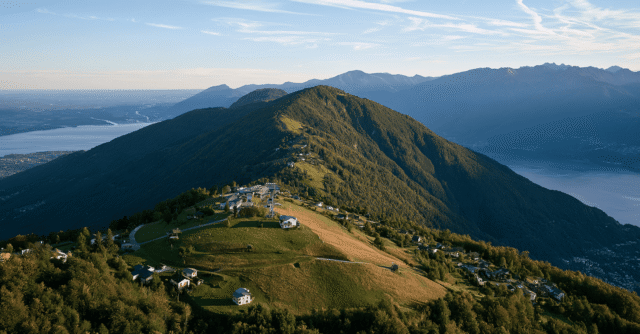
Cardada is on the verge of being excluded from the building zone
Cardada and Colmanicchio are once again coming under pressure, despite the fact that local planning regulations have already been tightened. The Ticino State Council does not intend to approve large…
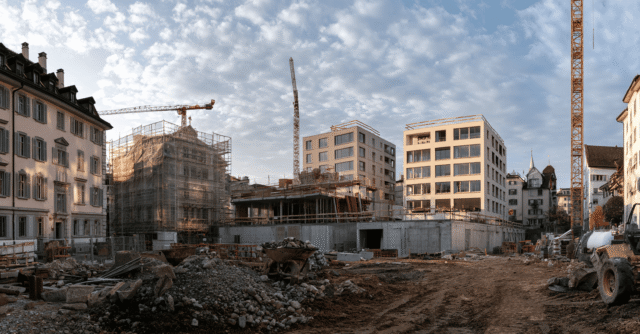
Zurich clears 4,000 flats from the ISOS backlog
In Zurich, a major obstacle to housing construction is being removed. On 18 September 2026, the Federal Council amended the rules governing the application of the ISOS and brought them…