From the factory site to the moated castle address
At Limmatspitz in Gebenstorf, the former BAG industrial site is being transformed into a new neighborhood featuring approximately 200 apartments, commercial spaces, and a canal promenade. Up to 150 million Swiss francs are being invested, a large portion of which comes from second-pillar pension funds. While planners are celebrating the transformation into a prime waterfront location, residents of Vogelsang are primarily concerned with one question: how will the neighborhood cope with the additional traffic?
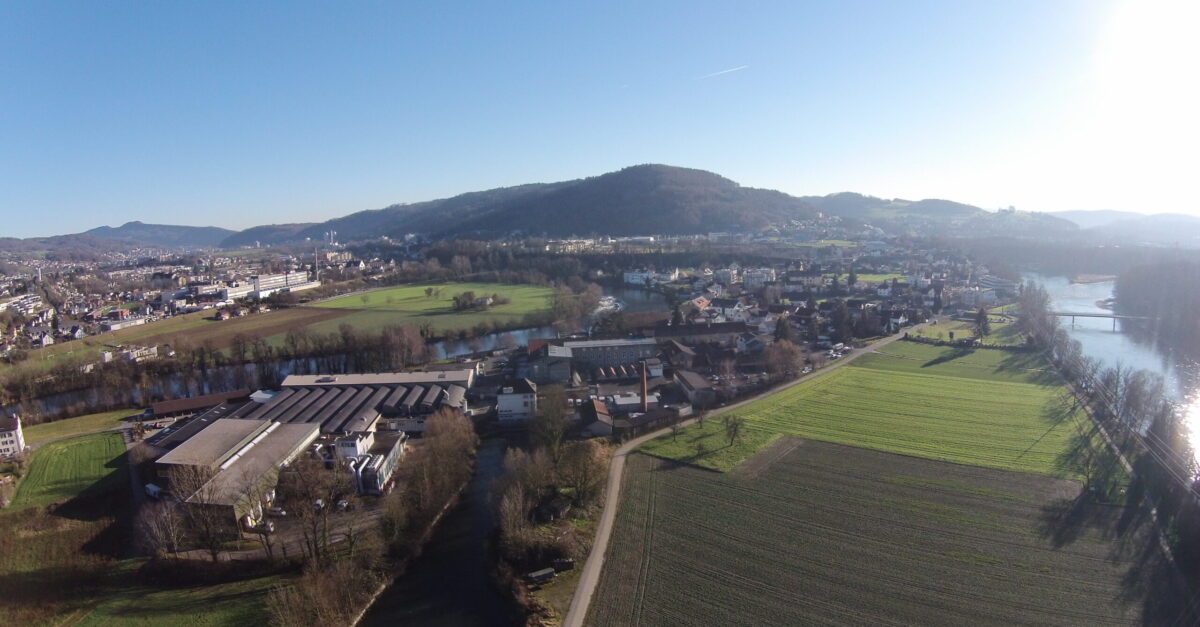
View of the moated castle in Aargau, featuring the Vogelsang district of Gebenstorf and the former BAG site. Photo: LuFiLa / Wikimedia Commons, CC BY-SA 4.0
The BAG site is located in the Vogelsang district of Gebenstorf, directly in front of the Wasserschloss, where the Aare, Reuss, and Limmat rivers converge. For decades, the former site of the BAG lighting factory shaped the area as an industrial enclave on the edge of the floodplain landscape. With the relocation of production, a reserve area in a prominent inner-city location became available. The rezoning from an industrial to a residential and commercial zone, as well as the “Wasserschloss³” design plan, are now intended to develop this reserve.
New Neighborhood Funded by Pension Funds
The Real Fund One real estate fund is behind the development. It pools funds from twelve pension funds seeking stable, long-term returns from residential and service-oriented uses. Approximately 194 apartments are planned across some 21,000 square meters, complemented by restaurants, retail, and services. Three historic buildings—the laboratory building, the spinning mill, and the foundry—will be preserved, as will the tall chimney and other elements of the industrial architecture. The spinning mill will be raised and opened up so that the new canal promenade can run right through the building. The investment ranges between 120 and 150 million Swiss francs, with the expectation that the “water castle” narrative will support marketing efforts.
City block by the canal, floodplain at the doorstep
In terms of urban design, the project focuses on compact structures and courtyard-like layouts. A public promenade will be created along the Werkkanal, leading from Limmatstrasse into the floodplain landscape. The new buildings frame this axis and create semi-public courtyards for residents. The historic building stock forms the identity-defining backdrop to which the new volumes are attached. This creates a dense boundary with the residential area, while open spaces and sightlines toward the floodplain are deliberately left open.
Traffic as the Sticking Point in the Neighborhood
At the public information event, it quickly became clear which issue concerns residents the most. Less the architecture, more the question of how the existing road network can handle the additional traffic. The underground parking garage with up to 280 spaces is to be accessed directly via Limmatstrasse, which is already considered a bottleneck today. Residents describe traffic jams at the Vogelsang intersection and problems with oncoming traffic involving trucks heading toward the gravel pit and recycling plant. While studies conclude that the network can handle the additional traffic, such statements elicited laughter rather than reassurance in the meeting hall. The municipality is pressing the canton for measures such as a 30 km/h speed limit or truck restrictions, but faces limited scope for action because it is a cantonal road.
Timeline with a long lead-up phase
The public consultation on the design plan runs until the end of June. The municipality will then evaluate the submissions and revise the draft. Public display would be possible in spring or summer 2027 at the earliest, with the plan becoming legally binding by the end of 2027. Construction could realistically begin in 2028. For existing tenants in the area, this means more breathing room than originally expected; individual solutions are to be sought. From the developer’s perspective, however, the planning phase has already been lengthy. After five years of preparation, the finish line is drawing nearer, but there remains a considerable lead time before the pension fund money actually goes into concrete.
A Building Block at the Intersection of Transportation and Pension Funds
The BAG site thus represents more than just a waterfront development. It illustrates how inward-looking urban development, pension fund investments, and neighborhood realities intersect. On one hand, there is the opportunity to create an identity-forming neighborhood with industrial heritage, a new promenade, and high-density use of the existing site. On the other hand, there are concerns about traffic, access issues, and the expectation that pension funds will be invested responsibly. Whether Wasserschloss³ ultimately stands as a prime example of successful transformation or as a densification project burdened by traffic issues will be determined less by the visualizations and more by the daily lives of the people in the immediate vicinity.