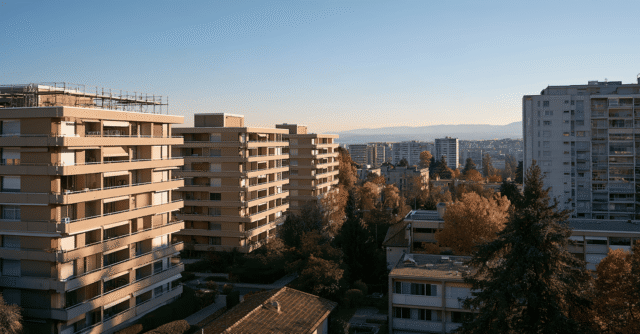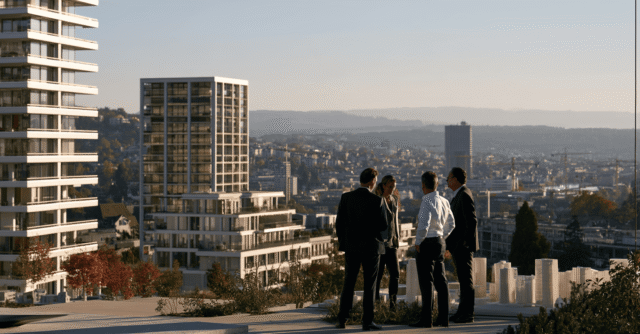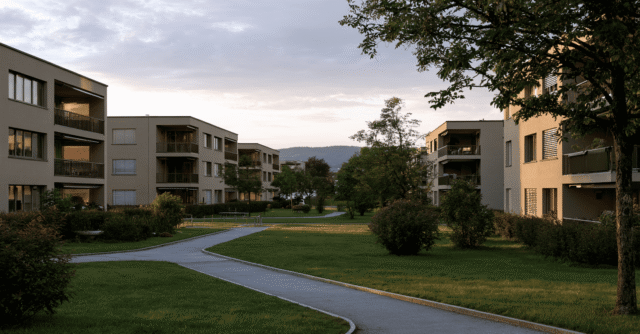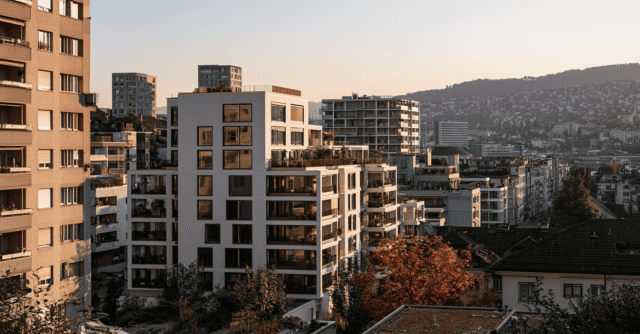
Between 2022 and 2025, the City of Zurich, together with its foundations, acquired 47 properties for a total of 1.3 billion Swiss francs. For 2026 alone, 600 million Swiss francs have been allocated in the budget for real estate purchases. By 2029, a total of over 6 billion Swiss francs is expected to flow into the real estate market through municipal foundations. The goal behind this has political legitimacy. In 2011, the people of Zurich voted in favor of ensuring that one-third of all rental apartments would be non-profit by 2050. Today, that share stands at 27 percent and has been declining.
The Silent Competition
Four municipal foundations are active in the market: PWG, SAW, SFW, and SEW. They all receive non-repayable funds from the city—contributions they do not have to repay. This gives them a structural advantage. They can submit higher bids in competitive bidding processes than their own financial strength would allow. Private cooperatives cannot do this. As the NZZ reports, sellers are aware of this mechanism. Anyone seeking to achieve the highest price invites the city and the PWG to participate in the bidding process.
Same Goal, Unequal Weapons
This is particularly upsetting from the perspective of affected cooperative members, as both municipal foundations and private cooperatives rent out properties based on the principle of cost-based rent. The nonprofit purpose is identical. Only the means differ. FDP City Council member Emanuel Tschannen from District 7 calls this a misguided political development and, according to the NZZ, demands that the city coordinate which entity bids on which property.
Coordination Fails Due to Contracts
Coordination sounds reasonable, but it is difficult in practice. Bidding processes are regularly subject to confidentiality obligations. The PWG itself states that coordination is prohibited due to such clauses. The Regional Association of Zurich Cooperatives puts this into perspective, noting that many properties the cooperatives seek to purchase are never even put up for public tender, and that the properties that are publicly tendered are usually simply too expensive for them.
Political Will, Unclear Consequences
The SP views the city’s real estate budget as a target that should be fully utilized and wants to allocate an additional 500 million francs to the PWG. It does not see this as a competition issue. However, even SP President Oliver Heimgartner notes that the city should avoid situations in which nonprofit organizations compete with one another. This sounds like an admission and points to an issue that will continue to occupy Zurich for a long time to come.