For a long time, robotics was seen as a race for precision, speed, and autonomy. Today, that logic is no longer sufficient. A team led by Empa researcher Mirko Kovač, together with Barbara Mazzolai from the Italian Institute of Technology and Seokheun Song from the Daegu Gyeongbuk Institute of Science and Technology, is focusing on a new question: What role should robots play in building a sustainable future?
More Than Just Green Technology
Until now, “green robotics” has only reduced the ecological footprint of machines. That’s not enough for the researchers. Barbara Mazzolai advocates drawing inspiration from nature, which delivers maximum performance with minimal energy and material consumption. Robotics should actively solve problems, not just cause less harm.
Three Principles for the Future
The manifesto is based on three guiding principles. “Minimally invasive” means keeping environmental impacts to a minimum, for example through compostable electronics. “Universally accessible” means not reserving technology solely for wealthy regions. “Symbiotic” is the most ambitious goal; it’s about regeneration and mutual benefit for people, the environment, and the economy.
From Theory to the Waters of the Rhine
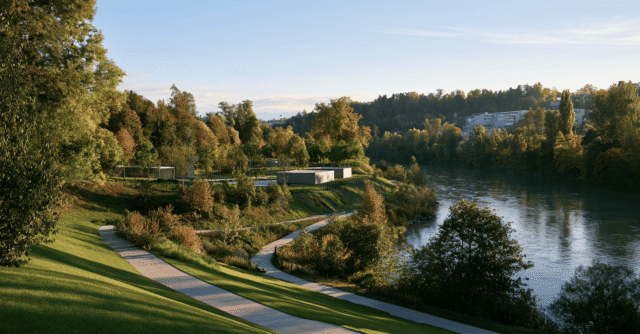
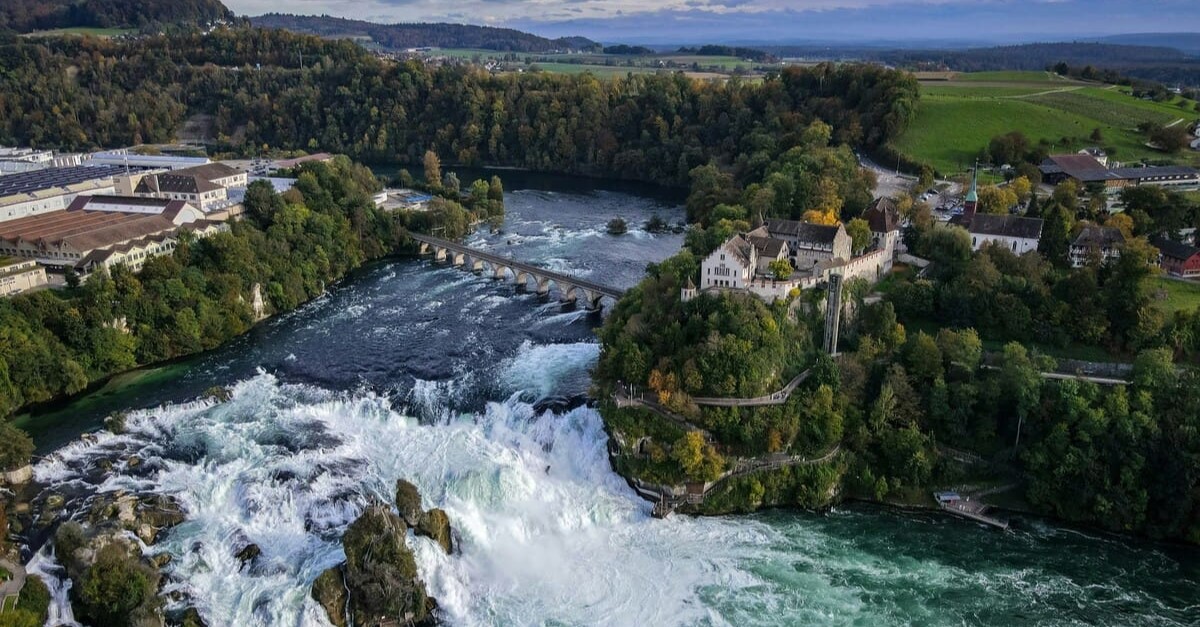
What begins as a manifesto in a specialized journal is already taking shape in Schaffhausen. A drone buzzes briefly in the air, disappears into the Rhine, resurfaces dripping with a water sample, and lands gently on the bank. Scenes like this are still the exception today, but they are set to become part of everyday life soon. Kovač, who heads the Laboratory for Sustainability Robotics at Empa and conducts research at EPFL, sees Schaffhausen as the key region for this development.
A Center of Excellence Is Taking Shape
Empa is establishing a Center of Excellence for Sustainability Robotics in Schaffhausen as an extension of the lab, the “DroneHub” in Dübendorf, and the planned “AeroAquaArena.” Before robots can operate under extreme conditions in Greenland or in urban canyons, they must be tested under real-world conditions, says Kovač. That is precisely what Schaffhausen is intended to provide, with tests involving wind, currents, and unpredictable environmental factors.
Why Schaffhausen Is the Right Setting
The region offers rare locational advantages. Unique biodiversity featuring the Rhine and the Randen, a strong economic hub with many high-tech companies, and close proximity to government agencies and economic development organizations create ideal conditions. Initial discussions with software manufacturers, sensor developers, and local schools are already underway.
The Roadmap for the Next Five Years
Empa and the canton plan to collaborate with Schaffhausen-based companies to develop, validate, and implement robotic solutions for environmental sensor technology—for example, in water quality and biodiversity measurements. Suitable locations throughout the canton will be equipped with sensor technology for this purpose. In the long term, sustainability in robotics should become as standard as safety standards are today, with a clear measure of success: the positive contribution to ecosystems, infrastructure, and quality of life.