“New Zurich”: The Zurich Airport Region Seeks Its Next Step in Development
FRZ (Zurich Airport Region) is launching “New Zurich,” a development strategy for one of Switzerland’s most dynamic economic and living environments. The approach is ambitious: The airport region should no longer be viewed merely as a metropolitan area, a source of jobs, or an extension of the city of Zurich, but rather as an independent, polycentric urban landscape with international appeal.
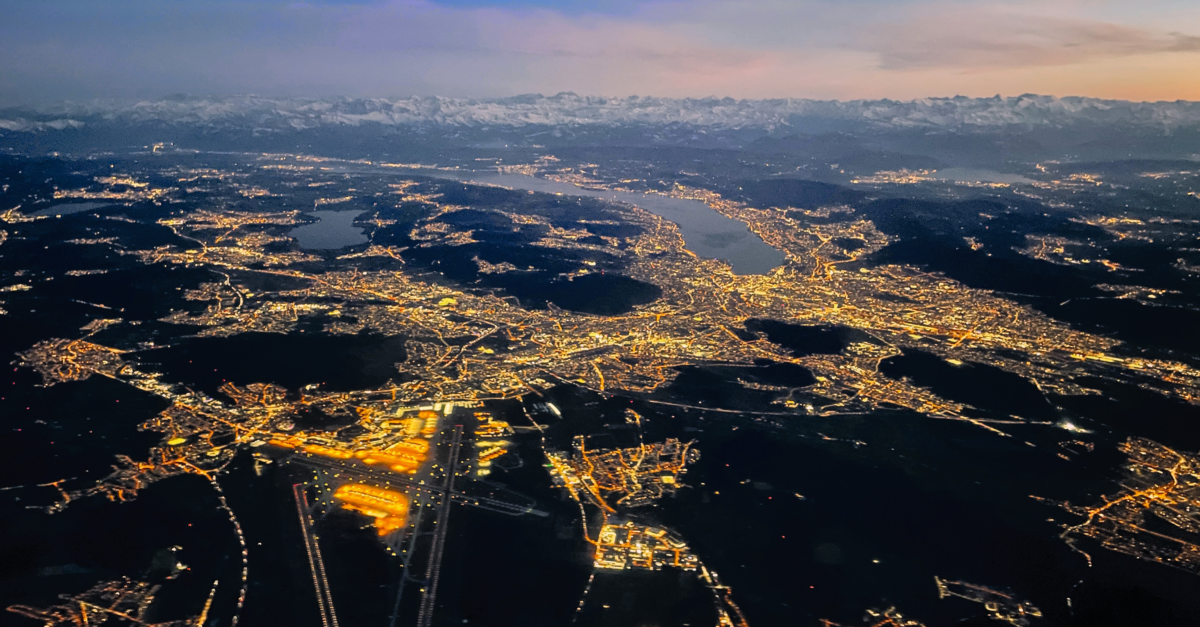
The wider region is home to approximately 300,000 residents and offers over 200,000 jobs. It combines international connectivity, a high concentration of businesses, research and innovation hubs, new urban neighborhoods, and high-quality residential and recreational amenities. The strategy report refers to a “cityscape surrounded by greenery” and describes “New Zurich” as a functionally interconnected area that has long since outgrown municipal boundaries.
But this is precisely where the central question lies: Is “New Zurich” merely a new name for a long-established growth region—or can it actually succeed in transforming today’s momentum into greater quality, better coordination, and new locational strengths?
The FRZ emphasizes that “New Zurich” is not intended to initiate new political structures or municipal mergers. Rather, the focus is on coordinated regional development with a long-term perspective. This is crucial, as the airport region is institutionally fragmented: numerous municipalities, divergent interests, scarce land, growing mobility demands, and high expectations for quality of life all converge here. The strategy must therefore demonstrate whether cooperation across municipal boundaries can be organized in a sufficiently concrete manner.
“New Zurich” is particularly relevant for the real estate sector. Many office and commercial areas in the region are showing their age. The development strategy calls for the targeted revitalization of older office locations. This involves flexible floor plans, activated ground floors, new communal spaces, and uses such as labs, FabLabs, and innovation hubs. From a real estate perspective, this is one of the most exciting aspects: the region is focusing not only on new growth but also on the revitalization of existing spaces.
Another key consideration is the question of the quality of growth. The airport region benefits from Zurich Airport, the S-Bahn, the Glattalbahn, strong companies, the Switzerland Innovation Park Zurich, and new urban neighborhoods. At the same time, issues such as traffic, noise, densification, land use, and quality of life are on the table. “New Zurich” will only be more than a location label if it succeeds in combining economic dynamism with quality of life and sustainable spatial development.
The strategy centers on five areas of development: digitalization and ICT, aviation and the space economy, corporate headquarters and international business functions, conferences and events, and health and life sciences. Plans include an ICT Academy, stronger integration with the Switzerland Innovation Park Zurich, a competency map for aviation and aerospace, pilot projects for older office spaces, and positioning the region as a standalone convention and event destination.
Here, too, a positive yet challenging question arises: Can these areas of development truly work together—or will they remain isolated initiatives? It is precisely the combination of innovation, real estate development, corporate functions, conferences, health, and mobility that could give the airport region a clearer profile. However, this depends on the strategy giving rise to concrete projects.
The FRZ has announced that, in the coming months, it will work with cities, municipalities, companies, academia, and other partners to flesh out these development areas. The goal is to secure lead partners for each area who will support implementation technically, organizationally, or financially.
This marks the transition of “New Zurich” from concept to implementation. The critical questions are valid: How much substance lies behind the term? How binding will the collaboration be? How will the region address land use, transportation, noise, and densification? And what concrete benefits will the strategy bring to municipalities, businesses, the public, and the real estate sector?
Precisely because these questions remain open, “New Zurich” is relevant to the region’s development. The strategy makes it clear that the Zurich Airport region is no longer merely an intermediate space between the city, the airport, and the metropolitan area. It has become an independent economic and living space—and now faces the task of shaping this growth in a more conscious, high-quality, and coordinated manner.