The market is sending out an SOS
The German real estate market isn't sending a faint signal—it's sending a loud one. Surveys, indices, and cancellation rates all point in the same direction: sentiment is shifting. This time, it’s hitting residential construction the hardest. Fears of regulation, a smoldering conflict in the Middle East, and the ECB’s first interest rate hike since 2023 are hitting an industry that had just begun to recover.
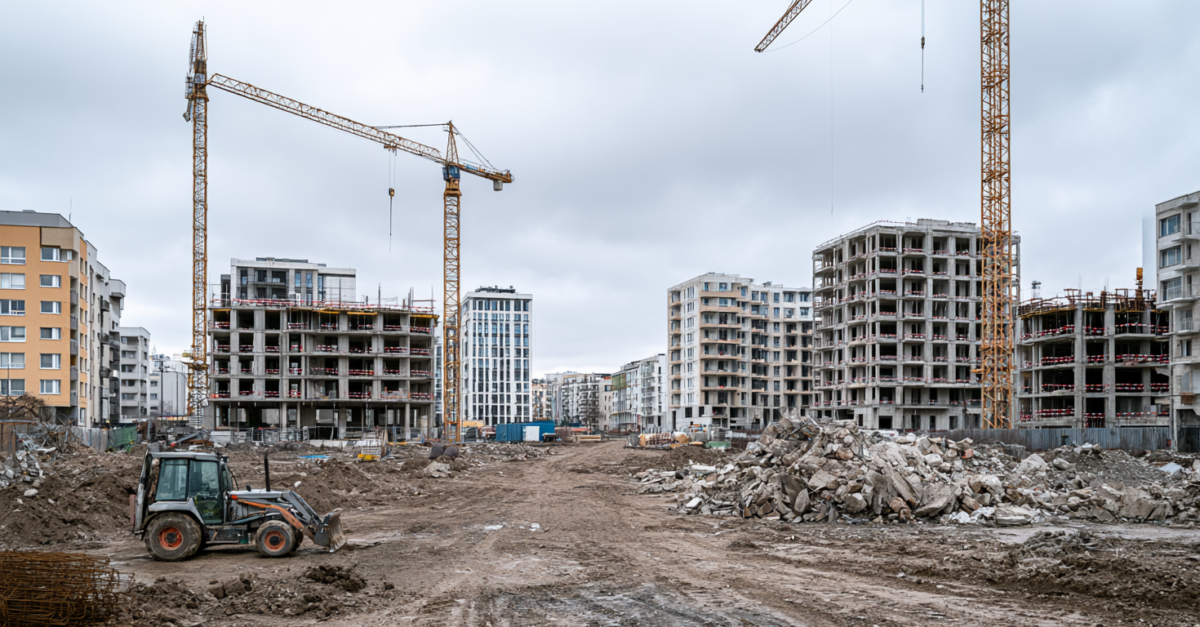

The Ifo Business Climate Index for the construction sector fell from minus 28.2 to minus 29.3 points in May. According to Klaus Wohlrabe, head of the Ifo survey, many companies do not expect a noticeable recovery in the market. The cancellation rate rose from 10.8 to 11.7 percent, a sign that customers are holding back on projects or abandoning them altogether. The share of companies reporting a shortage of orders remained high at 42.2 percent.
PMI signals contraction
The Purchasing Managers’ Index for the entire construction sector stood at 42.4 points in May, well below the growth threshold of 50. The sharpest decline was recorded in residential construction, followed by commercial construction. Civil engineering saw its first decline in seven months. Supply bottlenecks caused by the Middle East conflict extended lead times to levels last seen in July 2022. Subcontractors were used significantly less frequently, purchase volumes were scaled back, and jobs were cut.
Regulation as a Catalyst
The ZIA Real Estate Sentiment Index plummeted by 17.5 points to minus 2.0. The Expectations Barometer collapsed by 27.8 points to minus 11.4. “This slump in sentiment is not a mere market glitch, but a loud alarm signal to policymakers,” says ZIA President Iris Schöberl. The debate over tightening rent regulation is particularly burdensome. While the amendment to the Building Code facilitates planning, it does not trigger investment, warns the Central Association of the German Construction Industry.
Where investment is still taking place
Not all segments are suffering equally. Renovations of existing buildings, senior housing, and repurposing are becoming more attractive compared to new construction projects. Data centers, logistics properties, and light industrial properties are considered particularly resilient. Healthcare real estate is benefiting from demographic change and growing demand. Those investing today are doing so strategically and avoiding traditional new residential construction.
What the industry is calling for
The Central Real Estate Committee and the construction industry know that faster approvals, stable financing conditions, simpler construction processes, and fewer regulatory hurdles are needed. Politicians have heard the demands, but have not yet acted. As long as uncertainty dominates the decisions of developers and investors, the housing shortage will remain a structural problem without a structural solution.