Berlin continues to bang its head against a political brick wall
Despite the rent register, the debate on expropriation and the electoral risk, major rental housing projects are continuing to get under way in Berlin. The reason is straightforward, yet risky for developers. Demand remains high, but political uncertainty and rents exceeding 20 euros per square metre are putting massive pressure on privately funded new-build projects.
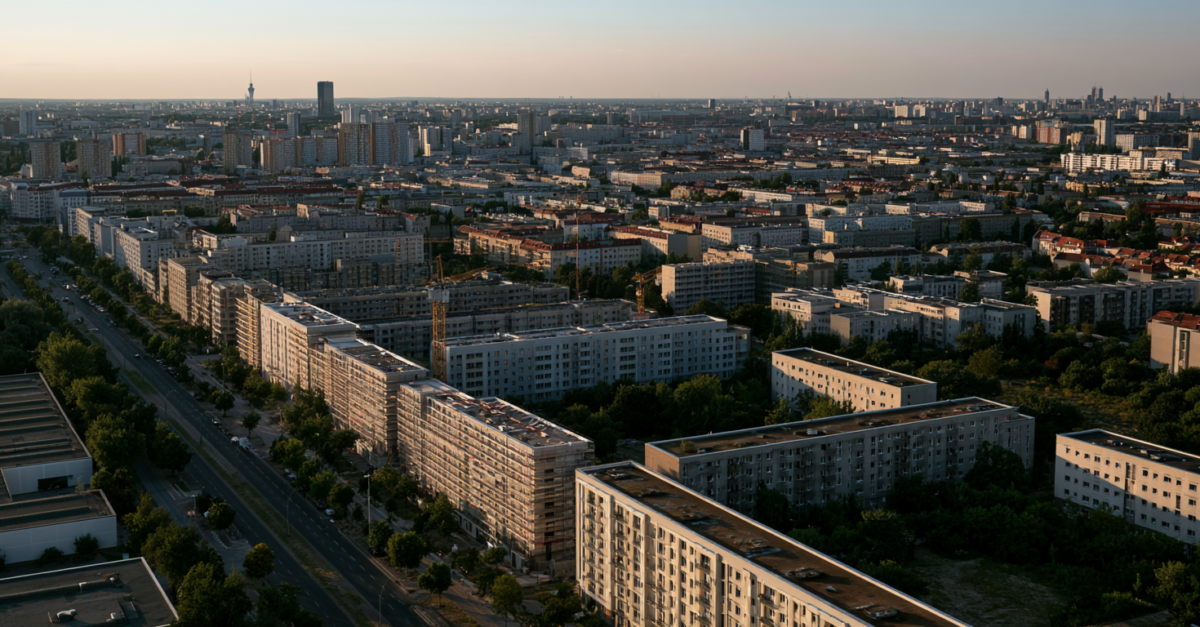

Berlin is keeping the construction of rental housing going, even though the political climate is becoming harsher for private investors. In July 2026, the House of Representatives passed the Rent Register and, at the same time, the Simplified Building Act. This means that tighter regulation and the streamlining of procedures are coming into direct conflict with one another.
This contradiction is evident on building sites. In June 2026, Primus announced the topping-out ceremony for 291 rental flats in Pankow and revealed a joint venture for further rental flats in Schöneberg. The company also points to a pipeline totalling 2,800 rental flats in Berlin that are either planned or under construction. At the same time, Instone is planning around 640 flats with approximately 42,500 square metres of living space on the former site of the Schlosspark Clinic in Charlottenburg. Construction is scheduled to begin in 2028, with completion in 2033.
Completions plummet
Nevertheless, the official figures do not give cause for complacency. According to the Berlin-Brandenburg Statistical Office, the number of housing completions fell again in 2025. The Berlin Senate put the number of flats completed in 2025 at around 11,000, whilst at the same time issuing nearly 14,000 planning permissions for flats. This means the state’s coalition agreement target of up to 20,000 new flats per year has clearly not been met.
So why is construction continuing? The key factor is scarcity. Berlin has once again officially classified the housing market as ‘tight’ since 1 January 2026. For developers, there is the added factor that institutional capital is once again increasingly seeking residential property, whilst other types of development have become more difficult. It is precisely this shift that drives projects forward, even when marketing becomes more challenging.
Politics remains the greatest risk
The Senate promises relief with the ‘Fast-Track Construction Act’, which has been in force since December 2024. The ‘Simple Construction Act’ came into force on 23 July 2026 and is intended to further streamline procedures and standards. At the same time, Berlin is increasing the level of intervention in the rental market with the new Housing and Rent Register. Ahead of the House of Representatives election on 20 September 2026, it therefore remains to be seen whether privately funded rental housing construction is heading towards further acceleration or even more regulation.
A second problem is already having an impact on the market. According to industry figures, asking rents for privately funded new-build properties are often well over 20 euros per square metre. Whilst this increases profitability on paper, it pushes many households to their financial limits in reality. For project developers, therefore, the decisive factor is not only planning law, but increasingly the question of whether compact floor plans and affordable total rents can still secure sufficient demand.