

The Cantonal Government has approved the comprehensive revision of the cantonal structural plan and referred it to the Cantonal Assembly for deliberation. The structural plan sets out how the canton is to develop spatially. It is binding on the authorities and provides a common direction for municipalities, the canton and other planning bodies.
The figures highlight the urgent need for action. A growing population means increasing demand for housing, transport, schools, amenities and jobs. Above all, however, competition for scarce land is intensifying.
Inward growth
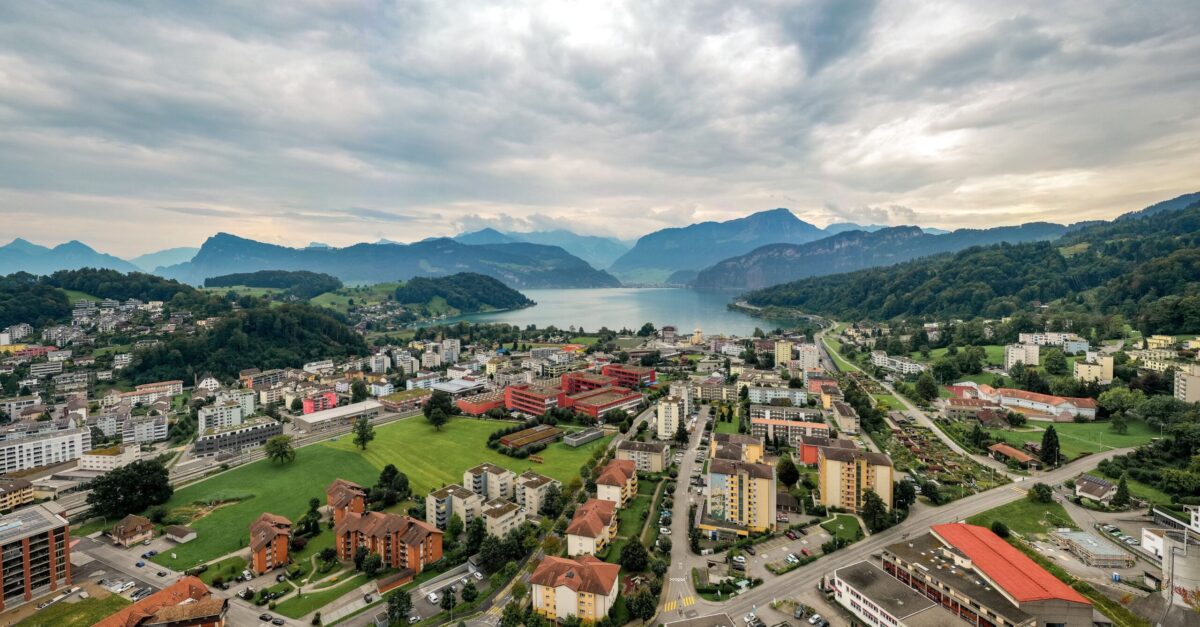
The revised master plan focuses on compact settlements and the prudent use of land. New developments are to be prioritised in areas where infrastructure, public transport and amenities are already in place. The aim is to limit urban sprawl and manage growth spatially.
This strategy presents local authorities with challenging tasks. Urban densification requires compelling projects, open spaces and a high quality of life. Where development becomes denser, the demands on transport, public spaces and community life also increase. The structural plan sets the framework. However, the actual quality is shaped at local level.
Land becomes an economic issue
At the heart of the revision are the availability of housing, employment areas and a more proactive land policy. This is crucial for Lucerne as a business location. Businesses need sites with development potential; local authorities need attractive jobs; and employees need affordable housing within easy reach.
Land policy thus becomes an instrument of location policy. Those who secure, develop or reserve land for specific uses at an early stage help shape the economic future. The canton aims to link spatial planning and location development more closely. This will enable existing land to be utilised in a more targeted manner and new land to be created in line with demand.
More politics in spatial planning
From now on, the Cantonal Council will decide on the key spatial development objectives and strategic directions of thestructure plan. The Cantonal Government will then issue the further chapters of the structure plan and the structure plan map based on these decisions. This will give greater weight to the political debate on long-term spatial development.
Spatial planning determines which areas will grow, where open spaces will be preserved, and how housing, work and mobility will interact in future. This enables sustainable development for the economy, the environment and society.
The next step
The Cantonal Council will debate the proposal in autumn 2026. The government will then review and amend the structure plan before submitting it to the Federal Council for approval. The process is expected to be completed in 2027.
The structure plan does not create housing or jobs. However, it sets out the conditions under which both can be developed. For Lucerne, the issue by 2050 is not just about a growing population. It is about how the canton provides space for its people.
Where Lucerne wants to expand
More Articles
Kaltbrunn is building nearly 300 new apartments
Kaltbrunn is poised for a significant growth spurt. In the major development areas “Im Dorf” and “Günterstall,” as well as in several smaller projects, a total of nearly 300 additional…
Residential pipeline drives new funding round to 203 million
The Akara Swiss Diversity Property Fund PK real estate fund will launch its 18th capital increase on November 11, 2026, with a maximum volume of 203 million Swiss francs. The…
Winterthur Struggles with Urban Densification and the Transportation Transition
Winterthur will vote on the completely revised municipal master plan on November 29, 2026. The proposal combines densification along the urban backbone, new open-space corridors, and a major shift in…
Thalwil has 58 affordable flats up in the air
Three appeals are holding up the start of a 33.895-million project in Thalwil comprising 58 affordable flats on Breitelistrasse. Instead of 2026, construction of the new building to replace the…
Yields on residential property continue to rise, whilst offices come under pressure
Across Switzerland, both residential rents and prices for multi-family properties continued to rise in the third quarter of 2026. At the same time, office rents are falling, and even the…