There is a shortage of 200,000 apartments
Zurich has a housing problem. That’s common knowledge. What’s less well known is why it has become so severe and who is responsible for it. ETH lecturer Sibylle Wälty says: “It’s not a market issue, but a political refusal.” And the new building and zoning regulations are making it worse, not better.
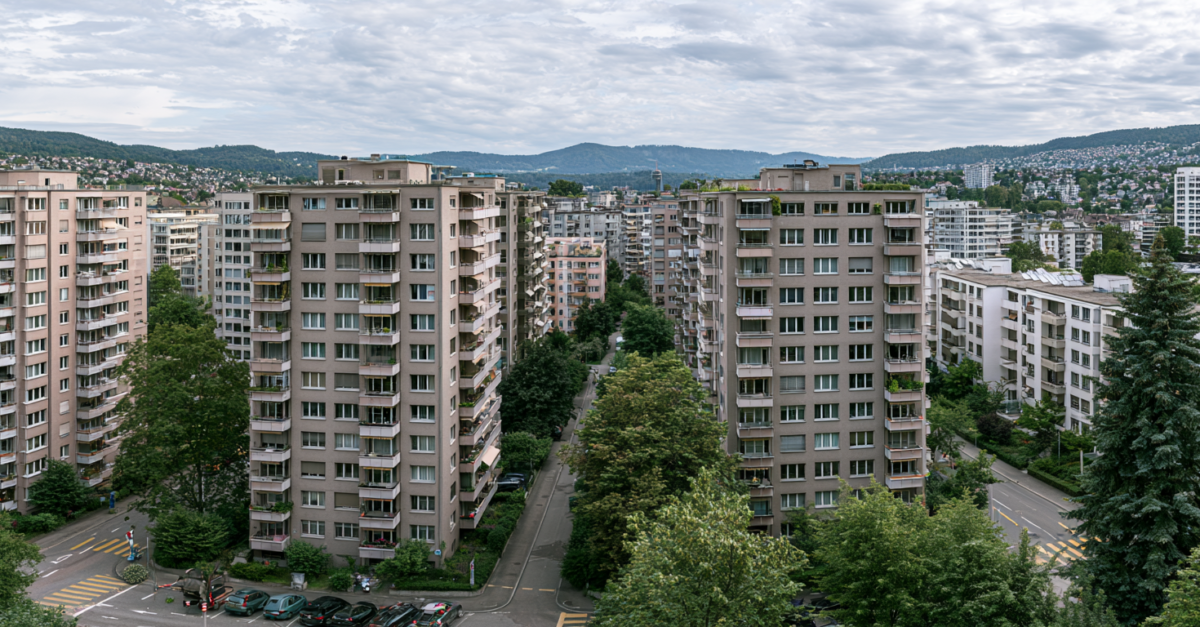

The price per square meter in Zurich has roughly quadrupled over the past fifteen years. Anyone renting a new apartment today pays up to 50 percent more than a neighbor who moved in earlier, because supply and demand have been drifting apart for decades. The number of jobs in Zurich has doubled since the 1960s, while the population has barely changed. Wälty estimates the resulting shortfall at around 200,000 housing units.
The Spatial Planning Act as a Turning Point
The 2013 revision of the Spatial Planning Act was intended to halt urban sprawl and promote densification. That promise was not kept. What has been curbed on the outskirts of cities is not being replaced to the same extent within city centers. In Zurich, there is hardly any undeveloped building land left, and the transformation of industrial areas is largely complete. At the same time, demand continues to grow, further driven by additional jobs created through federal and cantonal investments in the city center.
The New Zoning Regulations: A Missed Opportunity
For the first time in decades, Zurich has comprehensively revised its building and zoning regulations. Wälty sees thisasboth a historic opportunity and a missed chance. The creation of housing is not being made easier, but rather more difficult. Even nonprofit foundations seeking to build affordable housing are encountering new obstacles. ETH Zurich has been conducting research for years on how urban development can be shaped in a democratic, sustainable, and equitable manner, but policymakers have not consistently followed this research to date.
Regulation in the Wrong Order
Tenant protection is legitimate, but it is no substitute for new construction. Switzerland faces a problem: it regulates existing housing stock before sufficient new housing is built. Those who have an affordable apartment no longer leave it, even if it no longer suits their needs, because any alternative would be more expensive. Those looking for a new place can’t find anything. Current tenants are stuck, while potential city dwellers commute from the surrounding suburbs. Gentrification and evictions are on the rise, and affordable housing is disappearing.
Flawil shows how it’s done
In Flawil,the ETH spin-off Resilientsy, together with the municipality, developed three scenarios for local development and discussed them with the community in a participatory process. More than 90 percent of participants voted in favor of a comprehensive redevelopment of the town center. Older homeowners recognized the benefits for estate division, and local businesses stand to gain from increased foot traffic. What works in a municipality of 10,000 residents is also conceivable in Zurich—if policymakers are willing to even ask the question.