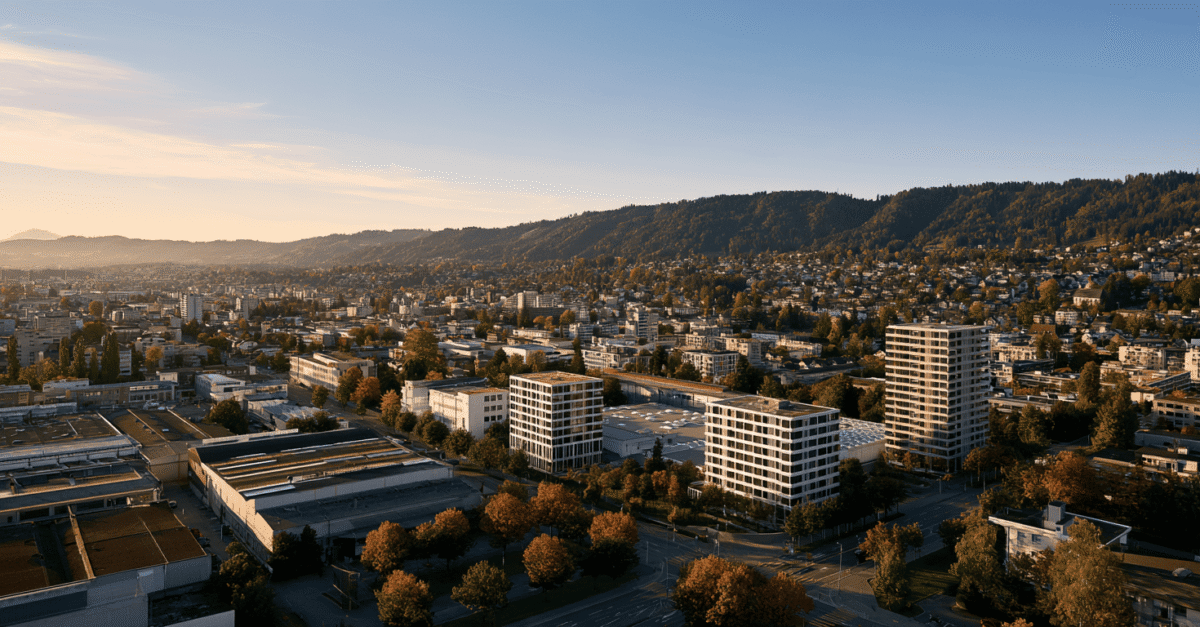

According to the new study, the key to achieving this does not lie in the demolition of commercial buildings, but in the use of vacant sub-plots within existing sites. The study initially identifies space for around 16,000 flats across 1,245 plots in 115 municipalities. With more intensive use of suitable land, the potential rises to more than 20,000 units for around 42,000 people.
This comes at a time when the housing market remains tight across Switzerland. According to the Federal Statistical Office, the vacancy rate fell below 1 per cent in 2026. In the canton of Zurich, according to cantonal figures, it stood at 0.52 per cent in June, and in the city of Zurich it was as low as 0.11 per cent. At the same time, net housing production in Switzerland has recently remained well below previous peak levels.
Growth is eating into new-build output
IAZI puts net housing production – taking into account new builds, conversions and demolitions – at around 41,000 flats, down from around 55,000 units in 2018. For the canton of Zurich, the study cites a projected shortfall of around 2,400 flats between 2023 and 2025. In 2025, the permanent resident population there grew by around 13,000 people, or 0.8 per cent.
This pressure is evident not only in market rents but also in the geographical shift in demand. As moving house becomes more expensive and central locations remain in short supply, cities and economically strong centres come under additional strain. This is precisely where the proposal comes in: to make use of existing settlement areas in a denser and more functionally mixed way.
Spatial planning is becoming a bottleneck
The focus is on industrial and commercial sites, where the addition of residential use is currently often only possible to a limited extent. The study therefore argues for the further development of spatial planning so that local authorities can permit residential use on suitable sites without designating new building zones. At the same time, it identifies clear constraints such as natural hazards, aircraft noise and operational requirements regarding access roads, deliveries, outdoor areas and future development opportunities for local businesses.
Regionally, the potential is unevenly distributed. For Winterthur, the study identifies around 1,200 potential flats. Uster and Volketswil together account for around 1,500. According to the study, if this reserve were actually utilised, it could meet demand in the canton of Zurich for around nine years.