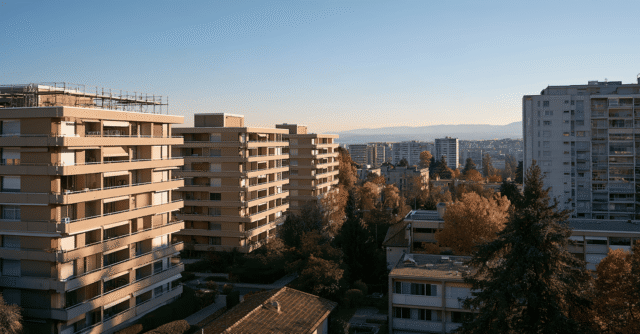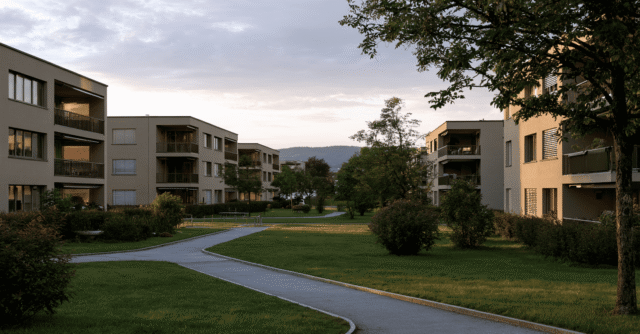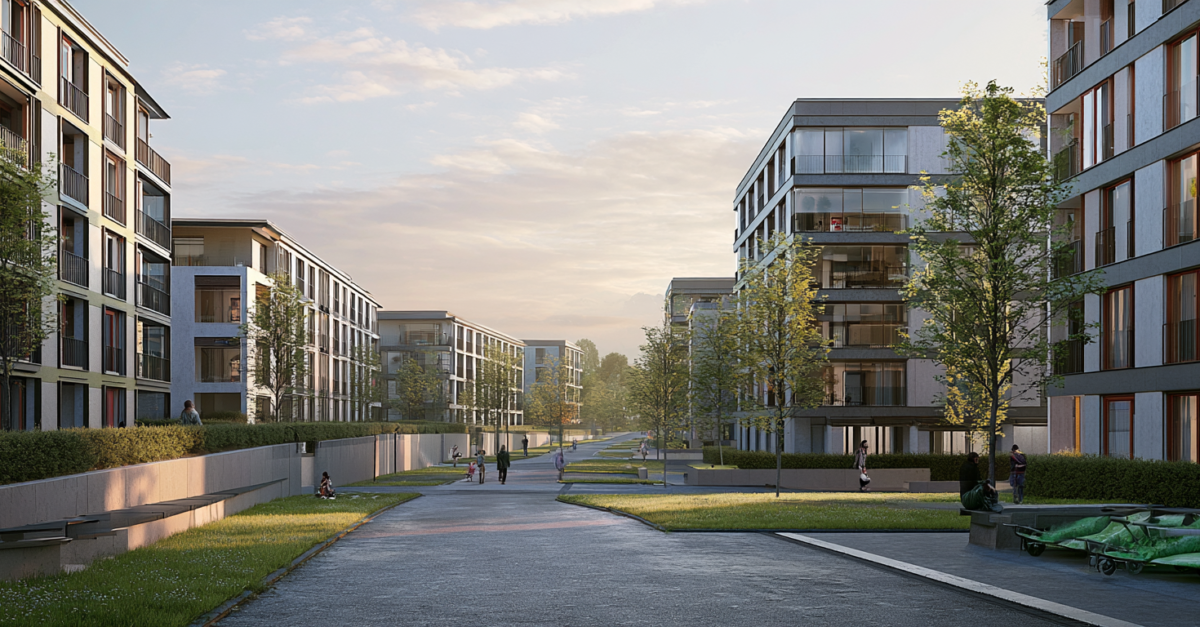

At Libellenhof near Lucerne—a housing complex with about 100 apartments near the cantonal hospital—the rent decreases with each additional person in the household. WBG President Andreas Bucher sums it up: a model like this has never before existed with such clarity anywhere in Switzerland.
Here’s how it works
A 4.5-room apartment measuring about 106 square meters costs 3,140 francs gross for a single person. A couple pays 2,940 francs, a family of four pays 2,540 francs, and at maximum occupancy of five people, the price drops to 2,340 francs. This means there’s a difference of 800 francs per month between a single person and a large family.
Space should go where it’s needed
The cooperative calls its concept the “Life Mobility Model” and pursues a clear goal: large apartments should primarily benefit families. The so-called occupancy subsidy is recalculated annually; if the number of people in the household changes, so does the rent. When children eventually move out, the rent for the parents increases again, unless they move to a smaller apartment.
Demand Exceeds Expectations
Shortly after the marketing campaign began, the success was already evident: around 90 percent of the 4.5-room apartments have already been allocated to families. Singles and couples deliberately pay the full rent, thereby helping to finance the discounts for larger households. Bucher calls this a necessary form of cross-subsidization, without which such subsidies for families simply could not be afforded.
An Investment with a Long-Term Perspective
Bucher admits that managing the model is challenging, but he believes the effort will pay off in the long run. This way, apartments can be repeatedly allocated over the years to those households that actually need the space. The entire Libellenhof project, spanning several construction phases, will comprise up to 238 apartments, with completion scheduled for 2029.