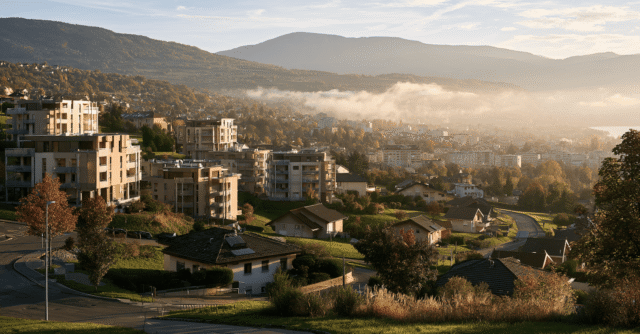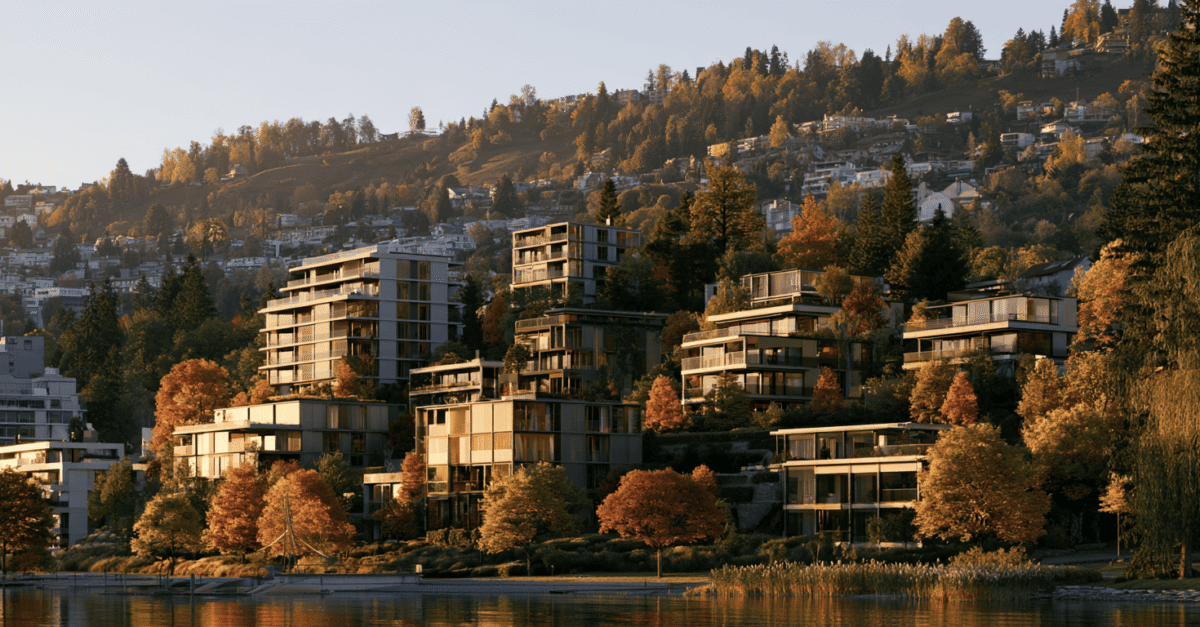

The pressure stems from a market that has offered little breathing space for years. Zug ranks amongst the areas with the highest vacancy rates in Switzerland, whilst the government itself cites lengthy planning processes, objections, a shortage of available building land and declining profitability as factors holding back new supply.
This is becoming particularly problematic for older households. After retirement, earned income falls, whilst the relief provided by low taxes has less of an impact than during working life. At the same time, rent levels remain high. Particularly in a canton where competition for housing is fierce, this situation can become unsustainable even for large sections of the upper middle class.
Housing strategy to tackle an acute crisis
The canton of Zug is attempting to counteract this. The Housing Policy Strategy 2030 aims to create more homes and more affordable housing. This includes consultations on densification in detached-house neighbourhoods, amendments to the Planning and Building Act, and a temporary special zone designed to enable the construction of as many additional homes as possible. In this so-called ‘White Zone’, at least 40 per cent of the homes must be affordable.
The political will is there, but it remains to be seen how quickly this will take effect. The partial revision of the Planning and Building Act entered the consultation phase in September 2026. It is therefore clear that key instruments have not yet been implemented. For owners, developers and local authorities, this means that whilst greater flexibility is being prepared, the bottleneck in the housing market will persist for the time being.
Demand remains high
Relieving the pressure is also difficult because the location continues to attract new demand. In September 2026, Vontobel announced a new campus in Baar, due to open in 2030. Such expansions intensify the pressure on a housing market that is already characterised by affluent newcomers and international demand.
This development is a sensitive issue for the property market because it not only exacerbates social tensions but also alters internal migration within the canton. When older Swiss households move away from a high-price location whilst higher-income groups move in, housing policy shifts from being a marginal issue to a location factor with a direct impact on the demographic structure.