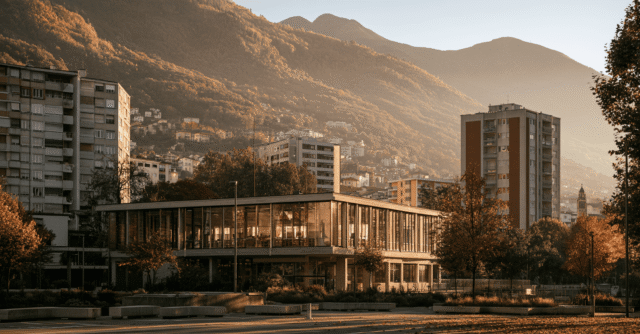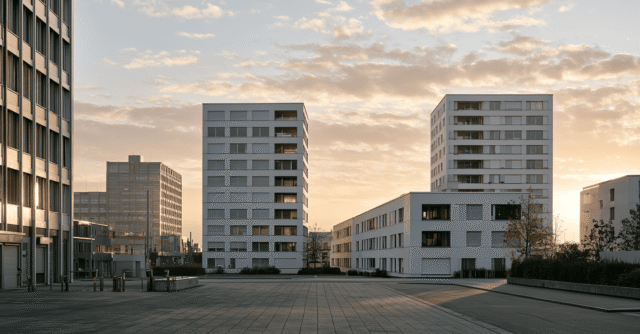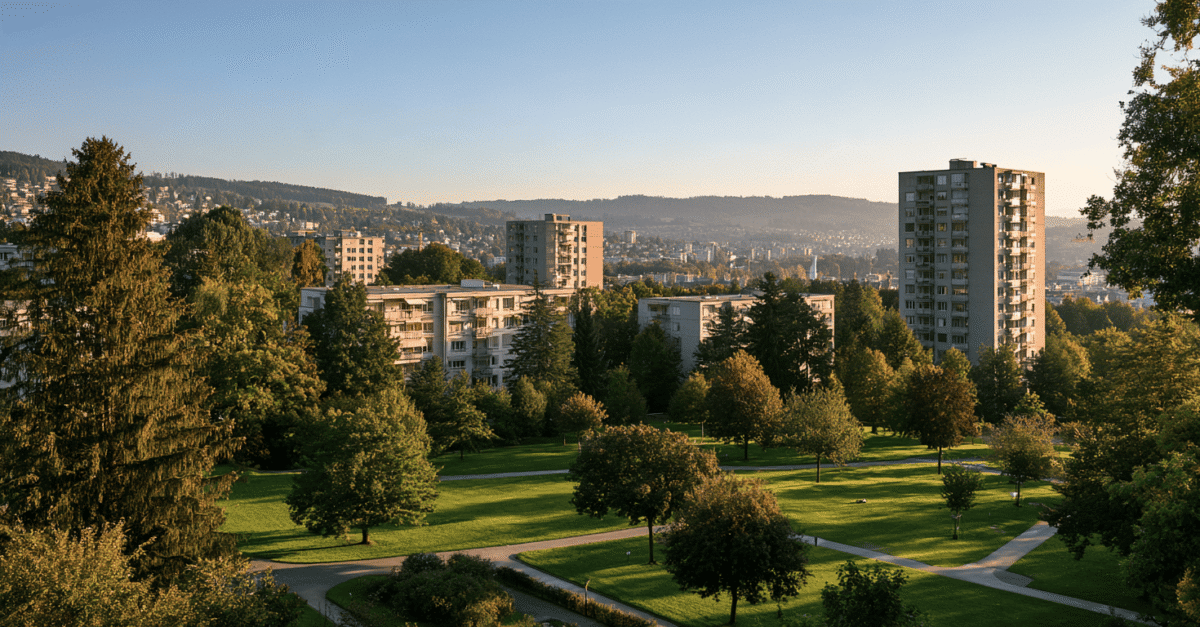

As at 27 October 2026, the project planning has been completed and the project is in the approval phase. Demolition and construction of the first phase are expected to begin in spring 2027, with the first flats due to be ready for occupation in 2029. The second phase is scheduled for completion by 2034.
On the site, which covers around 39,000 square metres in Zurich-Oerlikon, the current 307 flats are to be replaced by 657 flats and commercial premises. This will more than double the housing supply. It is precisely this leap in scale that makes the project significant for urban development, as increased density here is not to be achieved by forcing residents to move out entirely.
Phased development rather than clear-cutting
The core of the project lies in its phased approach. As construction is taking place in two phases, some of the residents can move within the estate and remain in familiar surroundings. The Zurich Tenants’ Association therefore cites Frohburg as an example of how socially responsible replacement developments are also possible on private land.
Long-standing tenants who moved in before 2016 will be given priority for an equivalent new-build flat on highly favourable terms. It is expected that around 90 tenant households will be able to remain in the estate. Of the 657 flats, 106 are classified as affordable housing, with a further 36 designated for student accommodation. The affordable flats are deliberately being built first.
More flats, a clear vision
In addition to the extra housing, a café, a local shop and a municipal nursery are planned. The project also sets high standards in terms of energy efficiency. The replacement development is to be connected to the district heating network and built to the highest ‘Platinum’ standard under SNBS 2.0.
It remains to be seen, until the planning permission process is finalised, whether the timetable – with construction due to start in 2027 – will be met. However, it is already clear what Frohburg will be judged on. The decisive factor will be whether the combination of phased development, right of first refusal and affordable primary residences actually ensures that a significant proportion of the existing tenants remain in their homes.