The housing market remains strong yet vulnerable
The Swiss National Bank considers the residential property market to remain vulnerable in 2025, even though a nationwide correction has not materialised for years. At the same time, according to the Federal Statistical Office (FSO), prices rose again by 1.5 per cent in the first quarter of 2026. For owner-occupied property, the tight supply remains the main driver.
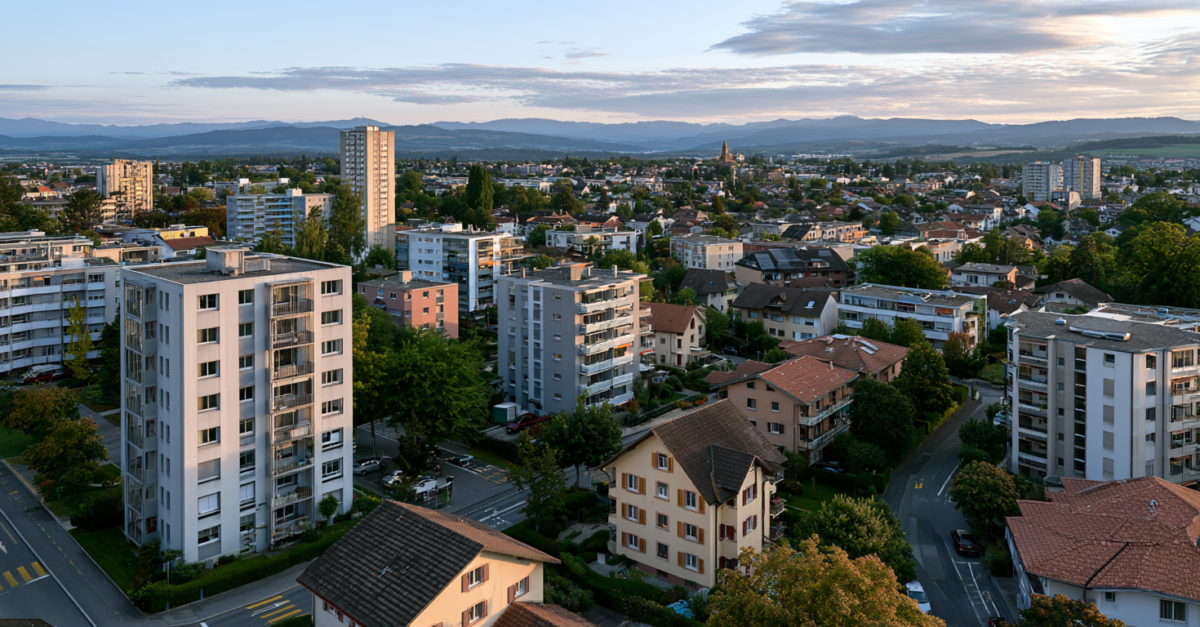

The warnings have remained, but the fall in prices has not. Whilst the Swiss National Bank has for years described the residential property market as vulnerable, house prices have recently risen once again. In the first quarter of 2026, the Swiss Residential Property Price Index rose by 1.5 per cent compared with the previous quarter, following an average annual increase of 4.6 per cent recorded in 2025.
This shifts the focus of the debate. The main question is no longer whether the National Bank has issued warnings too often, but rather what these warnings actually mean. The SNB does not claim to be able to predict the timing of a correction. Rather, it describes an increased vulnerability of the system – that is, the risk that an external shock or an abrupt rise in interest rates might hit a market environment that is already highly valued.
A warning is not a forecast
It is precisely this point that marks the difference, one that is often lost in the public debate. In its 2025 Financial Stability Report, the SNB notes that the price-to-rent ratios for residential properties in Switzerland are significantly above the long-term average. For the National Bank, this is an indication of increased vulnerabilities, not of an imminent price collapse. This interpretation also explains why the warnings have remained in place, even though the market has not yet experienced a major correction at national level.
For the property sector, this is more than just a matter of semantics. As long as interest rates, incomes, immigration and the supply of credit continue to underpin the market, high valuations can be sustained. However, this does not make the risk disappear; rather, it shifts the focus to the question of how resilient households, banks and project calculations would be in a stress scenario.
Scarce supply underpins home ownership
According to available data, the continued rise in prices is primarily due to the ongoing shortage of supply. Home ownership remains scarce in many regions, whilst new-build activity is insufficient to significantly ease the pressure. For developers, investors and property owners, this is a key point: the market is driven not primarily by euphoria, but by a structural shortage. This makes it resilient to moderate pressures, but not immune to major macroeconomic shocks.
Internationally, it is also evident that long periods of growth do not protect against setbacks. The BIS reported a real year-on-year price rise of 5.0 per cent for Switzerland as recently as the second quarter of 2025. At the same time, international data suggest that other markets can certainly turn downwards following years of booms when financing conditions change significantly. For Switzerland, this means that the absence of a correction does not disprove the SNB’s stance; it merely postpones the time horizon of the risk.
Implications for projects and financing
In practice, this presents a complex dual picture. On the one hand, residential properties and development sites remain stable in value and in demand in a tight market. On the other hand, high valuations alone do not justify giving the all-clear regarding financing, affordability assumptions and exit scenarios. The SNB’s key message therefore remains relevant, even if it is unpopular: it is not a crash that is certain, but the vulnerability in the event of a shock remains elevated.