Schwamendingen is trialling a cultural housing allocation scheme
A new replacement development comprising 154 co-operative flats is to be built on Wallisellenstrasse in Zurich-Schwamendingen. This case illustrates just how delicate the balance between affordable housing, cultural identity and tendering rules can become in a tight market.
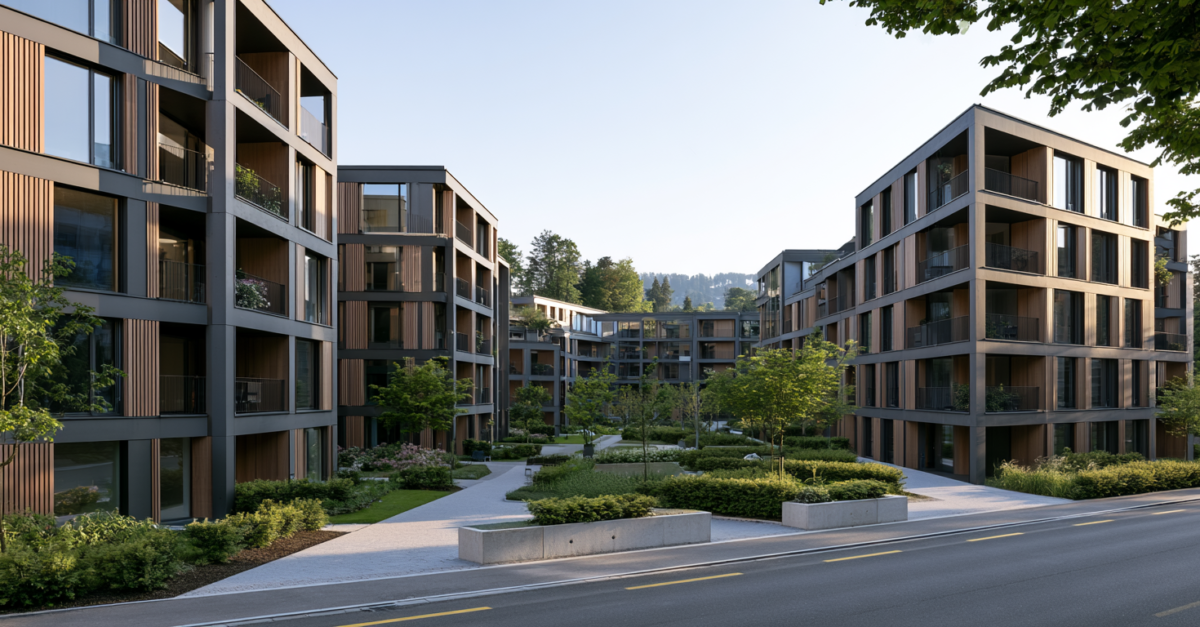

An unusual new co-operative housing development is taking shape in Zurich-Schwamendingen. On Wallisellenstrasse, the Zentralstrasse Building Co-operative plans to replace its existing housing estate and increase the number of flats from the current 76 to 154. The site is already designated as temporary until the replacement building is completed. What is controversial is not so much the increase in building density as the question of to what extent such a project may tie the allocation of flats to a cultural community.
The project has two main aims: to provide more affordable housing and to establish a permanent home for the Romansh diaspora in Zurich. The Ambassada Rumantscha Turitg is an existing association intended to serve as a cultural anchor. Publicly available information suggests that the area around Wallisellenstrasse is in any case facing major changes. The City of Zurich has long designated the area as a development zone between Oerlikon and Schwamendingen.
Redensification with a delicate additional question
From a property market perspective, the project is, at first glance, a typical replacement development: old stock, higher land utilisation, more flats, new open spaces and a more sustainable long-term settlement concept. In Schwamendingen, this redevelopment has been evident for years. With the regeneration of the neighbourhood around Überlandpark and Wallisellenstrasse, pressure on older, affordable housing stock is mounting further. It is precisely for this reason that the social rationale behind letting becomes the real litmus test.
There is discussion as to whether the flats should initially be advertised in Rumantsch and thus specifically allocated within the Romansh-speaking community. Such pre-selection would be politically and in terms of housing policy a sensitive issue. Co-operatives are permitted to refine their profiles and make programmatic use of communal spaces. However, the tighter the market, the more closely it is scrutinised whether a new non-profit development is allocated in an open, transparent manner and in line with the funding mandate.
The site has long been part of a larger redevelopment project
As for the location itself, the project fits into a well-known development. The town’s urban development strategy has for years envisaged significant structural changes for Wallisellenstrasse. At the same time, documents from the co-operative show that the Wallisellenstrasse Süd housing estate is only being managed on a temporary basis until the replacement development is completed. This suggests that preparations for the redevelopment are well under way, even though, according to publicly available information, no final decisions have yet been made regarding the timetable, planning permission procedures or definitive letting rules.
This makes Schwamendingen a concrete test case. The project can demonstrate how cultural infrastructure and social housing can be combined without giving rise to suspicions of a closed-off tendering process. For Zurich, this is more than just a niche issue. In a market with a chronic housing shortage, people expect not only additional housing but also transparency regarding who will ultimately be allocated it.