
In Pregassona, an existing housing project is set to evolve into a more cohesive neighbourhood regeneration scheme. Artisa has submitted a planning application for the section between Via Ceresio and Via Giuseppe Maggi, with the aim of completing the development of the Parco Ceresio site. This move is significant for Lugano because it involves not only additional flats but also the reorganisation of a prominent part of the city, encompassing the street frontage, internal spaces and open spaces.
The project builds on existing developments that are already visible in the neighbourhood. On its website, Artisa lists Parco Ceresio in Lugano as an ongoing project comprising a total of 89 flats. At the same time, flats in the already completed section on Via Ceresio are on sale, demonstrating that the development is no longer just on paper but is being implemented in phases.
From individual building to site-wide vision
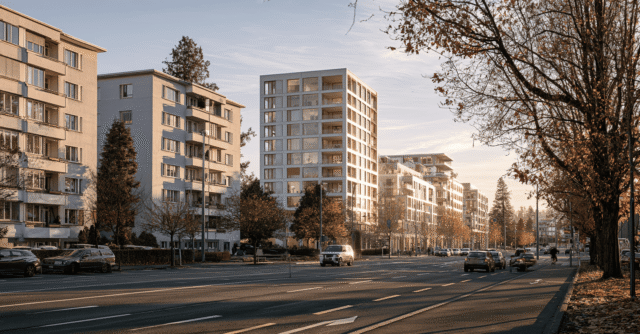
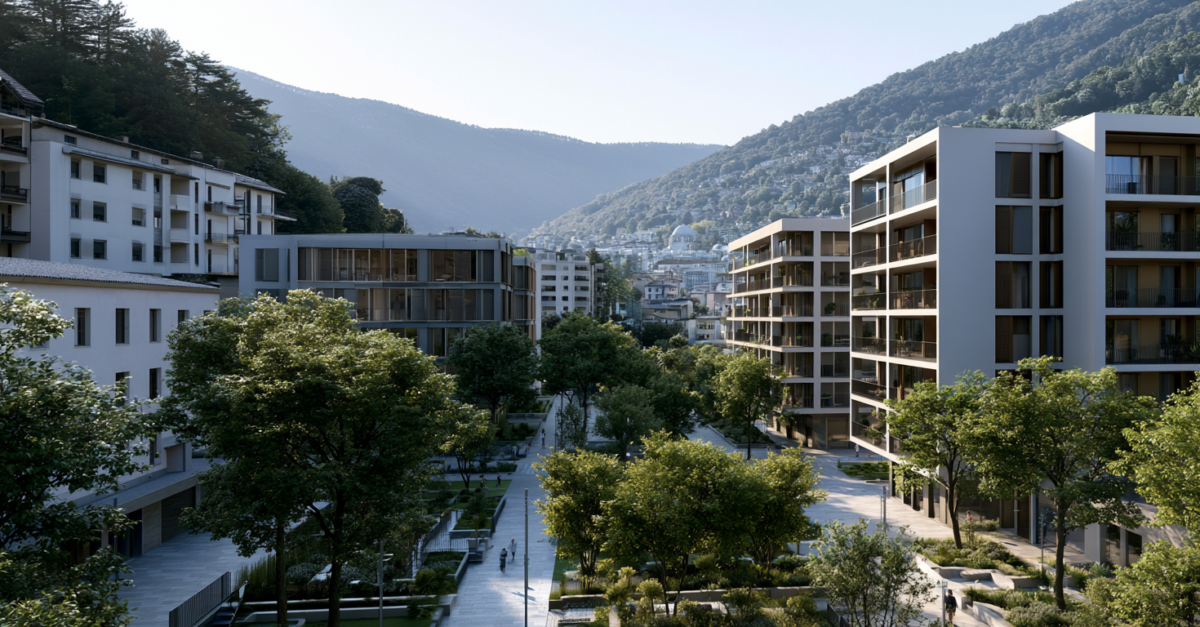
The new proposal focuses on the section between Via Ceresio and Via Maggi. Plans include the demolition of existing buildings and the construction of a new residential complex that will reinforce the street frontage along Via Ceresio and better define the inner areas of the site. For the neighbourhood’s development, this is more than just a replacement building. The key question is whether, through several construction phases, a cohesive part of the city will emerge, featuring clearer pedestrian connections, high-quality ground-floor spaces and usable open spaces.
The focus on green spaces, permeable surfaces and accessible entrances fits in with an environment in Pregassona that has been undergoing social and spatial reorganisation for years. Urban integration and regeneration initiatives are already underway in the area between Via Industria, Via Ceresio and Via Maggio. The private development thus encounters a neighbourhood in which open space, social mix and quality of life are not merely architectural concerns, but also urban planning issues.
Densification requires open space
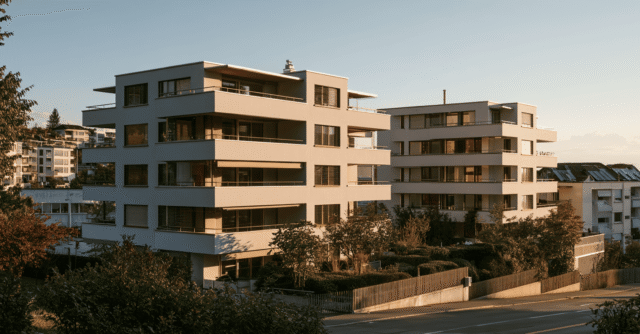
In the completed section, Parco Ceresio is being marketed as a Minergie-certified residential development comprising two blocks, each with twelve flats. The section now being proposed is likely to further enhance the significance of the overall project and shape the transition between existing development and the new neighbourhood boundary. Particularly in a well-served residential area close to the centre of Lugano, a familiar pattern emerges here: densification is better accepted when it not only adds volume but also provides clearly defined outdoor spaces and a more robust neighbourhood structure.
Whether and when the next construction phase will be approved remains to be seen. One thing is already clear, however: with this planning application, Parco Ceresio is shifting from a series of individual houses towards becoming a major urban building block for Pregassona.