Luxury Market Loses Momentum in the Lowlands
Swiss luxury real estate prices rose again by more than 3 percent in 2025. However, while mountain communities continued to see growth of 6 percent, many primary residence markets along Lake Geneva and Lake Zurich are reporting that prices have plateaued.
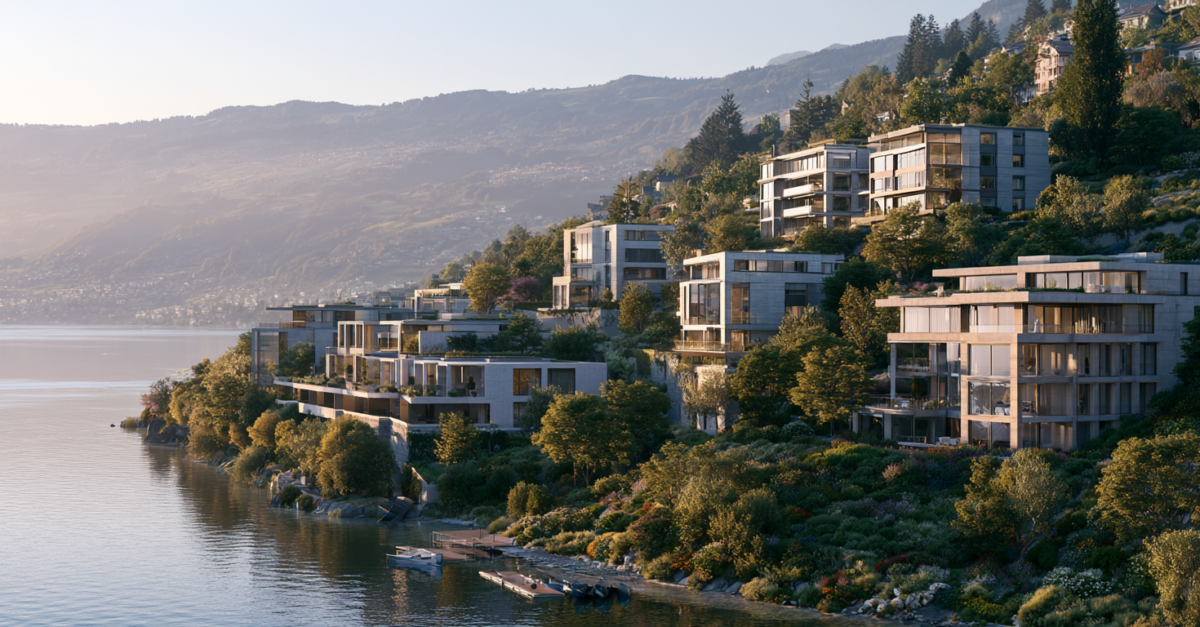

At around 52,000 francs per square meter, St. Moritz remains Switzerland’s most expensive luxury real estate market. But the real story for 2026 lies deeper in the market: In many primary residence communities on Lake Geneva and Lake Zurich, price growth has leveled off significantly, even though the luxury segment saw another average increase of more than 3 percent in 2025.
This is shifting the landscape in the high-end residential market. Major mountain destinations continue to benefit from international demand and limited supply. In the classic premium lowland communities, however, purchase prices in the mid-single-digit millions are increasingly reaching the limits of affordability and willingness to pay. For owners, developers, and marketers, pricing is becoming more selective.
Mountain locations continue to pull ahead
According to available data, luxury real estate in mountain regions rose by 6 percent in 2025, a stronger increase than in the previous year. St. Moritz tops the nationwide price ranking, followed by Gstaad and Verbier with prices around 45,000 Swiss francs per square meter. In these markets, demand from abroad continues to stabilize prices, especially as high-end vacation properties are increasingly viewed as investments.
The price gap within the luxury segment is thus widening. While prime Alpine locations have become about 40 percent more expensive over the past five years, according to publicly available data, many primary residence markets are showing the first signs of fatigue. Cologny remains the most expensive location outside the mountain regions at around 43,000 Swiss francs per square meter, while Küsnacht, on Lake Zurich, leads the way at about 37,000 Swiss francs.
Demand is becoming more uneven reg
In the Zurich and Zug areas, demand from high-income expats continues to support the market. At the same time, weaker employment growth in the Zurich region has already slowed momentum by 2025. On Lake Geneva, additional demand is coming from the Middle East, while in Ticino, longer sales cycles and stagnant prices point to a more challenging environment.
For the industry, this is more than just a footnote. When price increases in the luxury segment can no longer be enforced across the board, pressure mounts on location quality, product differentiation, and realistic exit expectations. Particularly in the high-end residential property market, this means that factors such as international demand, tax-advantaged locations, or limited supply will play an even greater role in determining a property’s success.
2026 is likely to be more subdued
For the current year, a weaker performance is expected compared to the overall home market. The combination of a subdued economy and declining affordability is likely to slow down the market, particularly for luxury condominiums in the mid-single-digit million range. The Swiss luxury market is not collapsing, but it is becoming more uneven: record prices in the mountains contrast with a plateau in parts of the lowlands.