Charging Regulations Put Residential Buildings Under Pressure to Renovate
The Federal Council wants to grant tenants and condominium owners in residential buildings the right to have the basic infrastructure for electric vehicle charging stations installed. For owners and property managers, this would make the expansion of parking facilities, load management, and cost allocation much more practical in day-to-day operations.
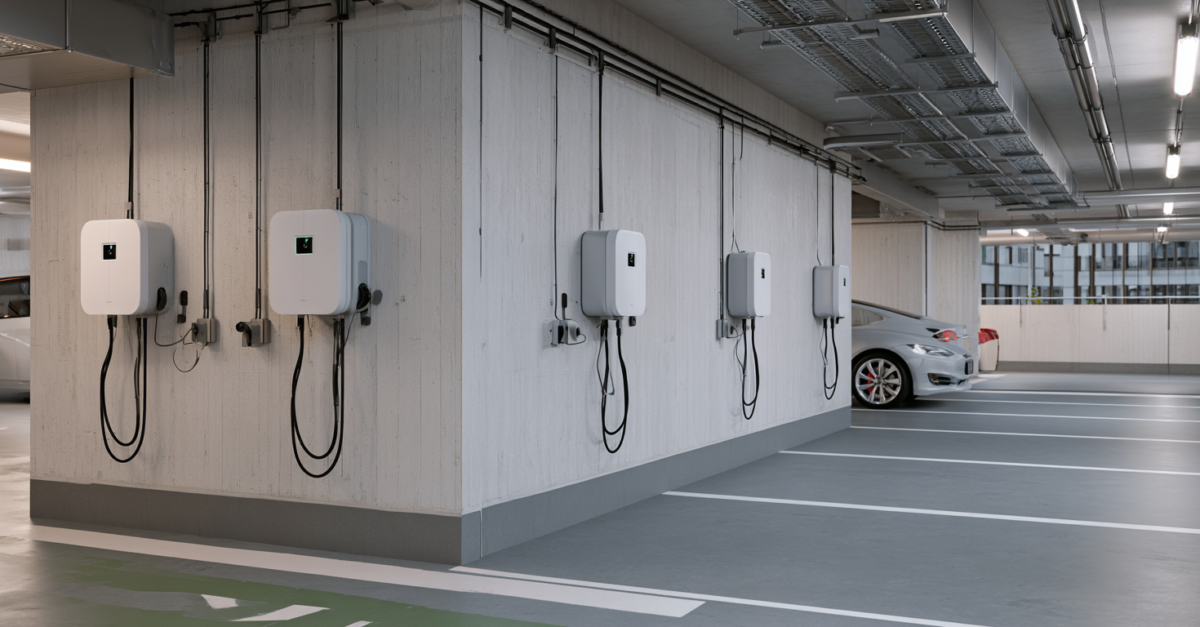

The Federal Council no longer wants to leave access to electric vehicle charging stations in residential buildings up to the goodwill of property owners. Since June 19, 2026, an amendment to the Energy Act has been under public consultation that would, under certain conditions, grant tenants and condominium owners the right to basic infrastructure for charging electric vehicles.
For apartment buildings, this is more than just an energy issue. It affects parking facilities, building connections, load management, billing systems, and ultimately property management as well. If this entitlement becomes law, many existing properties will face concrete pressure to retrofit as soon as residents with assigned parking spaces demand the upgrades.
Entitlement Only with Clear Limits
The proposal applies to individuals who live in the property or housing complex themselves and whose parking space was provided by the same landlord along with their apartment. According to available information, this also applies to subleases. Residents cannot demand the private wallbox itself, but rather the basic installation up to the parking space—that is, the power supply line, consumption allocation, and, if necessary, load management. The Federal Council also makes the entitlement contingent on reasonableness. Particularly in the case of older properties, the extent of the technical and financial intervention in each individual case remains a key factor.
For owners and property managers, however, the scope of action is shifting significantly. Those who rent out parking spaces in residential complexes would no longer have to wait until a comprehensive renovation is scheduled or a major e-mobility plan is in place to consider the installation. Charging capability would gradually become an integral part of the regular building infrastructure.
Costs Are Included in Parking Space RentUnder the lease agreement, the costs of the basic installation are generally to be passed on through the parking space rent. This is relevant for both institutional and private property owners because, while the retrofit is intended to be self-financing, its implementation requires clear models for cost allocation, metering, and operation. Disputes over the installation requirement are to be adjudicated by civil courts. This is unlikely to simplify the process immediately, but it does increase the pressure to clarify technical standards and contractual provisions at an early stage.
The bill was triggered by a parliamentary mandate. According to the available timeline, the Federal Council’s message is expected to follow in the first half of 2027. The consultation period runs through October 12, 2026. For the real estate sector, the message is already clear: EV charging infrastructure is shifting from an optional feature to an enforceable basic function of residential properties.