Klybeck is being marketed even before residents move in
Rhystadt is consolidating its current and future properties in Basel’s Klybeck district under the new brand “Neues Klybeck.” This move comes at a time when the master plan is in place, the zoning plan is expected in early 2027, and the first commercial offerings, such as FLOW, are shaping the life sciences hub.
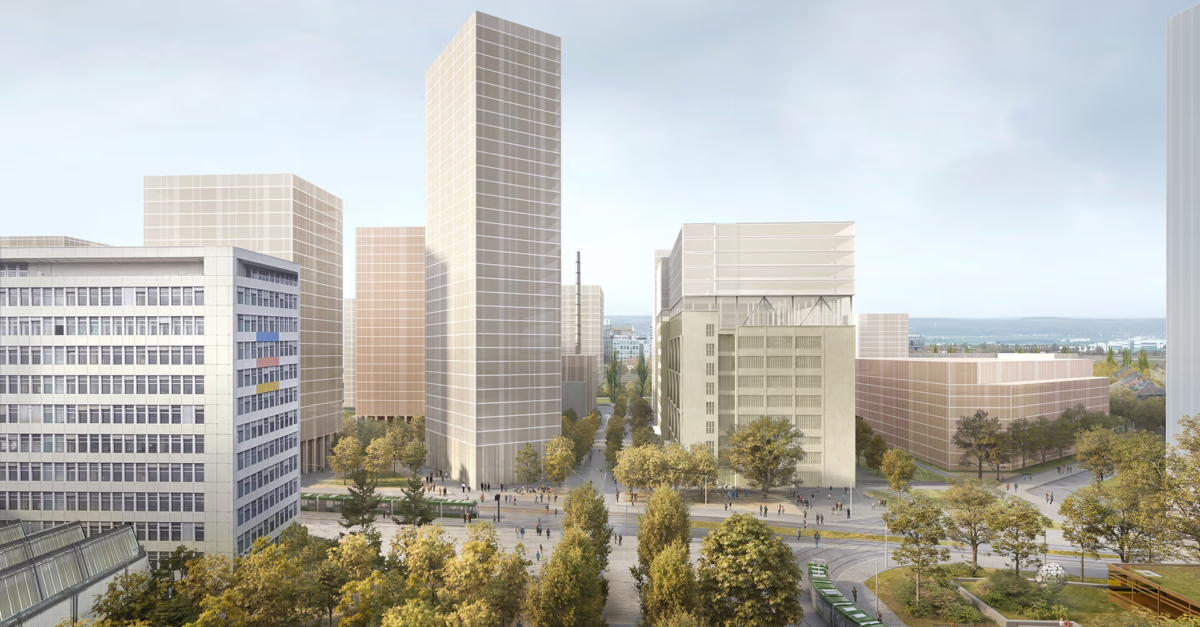
In northern Basel, the next phase of the Klybeck transformation is beginning not with residential units, but with rental properties. Rhystadt AG is consolidating its current and future spaces within its own section of the site under the new brand “Neues Klybeck,” thereby establishing a market-ready framework early on for a neighborhood that is still in the midst of the planning process.
This step is more than just a communications decision. In the coming years, the focus in Klybeck will be on bringing together existing commercial uses, future development areas, and the opening up of a previously enclosed industrial site. As long as the zoning plan is not yet legally binding, residential development remains a distant prospect. For now, the focus is on identifying what can be leased immediately and which uses will shape the site even before the actual neighborhood is built.
Planning Moves into the Next Phase
A master plan for the entire klybeckplus development area has been in place since November 2025. It forms the basis for land-use planning in the approximately 300,000-square-meter site between the Rhine and the Wiese. Plans include housing for 8,500 people, 7,500 jobs, as well as new open spaces and connections to the neighboring neighborhoods. As things stand today, the zoning plan is expected to be ready in early 2027 and will then be submitted for public comment.
For Rhystadt, the new umbrella brand thus serves as a tool for the preliminary phase. The company is developing its own portfolio on approximately 160,000 square meters within the overall site. Laboratories, offices, studios, and other commercial spaces are already in use there today. Publicly available data indicates that well over 2,000 people already work, conduct research, or study on the site every day.
FLOW Sets the Commercial Pace
The direction of the project is particularly evident in the FLOW project. The laboratory and office building has been announced as a construction project since 2024 and is expected to cover approximately 19,000 square meters. With this, Rhystadt is specifically targeting life sciences companies seeking laboratory infrastructure with room for expansion in northern Basel. The site is therefore not attempting to prioritize residential use but rather to economically establish the commercial core of the transformation.
However, the timeline remains challenging. In addition to the ongoing planning process, the issue of contaminated sites has once again come to the forefront. In the spring of 2026, it became known that further remediation steps and a concrete plan for contaminated areas are necessary before actual construction work can begin. This does not change the long-term outlook for Klybeck, but it does show that neighborhood development and site remediation remain closely intertwined here.
Brand as a Bridge Between the Existing and the Future
This is precisely where “Neues Klybeck” comes in. The brand is not intended merely to list available spaces, but to make the transition from an industrial site to a mixed-use neighborhood clear. This is relevant for the Basel real estate market because marketing in Klybeck begins years before the first residents move in. Those who settle here today are not just renting space; they are positioning themselves in one of Switzerland’s largest urban development areas.
Whether this early positioning pays off will depend on two factors: the progress of the zoning plan and how quickly contaminated subplots can be made ready for construction. Until then, “Neues Klybeck” remains, above all, a signal that the transformation does not begin with residential construction, but is already taking shape through interim uses, commercial clusters, and the identified demand for laboratory and office space.