
This has been prompted by an amendment to the Energy Act, which the Federal Council sent out for consultation on 19 June 2026. It implements a motion passed in 2025 and stipulates that owners of residential properties must install the basic infrastructure for charging electric vehicles, provided that tenants or owners of flat-ownership properties request this and the measure is reasonable.
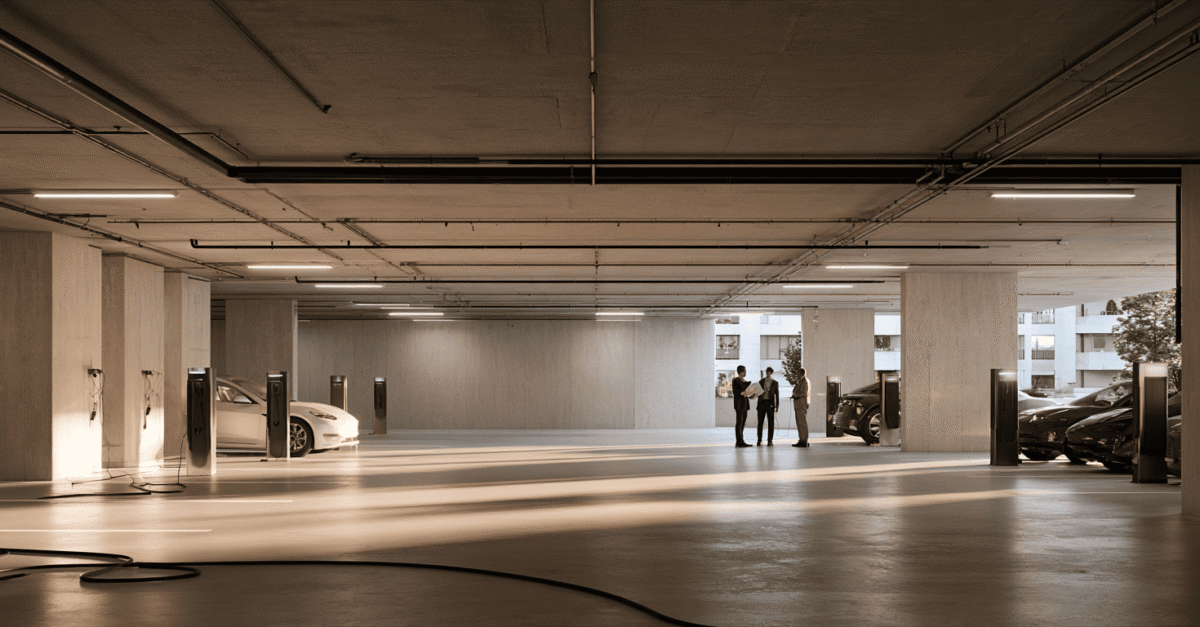
For property owners, this is not simply a matter of individual wall boxes, but involves alterations to car parks, infrastructure and the allocation of costs. Depending on the building, the basic installation includes cabling to the parking space, metering and, where there are multiple charging points, load management. According to the draft bill, the actual charging unit remains the responsibility of the user.
Associations are taking a confrontational stance
The resistance is organised. HEV Switzerland rejects a statutory obligation to invest and warns of additional costs and new conflicts in rented properties and in condominiums. SVIT Switzerland is also opposing the measure, describing it as disproportionate. Both associations argue that the expansion of charging infrastructure is already underway, albeit more slowly than the proponents would like.
On the other side, supporters point to everyday life in multi-occupancy buildings. The federal government explicitly justifies the proposal by citing the lack of charging infrastructure as a common barrier to the purchase of an electric vehicle. Particularly in Switzerland, with its high proportion of rented and freehold properties, the expansion of charging infrastructure in residential properties is crucial.
More pressure on existing properties
For owners and property managers, the bill is particularly tricky when it comes to existingproperties. Whilst retrofitting underground car parks can often be technically resolved, it raises issues regarding grid connection, billing, reserve capacity and the question of which costs can be borne collectively. This is precisely where the political flashpoint of the proposal lies. It does not force property owners to purchase every single charging point, but it does require them to make structural and organisational preparations in advance.
Additional pressure is being exerted by supporters who want to go even further. Energie 360° describes the Federal Council’s proposal as a minimal compromise and is calling for a right to charge electric vehicles in car parks adjacent to commercial premises as well. This would quickly extend the debate from residential buildings to office and commercial properties.
The real battle begins after the consultation
The consultation ended on 12 October 2026. Next, the Federal Council must evaluate the feedback and draft a message to Parliament. It is likely to be in Parliament that a decision will be made on the extent to which property rights will actually be infringed upon, and how narrowly the concepts of reasonableness, exceptions and cost pass-through will ultimately be defined in the legislation.