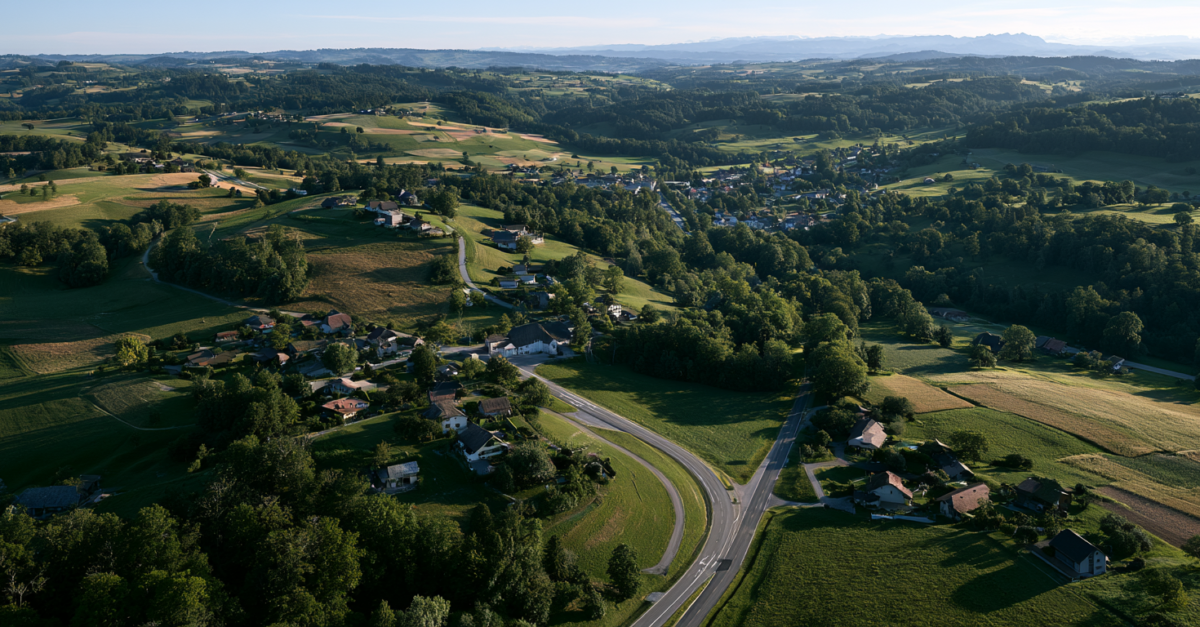

Freiburg is tightening the reins on building outside the building zone. By amending the cantonal Spatial Planning and Building Act, the canton is laying the groundwork for a demolition incentive designed to encourage the demolition of buildings and facilities that are no longer needed, with effect from 1 July 2026.
This is a clear political move. According to available information, the Grand Council adopted the urgent amendment by 96 votes to 2, with one abstention. Freiburg is thus implementing the new provisions of the federal government’s revised Spatial Planning Act, which aims to limit the number of buildings and the amount of sealed land outside building zones.
Demolition becomes a policy tool
The grant is more than just a financial incentive. It forms part of a policy framework designed to curb urban sprawl and improve the quality of the landscape outside building zones. In Fribourg, the grants are financed through the existing added value fund. Publicly available documents also suggest that the canton has clarified the exceptions and ensured that protected properties are dealt with appropriately in the current procedure.
For owners and project developers, the decisive factor will therefore be whether an existing property outside a building zone still fulfils a function in the long term. Where this is not the case, demolition will, for the first time, be subject to a clearly defined cantonal instrument. At the same time, the pressure on local authorities and planning authorities to enforce the regulations is increasing, as the federal government is demanding not only individual decisions but also a stabilisation of the existing situation.
Monitoring is essential
Fribourg is working in parallel on an IT solution designed to record the number of buildings and sealed areas outside building zones. This is precisely where the real significance of the revision lies. In future, it will no longer be sufficient to assess exemptions on a case-by-case basis. The canton must track its development in a measurable way and subsequently ensure it is underpinned by planning.
To this end, the cantonal structure plan, the stabilisation concept and a territorial approach are to be drawn up and put out for external consultation in 2026 and 2027. Adoption by the State Council is scheduled for 2028, with federal approval expected in 2029. This is relevant for the property and planning sectors because the approach to existing buildings outside the building zone is shifting from a case-by-case basis towards quantified overall management.