A Parking Space Becomes a Political Issue
An electric car spends most of its time parked. That’s exactly when it should be able to charge—at home or at work. But for many renters and condominium owners, this simple idea hits a wall in the garage. The Federal Council now wants to change that, thereby sparking a conflict that goes far beyond the wallbox.
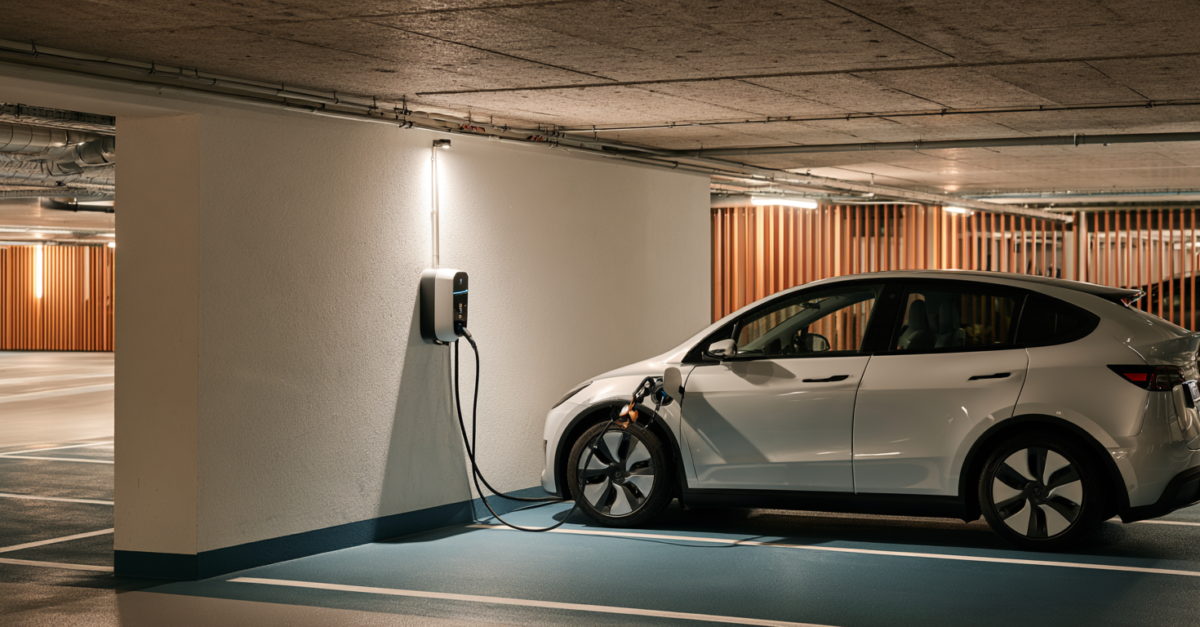

Currently, installing a charging station usually requires the consent of the landlord or the condominium association. In the future, residents will be able to request basic installation under certain conditions. The Federal Council has submitted an amendment to the Energy Act for public comment. The comment period runs through October 12, 2026.
This right applies to individuals who live in the property themselves and whose parking space is provided along with the apartment. Subtenants would also be covered. The prerequisite remains that the implementation must be reasonable for the property owners.
The focus is not on the wallbox
The individual charging station will continue to be paid for by the person who wants to use it. However, the property owner would be required to provide the infrastructure. This includes the power line to the parking space, a meter for tracking consumption, and, if necessary, a system that distributes the available power among multiple vehicles.
This may sound like a technical issue, but it is primarily a matter of planning. Two individual connections can often be set up. If ten or fifty vehicles later need to charge simultaneously, a shared solution will be required. The Federal Council wants to prevent a situation where many individual solutions must later be replaced at great expense.
Property Meets the Energy Transition
The Federal Council justifies the proposal with the goal of facilitating the electrification of transportation. A lack of charging infrastructure is considered a major hurdle in the transition to electric vehicles. In Switzerland in particular, the potential impact is significant because many people rent their homes or are part of a condominium association.
However, property owners’ associations view this as a significant encroachment. They criticize the fact that a single tenant or condominium owner could trigger an investment decision. The Swiss Real Estate Industry Association calls it a direct attack on property rights.
Who Bears the Costs
In rental agreements, the costs of the basic installation may generally be passed on to the parking space rent. This eases the burden on the property owners but shifts the discussion to the tenants. Who pays for infrastructure that only some of the residents use?
In the case of condominiums, the situation becomes even more complex. The homeowners’ association must coordinate investments, technical standards, and future expansions. A legal entitlement can break deadlocks, but it is no substitute for a fair cost-sharing arrangement or forward-looking overall planning.
The law must remain flexible
Critics fear overly detailed regulations. Charging infrastructure is evolving rapidly. In the future, vehicles will not only be able to draw electricity but also feed it back into the building or the grid. Rigid requirements could hinder tomorrow’s solutions.
The consultation process now opens the decisive debate. The goal is undisputed: home charging should become easier. It remains to be seen how Switzerland will facilitate access without pitting ownership, costs, and technical development against one another.