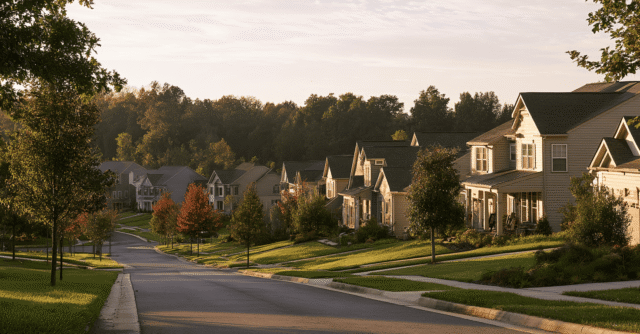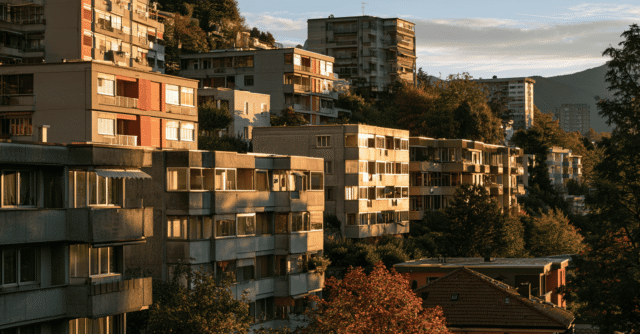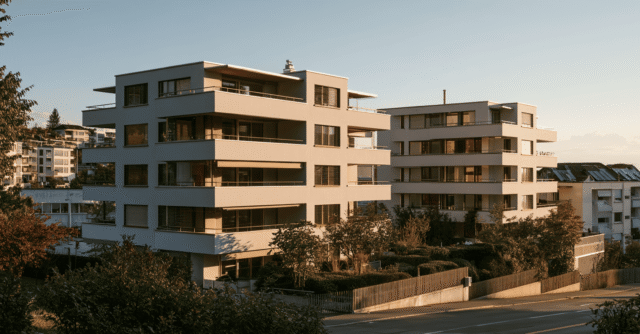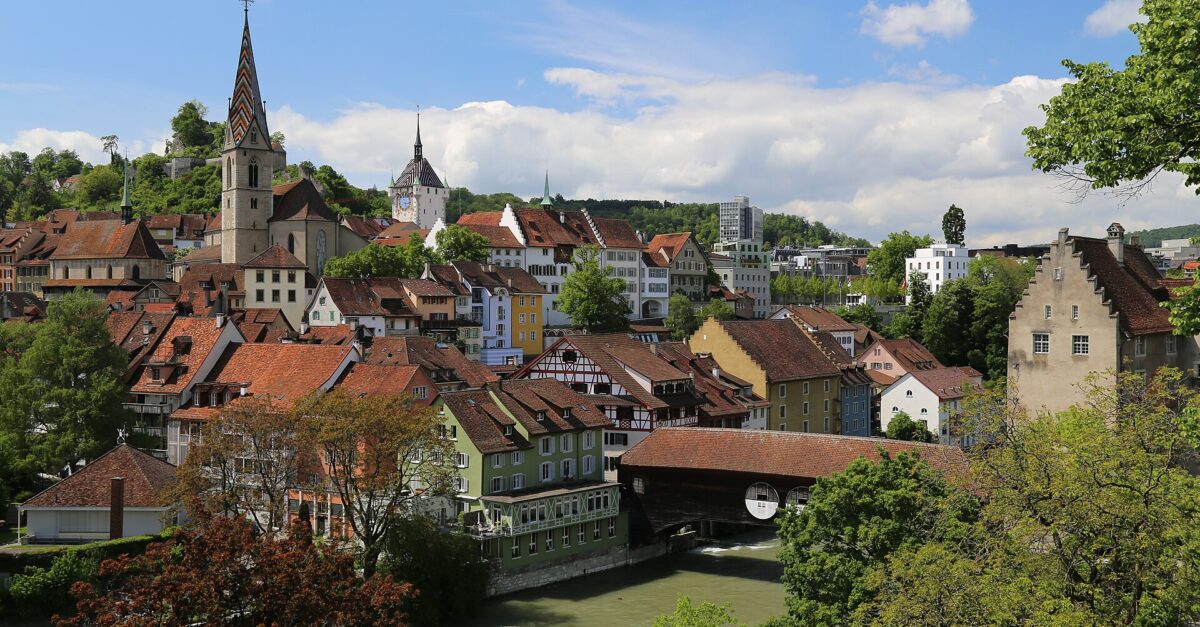
Wälty criticizes the new BNO as lacking vision and sees it as a mere continuation of previous practices. The infill development required by the Spatial Planning Act is simply not taking place. She is particularly troubled by the fact that the city has not plausibly demonstrated where the more than 6,000 additional residents required by the canton are even supposed to live by 2040.
Where Baden Could Densify
According to Wälty’s assessment, more construction could take place almost anywhere—for example, in the Oberstadt, the Meierhof, the Kappelerhof, and Baden Nord. For her, the charm of a denser city lies in the “10-minute neighborhood,” where living, working, shopping, and leisure activities are all within walking distance. This would result in less car traffic, greater flexibility for older residents, and lower overall costs for society.
Resistance from Within Their Own Ranks
According to Wälty, one reason for the lack of political pressure is that many decision-makers already live in Baden themselves and feel no need for change. In Flawil, in the canton of St. Gallen, her ETH spin-off, Resilientsy, has shown that people are indeed open to change, provided the implications are illustrated to them through scenarios. A pilot project she initiated for the Upper Town and parts of the Meierhof met with interest from the public, but the city did not pursue it further.
Space for 50,000 People
According to Wälty’s calculations, with consistent densification, Baden could accommodate between 45,000 and 50,000 people—twice as many as today. Although the topography—with its extensive forests—makes high-rise construction difficult, the current plan of adding just one additional story at select locations is still far from sufficient.
The Cost of Hesitation
According to Wälty, construction is slow not only in Baden but also in Zurich, which is why workers are moving to Aargau and Thurgau. If housing remains scarce while demand continues to rise, the consequence is clear: rent and real estate prices will continue to climb. From a broader societal perspective, greater urban densification would make more sense, because per-capita infrastructure costs are significantly higher in outlying municipalities.
Source reference: “Badener Tagblatt, interview by Pirmin Kramer with Sibylle Wälty, July 4, 2026”