Ticino is attractive, but picky
A high quality of life, a strategically favorable location and attractive yields make Ticino an attractive location for real estate investors. However, image and location alone are not enough to really convince capital from German-speaking Switzerland. Manuel Gamper, founder of Leading Investors, explains where the canton is convincing, where it still has some catching up to do and what conditions need to be in place today to turn potential into concrete investments.
If you had to describe Ticino today as an investment location in a single sentence and name the most important arguments for a real estate investment, how would you summarize it?
Today, Ticino is an attractive but selective location: A high quality of life, strategic location and above-average returns go hand in hand with a limited market volume, a certain political complexity and a growing need for specialist skills. The three strongest arguments for a real estate investment are Switzerland’s institutional and tax stability, its unique location as the southern gateway to the country with links to Italy and a market that continues to offer solid demand and value appreciation opportunities for well-positioned properties.
Where do Ticino’s self-image and the reality as perceived by investors diverge the most, and what expectations do investors from Zurich, Zug or Basel have of a region today?
Ticino tends to see itself as a premium location, focusing on the quality of life and attractiveness of the region, and often assumes that this is enough to attract investors. However, investors also need more scale, transparency and more efficient processes. Today, they expect speed, predictability, data transparency and institutional-quality products. Ticino still has difficulties with scalability, decision-making times and planning clarity.
Your work is very data-oriented. In which areas does Ticino currently lack the necessary transparency to enable investors to make decisions more quickly and with greater certainty?
The basic data is available today. What is missing, above all, are future-oriented and truly decision-relevant elements: Absorption times, demand dynamics, market trends and the actual project duration. There is therefore a need for greater integration and evaluation of the data, as well as for experts who can interpret it and provide concrete support to investors thanks to their in-depth knowledge of the region.
Which region in Ticino is the most interesting for investors today – Lugano, Bellinzona or Locarno – and why?
That depends very much on the respective objectives and investment profile, but if you had to choose one, it would be Lugano today: higher visibility, liquidity and economic attractiveness. Bellinzona is strategically favorable and on the upswing, Locarno remains interesting, but is more selective and more closely tied to individual projects.
To what extent do issues such as the availability of a qualified workforce, the exodus of young people, long-term economic momentum and proximity to Italy play a role in the assessment of Ticino as a business location today?
They are becoming increasingly important. Capital is now paying attention to long-term sustainability: demographics, attractiveness for talent, employment dynamics and innovative capacity are becoming just as important as returns. Ticino has asset classes that need to be carefully managed and others that are very interesting. Its proximity to Italy is also a dynamic balance. It remains an advantage in terms of access to labor, culture and economic exchange, but also brings with it greater competitive pressure and the perception of greater structural exposure, which can amplify both opportunities and vulnerabilities.
To what extent do the procedures for granting building permits, planning uncertainties and political complexity slow down concrete investment decisions in Ticino today?
They slow them down considerably. Not so much as an absolute obstacle, but as a factor that brings uncertainty in terms of timing – and time is one of the most important value drivers today.
In a market with lower margins and higher risks, off-market transactions, club deals and co-investments are becoming increasingly important. Are these precisely some of the few opportunities to continue investing attractively in Ticino today?
They are not the only option, but they are increasingly the most effective. In a small market characterized by personal relationships, access to opportunities and the ability to structure deals often count more than pure financial strength. The opportunities are there, but require openness to different asset classes such as hospitality, industrial or senior housing, as well as greater flexibility. With the help of data and more advanced investment structures, we estimate the untapped potential at CHF 200 to 400 million per year.
To what extent are the current global situation, geopolitical conflicts, energy prices and uncertainty on the markets influencing the willingness to invest in smaller or remote regions such as Ticino?
Noticeably. In times of uncertainty, capital tends to favor large and liquid markets. Regions such as Ticino must therefore demonstrate their risk/return ratio even more clearly. At the same time, the margins and returns, which are often above the national average, represent a concrete opportunity that – if well communicated and structured – can become a real competitive advantage.
What three measures should the canton prioritize in the next two years to make Ticino significantly more attractive to investors from German-speaking Switzerland?
Speed up procedures and make them more predictable, push ahead with major public projects and the regulatory framework, and invest decisively in economic attractiveness and talent retention.
What message would you like to give to politicians and spatial development stakeholders with a view to the next two to three years?
Ticino has everything it needs to be very attractive. It is crucial to communicate this clearly and to emphasize these strengths through implementation, speed, competence and teamwork among the players.
About the person
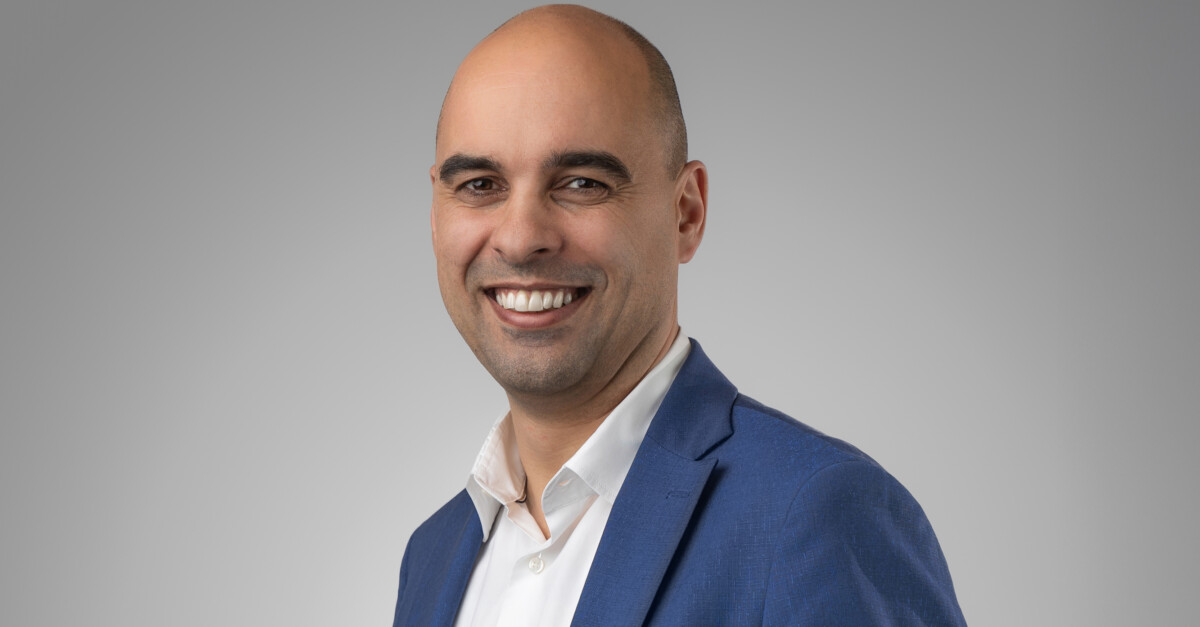
Manuel Gamper, born in Lugano, began his career in management consulting and marketing, where he spent over 15 years founding and managing agencies operating both nationally and internationally. In 2018, he joined the Artisa Group, where he led City Pop through the development and launch phases of its innovative “micro living” model with on-site services. In 2020, he co-founded Multi RE, a company specializing in data analysis and real estate consulting, which later became Leading Advisory. In 2024, he founded Leading Investors, a company focused on large and complex real estate transactions and targeting leading national and international investors and developers. Gamper is married, the father of two daughters, and lives with his family in Ticino.