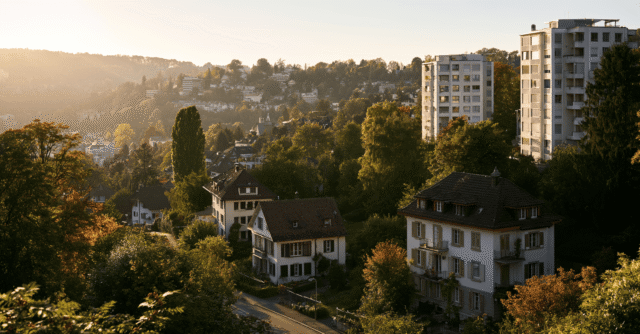

In the Swiss Mittelland region, one owner initially turned down the offer. The offer was far above the market price and he was suspicious of the buyer. A day later, the same man turned up at the door with cash, a mid-six-figure sum as a “deposit”. The owner became weak. The trail of this deal led directly into the milieu of a suspected Lucerne money laundering travel agency and to people with close links to an Albanian cocaine boss who has been in custody in Albania since autumn 2024.
The pattern is always the same
CH Media recently documented dubious property transactions from several cantons. The pattern repeats itself. Owners are approached directly, the purchase offers are massively inflated and the time pressure is enormous. Those who agree often find that the new owners immediately leave the property empty or sell it on at a much higher price. One flat in central Switzerland stands empty for over a year after such a deal, redeemed to an anonymous property company, the owner apparently in a position to leave an investment of over a million francs lying idle.
Illicit labour as a second money channel
It is not only drug money that flows into properties. Illicit money from the construction sector also ends up there. The pattern is ingenious. A criminal entrepreneur receives one million francs for a new building through the bank in the normal way. Thanks to illegal labour, the project only costs him 700,000 francs. He “hides” the remaining 300,000 francs with false invoices from bogus companies that issue fictitious receipts in return for a commission of around five per cent. These companies do not keep any accounts and are usually already bankrupt by the time the authorities enquire. The result is a profit of CHF 300,000 at the expense of the general public and construction workers.
The market remains silent, the price rises
It is estimated that over a third of all money laundering cases worldwide are related to property transactions. Switzerland is considered particularly attractive internationally because the market is stable and regulation has long been patchy. Lawyer Fabian Teichmann, a money laundering expert, puts it in a nutshell: “If you’re smart, you’d rather buy four properties for five million each than one for 20 million. It’s less conspicuous.” The direct side effect is overpriced purchases that drive up prices for everyone.
The law is following suit, slowly
On 26 September 2025, the Swiss parliament passed a revision of the Anti-Money Laundering Act. Real estate agents are now also subject to due diligence obligations and must join a recognised self-regulatory organisation. The catch with this law is that transactions of less than five million francs remain outside the scope of the obligation. Entry into force is planned for the second half of 2026. Anyone who buys four properties worth four million each today will remain under the radar for the time being.