There’s plenty of land available for construction, but nobody is building
Switzerland is debating the housing shortage. The FDP therefore wants to rezone more land. But a recent study shows that the problem lies elsewhere. Building land is available; it’s just being hoarded. Anyone who relaxes land-use regulations now is sacrificing the smartest law of the past decades.
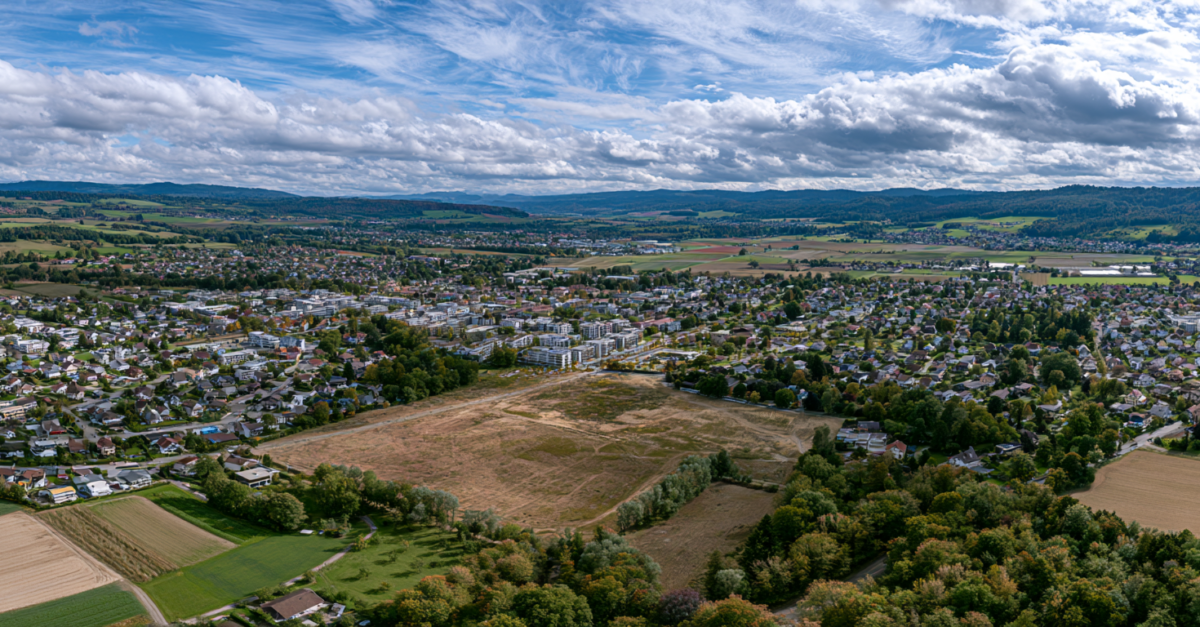

Following the rejection of the 10-million initiative, FDP Co-President Susanne Vincenz-Stauffacher is calling for a change in course. Cantons and municipalities should be given more leeway in designating new building zones. “We should rezone land,” she says, noting that the pendulum has swung too far toward densification. Anyone talking about skyrocketing rents, record-low vacancy rates in Zurich and Geneva, or seven-figure purchase prices on Lake Zug eventually arrives at the root of the matter: land.
41,291 square kilometers, no more
Switzerland covers 41,291 square kilometers. One-third is high mountains and bodies of water; another third is forest. What remains is shared between settlements and agriculture—this is where the real battle over land allocation takes place. Under current law, rezoning remains possible. However, it can no longer be carried out at the mere whim of a municipal assembly or local building authorities; instead, it must fit into an overarching plan. This is precisely the core of the Spatial Planning Act (RPG) Revision I.
The Masterpiece of 2013
Until the March 2013 referendum, cantons and municipalities largely determined for themselves where construction took place. The result in the Mittelland: a haphazard, sprawling urban mess, massive land consumption, and urban sprawl. RPG Revision I put an end to this anarchy. Development inward, compact settlements, and building land reserves limited to 15 years’ worth of demand. Where this demand was exceeded—particularly in Valais—the federal government mandated rezoning. Since then, anyone rezoning land has paid a profit levy, which in turn compensates owners of rezoned properties. A system with its own internal logic.
An exception in Swiss politics
This point deserves special attention. In social and health policy, we have been treading water for years. Effective solutions for retirement planning, disability insurance, or rising health insurance premiums—if they are even brought up for discussion—are effectively lobbied out of the picture. Security policy is a farce marked by failures and misguided procurement decisions. European policy is dominated by defensive battles. Spatial planning, however, is a completely different story. The first revision of the Spatial Planning Act (RPG) has shown what political institutions are capable of at their best—structural, sustainable, and bold.
There is plenty of building land
A study by Raiffeisen Switzerland from February 2026 fundamentally contradicts the FDP’s assessment. Existing building land reserves offer space for 950,000 to 1.5 million people. A Switzerland with 10 million people would, purely mathematically, not require a single additional square meter of building zone. However, many landowners have no interest in building. Undeveloped building land serves as a parking lot, storage space, or simply as an investment for future generations. Those who hoarded building land instead of developing it over the past 25 years achieved a return of 592 percent.
What Really Helps
Land cannot be produced, and even less so can it be reprinted like banknotes. Once it has been paved over, the process is irreversible. New approaches to mobilizing existing building land, targeted incentives for owners, and consistent densification of the existing housing stock would be the right path forward. Rezoning as a quick fix for the housing shortage would be the wrong move at the wrong time, and it would undermine the very law that Swiss policymakers enacted in one of their finest moments.