Eight-Year High in Permits, No Impact on Rents
Cranes are once again a common sight on Swiss construction sites. Last year, the number of new apartments approved was the highest it has been in eight years. Anyone hoping for lower rents is likely to be disappointed. The construction boom is simply not enough to meet the pent-up demand.
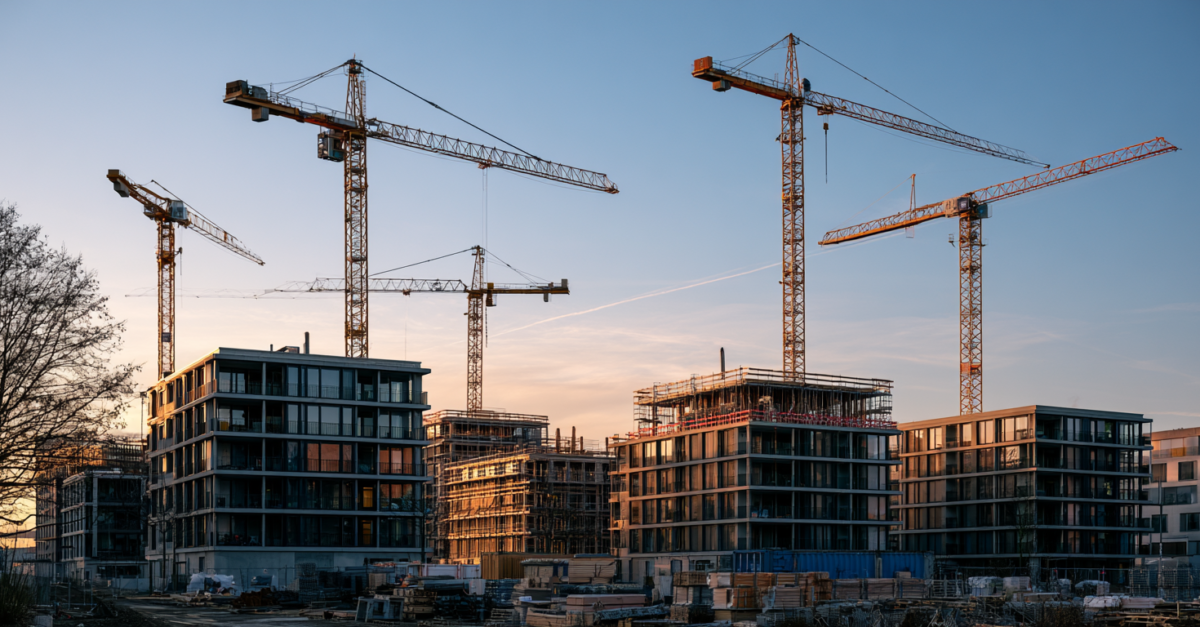

Over the past twelve months, building permits were issued for approximately 52,000 apartments across Switzerland—the highest number since late 2018. This represents an increase of just over 5 percent compared to the previous year. The growth in rental apartments is particularly striking, with permits for this segment rising by 11 percent.
Where the numbers reveal their limitations
The entire increase in permits is attributable to the rental housing segment. Specifically, 32,900 new rental apartments were approved—50 percent more than at the low point of construction activity two and a half years ago. At the same time, significant capital continues to flow into the sector—over 9 billion Swiss francs in additional investment last year alone—with the inflow showing no signs of slowing.
The vacancy rate remains stubbornly low
Despite the construction boom, the vacancy rate remains at just under 1 percent. Wüest Partner projects approximately 48,000 vacant apartments nationwide as of June 1, 2026—a figure that remains negligible given the size of the population. Other market analyses also confirm this picture; the vacancy rate is structurally well below the long-term average, particularly in urban centers.
The rental gap continues to widen
While existing leases have recently become slightly more affordable—with a 0.4 percent decline in existing rents—asking rents rose by 1.0 percent in the first half of the year. Those who have to move are therefore paying noticeably more, while those who stay are hardly affected. Other forecasts even predict increases in asking rents of between 2 and 3 percent for the current year.
Why the situation isn’t easing quickly
The underlying problem remains structural. Population growth of around 80,000 people per year, low mortgage rates, and the ongoing trend toward working from home are constantly driving up demand. Although construction investment is expected to rise by 5.3 percent in 2026, a surge in supply of this magnitude will take years to translate into a noticeable increase in available housing.