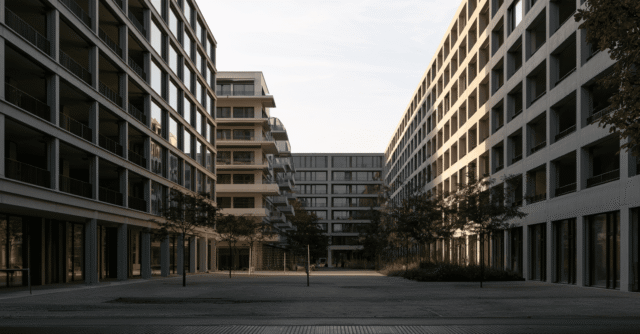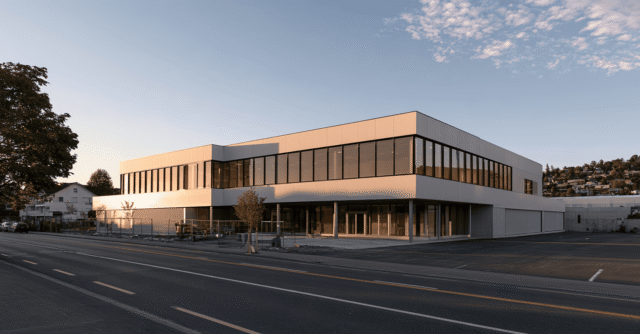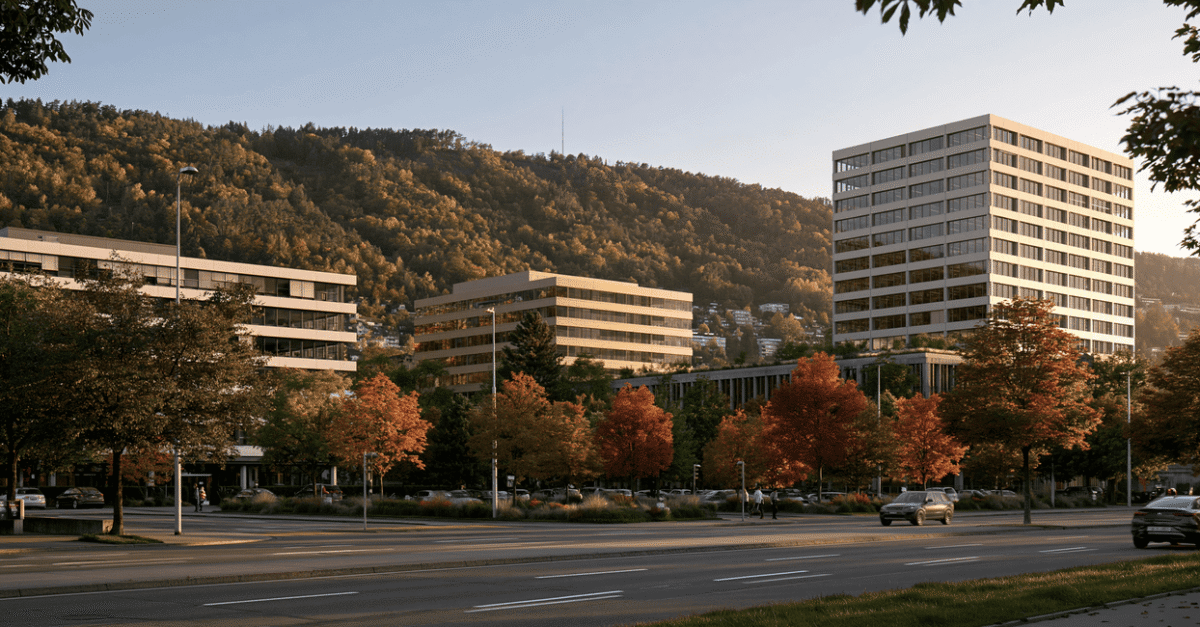

The Norwegian sovereign wealth fund has owned the Üetlihof since 2012, when it purchased the office complex from Credit Suisse for 1 billion Swiss francs and leased it back to the bank. The property covers just over 55,000 square meters and is located in a five-story residential zone. It is precisely this zoning status that makes the site far more than just an investment property for a new owner.
For now, UBS remains the key anchor tenant. The lease runs through 2037 and, according to available information, can be extended by up to 15 years. As early as 2022, the property generated approximately 45 million Swiss francs in annual rent, fully indexed to inflation. At the same time, vacant spaces are reappearing on the market. Several office spaces totaling over 14,000 square meters are listed on Homegate at this location, including a listing for 6,194 square meters at Uetlibergstrasse 231.
Residential Zone Instead of Rezoning Risk
The true value of the Üetlihof therefore lies not only in the existing buildings, which offer space for approximately 8,500 workstations and a total of about 100,000 square meters of office space. The key factor is that no rezoning would be necessary for future residential use. The City of Zurich had already designated the site in 2022 as the city’s second-largest contiguous parcel of residential land. At that time, the City Council wanted to acquire the complex, but the Municipal Council rejected the proposed supplementary budget of 1.2 billion Swiss francs.
Foreign Capital Hits Limits
This narrows the pool of potential buyers for the current sale. Under the current Lex Koller, individuals abroad are permitted to acquire commercial properties. However, anyone wishing to develop the Üetlihof into a residential complex at a later date would need a Swiss-controlled ownership structure or would have to resell the property before converting its use. Politics is creating additional pressure. On April 15, 2026, the Federal Council opened the consultation process for a tightening of the Lex Koller. In the future, restrictions on foreign nationals acquiring commercial properties for investment purposes are set to become even stricter.
The period following the office campus project
For the real estate industry, this case is therefore doubly relevant. In the short term, it involves a transaction worth billions with secure cash flows. In the long term, the question is who will be able to secure one of Zurich’s rare large residential developments. As early as 2022, the potential for a new development was estimated at 700 to 1,000 apartments. A mixed-use solution also remains a possibility, because the newer building from 2012 is in good condition and a complete demolition would waste a significant amount of embodied energy.