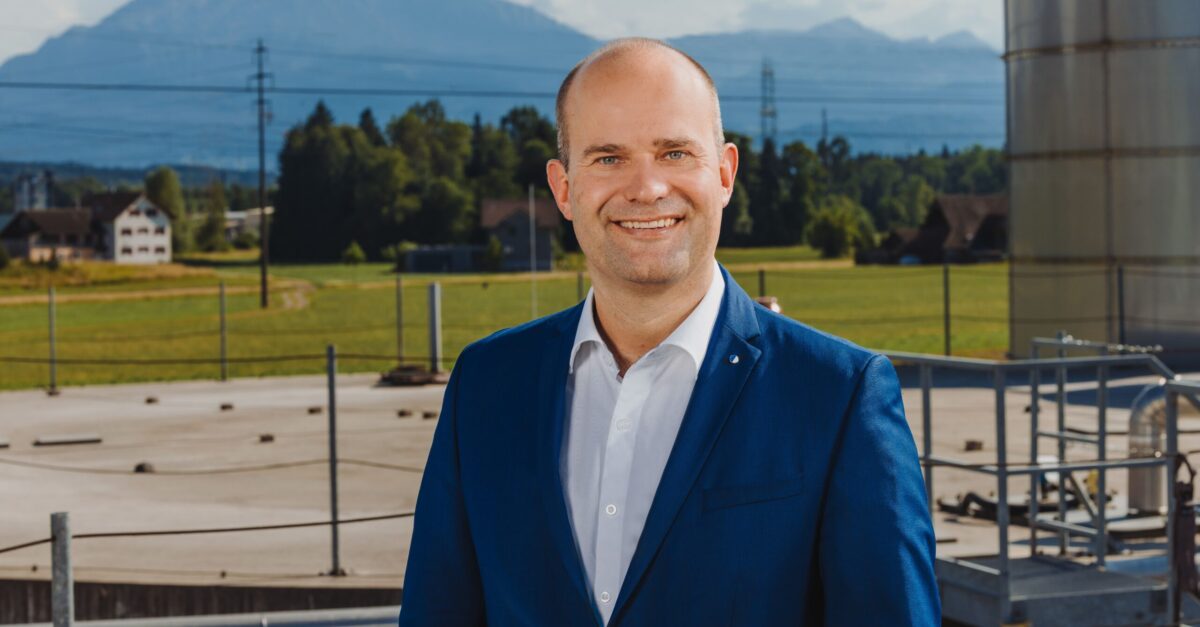
Mr Peter, the through station and the bypass are major projects of great importance to the canton of Lucerne. What is the current status of these major projects?
Both projects have reached important milestones in recent months. As regards the through station, the Federal Council decided in June to include the first phase in the ‘Transport ’45’ proposal. This sends a strong signal to Lucerne and the whole of Central Switzerland. The consultation process is now under way, and debate in the Federal Parliament will follow in 2027. We have also made significant progress on the bypass: key differences with the cities of Lucerne and Kriens have been resolved, and solutions for urban and residential development have been found. This has laid the groundwork for further implementation. Both major projects demonstrate that perseverance and viable solutions are needed. We have not yet reached our goal, but we are significantly closer today than we were at the start of my term of office.
Alongside the bypass, plans are now also in place for partial covering of the motorway in Lucerne South – what do you hope to achieve from this?
The partial covers represent a major opportunity for Lucerne South. At present, the motorway divides neighbourhoods and has a significant impact on the area. With the new residential links, we can reduce this divisive effect, better connect neighbourhoods with one another and create new green spaces and communal areas. This will deliver real added value for the local population and the further development of Lucerne South. At the same time, the measures are closely coordinated with the bypass. For me, it is important that when we build infrastructure on this scale, we must seize the opportunity not only to improve traffic flow but also to enhance the quality of life and the built environment in the long term.
Lucerne railway station has the third-highest passenger numbers in Switzerland after Zurich and Bern. When are concrete capacity bottlenecks likely to arise without expansion?
Capacity bottlenecks are not just a future threat – we are already facing them today. Over 100,000 people board, alight or change trains at Lucerne station every day, and this figure is rising. However, with around 700 trains a day, the station’s access infrastructure has reached its capacity limit. At the same time, demand continues to grow. That is the real problem: whilst the population and mobility are growing, supply remains largely constant. The through station will eliminate these bottlenecks and create the capacity for more frequent and direct connections. This is of enormous importance both for a suburban rail system with quarter-hourly services and for strong national and international connections. That is why it is crucial that we move forward now.
As Chair of the Gotthard Committee, you link the through station with the Gotthard axis. What significance does this project have for the whole of Switzerland, beyond the canton itself?
The through station is a key national project. It strengthens the Gotthard axis and, at the same time, the entire Swiss rail network: passengers travelling from French-speaking Switzerland, Bern and Basel towards Ticino and Italy will save up to 20 minutes via Lucerne. This also relieves the heavily congested east-west axis via Zurich of north-south traffic. At the same time, the through station enables half-hourly services between all major Swiss cities, thereby closing the final gap in the national timetable. It also creates additional capacity and alternative routes in the event of disruptions. It is therefore clear to me that anyone wishing to strengthen the Gotthard corridor must also strengthen its feeder lines. The through station is a project for the whole of Switzerland.
According to forecasts, the canton of Lucerne is set to grow by around a third by 2055 – the highest growth rate in Switzerland. How is the canton addressing this development?
It is crucial to shape this growth in a forward-looking and high-quality manner. An important tool for this is the cantonal structure plan, which we are currently revising. In it, we are laying the planning foundations for the next ten years and beyond – from urban development and mobility to the landscape, and from supply to waste management. Our aim is to ensure that infrastructure keeps pace with growth, that sufficient space for housing and work is created, and that, at the same time, attractive open spaces and local recreational areas are preserved and developed. In this way, we intend to safeguard the high quality of life in the canton of Lucerne even as the population grows.
What is the current status of the revision of the Structural Plan, and what are its key priorities in light of population growth?
The structural plan cannot influence population growth. However, it can ensure that the expected growth is managed in a spatially sustainable manner. By this I mean orderly, compact and resource-efficient urban development. This means we want to make better use of and densify existing urban areas, rather than rezoning agricultural land. At the same time, we need smart, interconnected transport solutions to ensure accessibility across the canton. The revision of the structural plan will be debated in the Cantonal Council in November. Our aim is for it to be approved by the federal government in 2027.
You describe the many SMEs as the backbone of Lucerne’s economy. Which sectors or future growth areas should be strengthened and added to in future?
Lucerne’s economy is very broadly based, both in terms of company size and the diversity of sectors. This diversity makes our business location resilient and is a clear strength. At the same time, we are keeping a close eye on new developments. By further developing our business promotion strategy, we also aim in particular to strengthen the innovative capacity of Lucerne as a business location – to ensure an attractive business environment and a sustainable economy in the canton of Lucerne.
How does the canton of Lucerne position itself in the competition with Zurich and the rest of Central Switzerland?
The canton of Lucerne positions itself as an excellently connected business location with an international focus and very attractive tax conditions. This year, the canton of Lucerne has overtaken the canton of Zug in terms of effective corporate tax rates and now offers the lowest rate in Switzerland. At the same time, Lucerne provides an environment that offers prospects for both businesses and skilled workers alike. This includes a diverse range of cultural, sporting and educational opportunities, as well as a high quality of life. The canton of Lucerne is therefore well placed to compete successfully with Zurich and the other cantons of Central Switzerland.
The Cantonal Council has allocated 250 million Swiss francs for business promotion in 2026, in response to the OECD’s minimum tax rules. How will you ensure that this money supports not only large corporations but also SMEs?
It is important to us that the funds have a broad impact. Accordingly, alongside large companies, SMEs, the population and local authorities will also benefit from the package of measures. Various measures directly support SMEs, for example in the area of digitalisation or through tax relief. This also applies to the instruments for promoting innovation: for example, the Lucerne Innovation Grant (LIB) – the centrepiece of the business promotion programme – is, in principle, open to all companies registered in the commercial register with staff and premises in the canton of Lucerne. Furthermore, the measure to promote the start-up and innovation ecosystem is explicitly aimed at SMEs as well. Overall, we are thereby helping to improve the framework conditions for SMEs and strengthen their competitiveness.
What role will innovation support play in the future in retaining start-ups and research institutions in the canton in the long term?
Innovation promotion plays a central role in this. All measures are based on a comprehensive location analysis. This has shown that Lucerne still has potential, particularly in the field of innovation. That is why we are focusing our package of measures specifically on this area.
What does the establishment of the ETH Swiss GeoLab in Root mean for Lucerne as a centre of innovation?
With the ETH Swiss GeoLab, Lucerne as a business hub gains a strong and attractive partner. An innovation cluster in the field of space and aviation can thus emerge around the Business Village and the Technopark in Root, from which the canton of Lucerne and the whole of Central Switzerland will benefit. At the same time, the ETH Swiss GeoLab provides a significant boost to the emergence of numerous start-ups and strengthens Lucerne as a centre of knowledge and innovation. That is why its establishment represents a major opportunity – for Lucerne and the entire region.
The ‘Net Zero 2050’ target was enshrined in law for the first time in Switzerland through the Climate and Innovation Act (KlG). The canton of Lucerne is pursuing the same goal with its Climate and Energy Planning Report. But where does it stand on the path to ‘Net Zero 2050’?
At the beginning of July, the government presented the updated planning report on climate and energy policy. We continue to base our climate and energy policy on the key objectives already defined in the 2021 planning report. The net-zero target by 2050 remains at the heart of this. At present, however, it is becoming apparent that, without more robust measures, the canton of Lucerne will fail to meet its climate targets in key sectors. For example, greenhouse gas emissions in transport and agriculture are stagnating. It is in these sectors in particular that we will now propose more robust measures and solutions. Against the backdrop of the rapidly increasing impacts of climate change – such as this summer’s drought – we are also stepping up measures for climate adaptation.
Under this strategy, the canton of Lucerne aims to improve energy efficiency and increase the use of renewable energy in people’s own homes. Is there a specific support programme for this?
Yes, our ‘Energy’ funding programme aims to improve energy efficiency and increase the use of renewable energy in people’s own homes. It is an important tool for improving energy efficiency. In this way, we strengthen security of supply whilst simultaneously reducing CO₂ emissions from buildings. However, the Energy Incentive Programme also contributes to climate protection and greater regional value creation, creates jobs and helps us achieve the cantonal climate protection target of ‘Net Zero 2050’. Furthermore, the current global situation highlights just how important it is to reduce our dependence on energy imports from abroad. We can achieve this by making greater use of our domestic renewable energy sources.