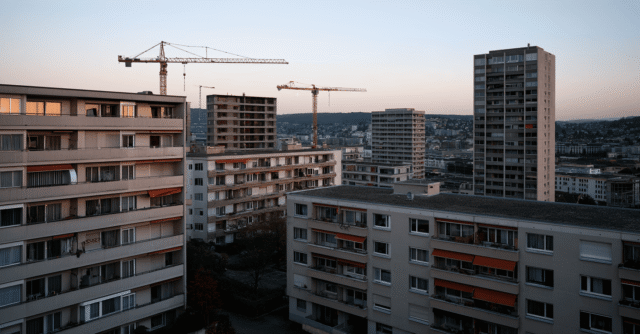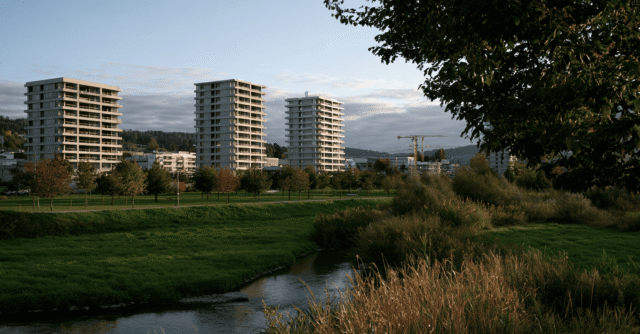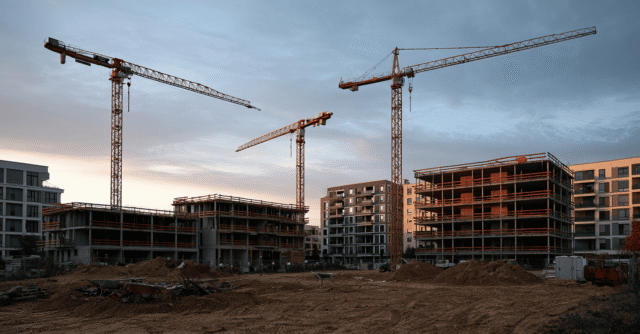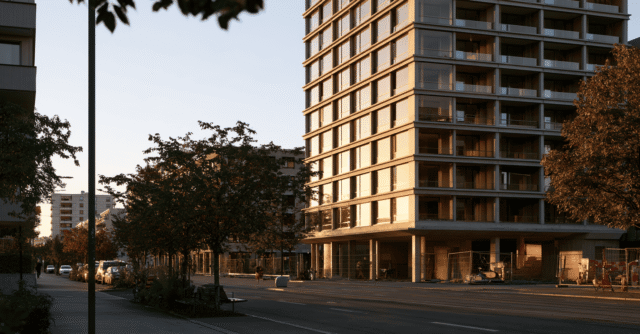

The initiative comes at a time when the market is continuing to shrink. The ifo Institute forecasts that only 185,000 new homes will be completed in Germany in 2026, down from 207,000 in 2025. It is precisely in this context that the IMK raises the question of whether a new federal agency could even overcome the bottleneck in time and on a sufficient scale.
The study by the Hans Böckler Foundation, published on 31 August 2026, presents a clear alternative proposal. Instead of setting up a centralised state-run housing construction company, the federal government should leverage existing public and private housing providers through guarantees or direct loans covering around 50 per cent of the construction costs. In return, the providers would have to commit to moderate rents in the long term, cost-effective operation and cost-efficient construction methods.
Constitutional risk and pace
From the authors’ perspective, the issue of jurisdiction is particularly sensitive. In Germany, housing construction is generally the responsibility of the federal states. The IMK therefore warns that both a purely state-run federal company and models involving private participation carry significant constitutional risks. Added to this is the operational problem. A single new company would have to ramp up planning, procurement and scaling within a short timeframe, even though it is precisely local stakeholders, land availability and procedures that determine the pace of construction.
For the property sector, the crux of the debate is therefore not the establishment of a state-run organisation, but a financing mechanism. The IMK proposes long loan terms of, for example, 40 years; in the study’s model, 43 years. For the first 20 years, basic rents of no more than 11 to 13 euros per square metre are conceivable. Only projects with demonstrably lower construction costs would be supported, for example through mass prefabrication, simple standards, optimised floor plans and the avoidance of underground car parks where possible.
Pressure for funding rather than tokenism
Politically, the proposal is controversial because Federal Minister for Construction Verena Hubertz only announced on 25 August 2026 that she would present a concept for the state-owned housing association in the autumn. The IMK argues, however, that a broad-based funding approach via KfW could have a quicker impact, as it involves existing market players and does not require the establishment of a new central organisational structure. Towns and local authorities would remain crucial in this regard, as affordable land and faster procedures continue to be the real bottlenecks in housing construction.
This finding comes at a time when the market is already under strain. According to the data on which the study is based, there is a shortfall of 1.35 million homes nationwide. The authors derive from this the target of creating an additional one million homes within ten years. Whether Berlin establishes a new federal agency for this purpose or stimulates the market with clear funding conditions is therefore more than just an institutional dispute. It is a decision on the direction to take regarding the pace, rent levels and capital investment in German housing construction.