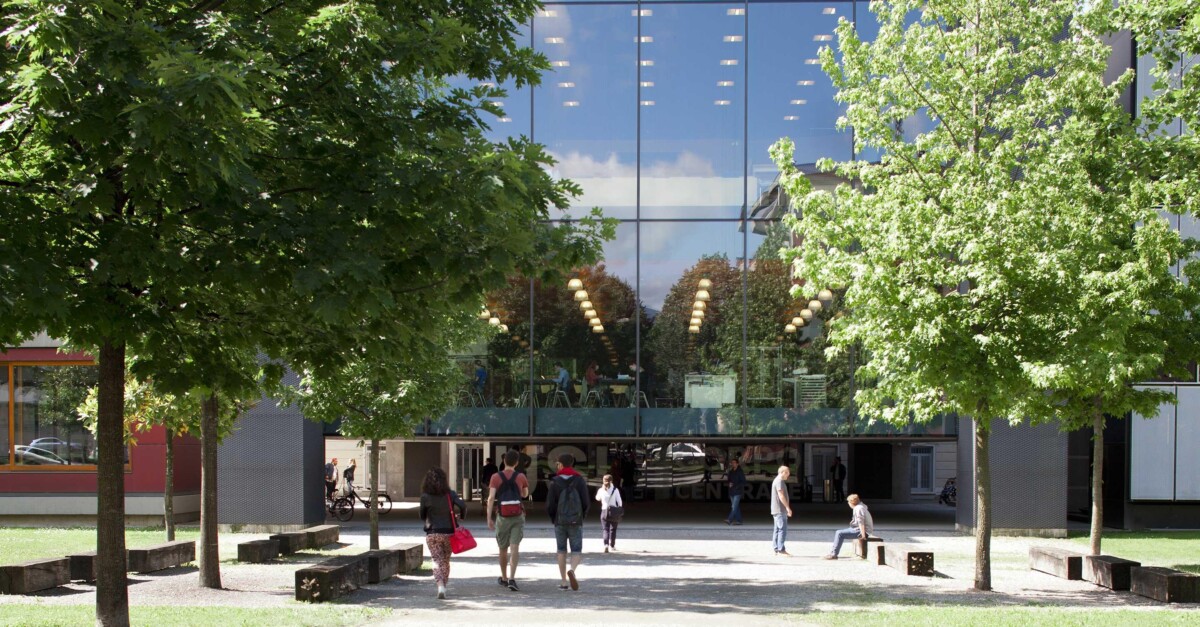
The Università della Svizzera italiana USI currently has around 4,750 students, 70 percent of whom come from abroad. It is ranked 405th worldwide in the QS World University Ranking 2025. SUPSI complements the profile with practical training in technology, health, social affairs and design. Together, the two institutions support the IDSIA, one of the world’s leading research institutes for artificial intelligence. Among other things, the LSTM architecture, which is now used in numerous AI applications worldwide, was developed there.
The Innovation Park as a link
In November 2024, the Switzerland Innovation Park Ticino was officially included in the national network of Switzerland Innovation. Three competence centers form the core. The Swiss Drone Competence Center in Lodrino tests autonomous flight technologies. The Life Sciences Competence Center in Bellinzona conducts research into biomedicine and animal-free testing methods. The Lifestyle Tech Competence Center in Lugano is driving the digital transformation in fashion, food and wellness. The park is supported by the canton, BancaStato, USI, SUPSI, the business associations CC-TI and AITI and the Fondazione Agire.
Startups as an early indicator
The Boldbrain Startup Challenge, organized by Fondazione Agire and the USI Startup Centre, received a record 141 applications in 2025. 20 projects go through the three-month accelerator program each year and compete for prize money of CHF 120,000. 16 of the 20 teams selected in 2025 came from Ticino. Such programs are the touchstone for determining whether knowledge actually turns into local entrepreneurship.
Education shapes square meters
For the real estate market, this dynamic is changing demand profiles. Laboratories, flexible office space, student housing, co-working and technology-oriented company locations create different spatial requirements than traditional administration. If you want to strengthen the Ticino economic region in the long term, you need to see education policy, talent development and real estate development as a single task.