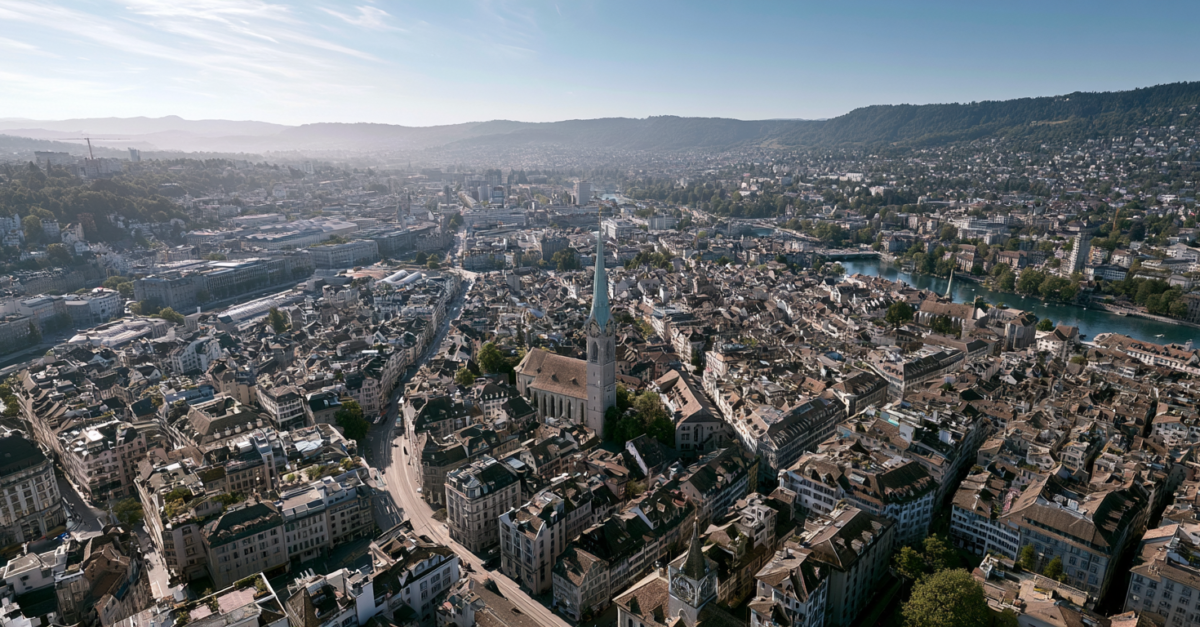

In downtown Zurich, the energy transition is being given a concrete timeline. The city plans to decommission the gas distribution network in the area between the main train station, Schanzengraben, and Bürkliplatz between 2033 and 2035, depending on the location. This affects about 500 buildings, which will be gradually connected to the CoolCity lake-water network or supplied with other renewable energy solutions.
For property owners, this is more than just a signal regarding climate policy. Anyone in this area who still uses gas for heating or cooking must plan to replace existing appliances well in advance. The transition will have a profound impact on building services, investment planning, and the scheduling of renovations, especially since the shutdown is not scheduled to take place until after district heating has been connected, and the deadlines vary by street.
District Heating Sets the Pace
CoolCity is scheduled to begin supplying energy in 2032 and be largely completed by 2035. According to available data, the city anticipates an annual heating demand of approximately 115 GWh and a cooling demand of more than 37 GWh. This will create one of Switzerland’s largest lake-water heating networks in the city center. As early as the end of 2024, the first microtunnel was completed at Basteiplatz, which is considered an early, visible milestone in the network’s expansion.
For the real estate portfolio in the city center, it is crucial that the phase-out of natural gas does not affect only new buildings or large-scale projects. Older residential and commercial buildings in particular—with limited space for technical equipment, ongoing leases, or mixed-use properties—must integrate the transition into their existing operational processes. Where a district heating connection is not immediately feasible or economically viable, decentralized renewable systems remain part of the strategy.
Costs, Compensation, Deadlines
The city refers to subsidies for heating system replacements based on established criteria. In addition, compensation is available for gas appliances that have not yet been fully depreciated in areas where a network shutdown has been approved. This only partially alleviates the pressure on individual property owners. The key factor remains whether replacement investments, utility line connections, and construction work can be coordinated in a timely manner.
The expansion already has broad political and financial backing. In 2024, the City Council approved approximately 304 million Swiss francs for CoolCity from the “Thermal Networks” framework credit of 573 million Swiss francs, which was approved by voters in 2022. At the same time, the city has expanded the scope of the gas network decommissioning in Altstetten-Nord and adjusted the timeline there. This shows that Zurich is no longer merely formulating the phase-out of the gas network as a long-term goal, but is translating it into binding timelines on a neighborhood-by-neighborhood basis. For property owners in the city center, this marks the beginning of the operational phase of the heating transition.