Zollikofen puts 140 flats to a public vote
956 valid signatures were enough in Zollikofen to put the rezoning of the Steinibachgrube to a public vote. This means that a housing project comprising around 140 flats will become a political litmus test for urban densification, the risk posed by contaminated sites and traffic impact.
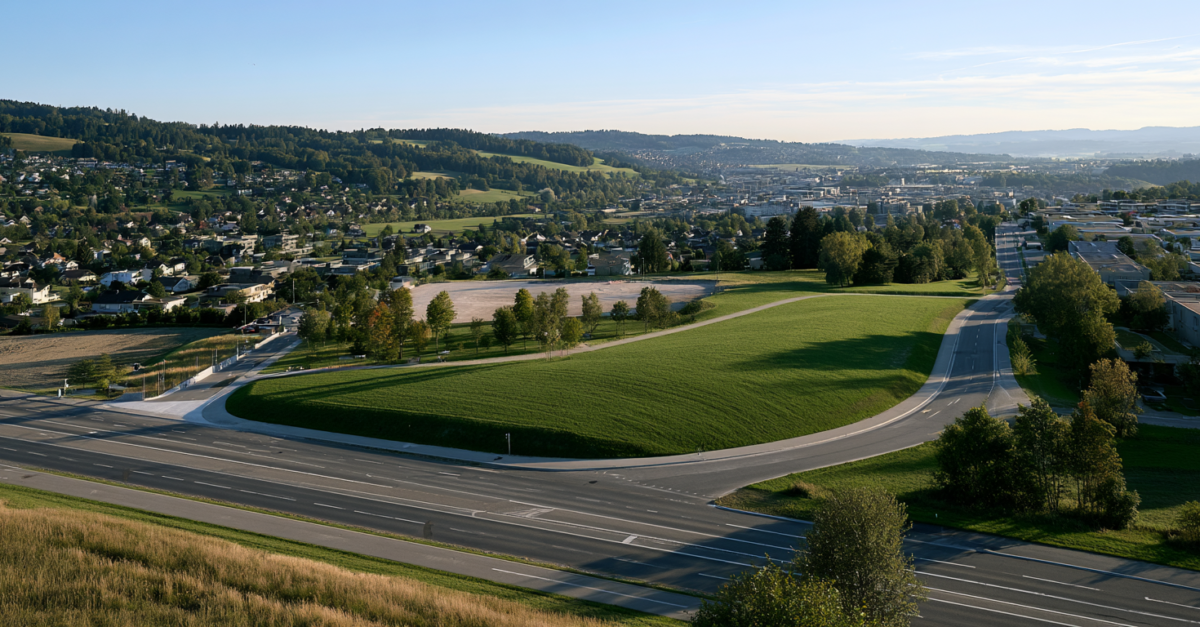

In Zollikofen, a planning issue has turned into a decision of principle. 956 valid signatures were submitted in support of the referendum against the amendments to the zoning plan and building regulations for the Steinibachgrube site. A total of 300 would have been required. The proposal must therefore be put to a public vote.
At its core, the issue concerns the rezoning and development plan for a site at the entrance to the town, which, according to the published documents, is to be developed as a zone subject to planning requirements. The reference concept provides for around 140 flats. According to a municipal announcement, the referendum is scheduled for 29 November. This is a contentious issue for housing policy because the project is planned on the site of a former quarry with pre-existing contamination, raising not only the usual questions of density and public acceptance but also those of technical feasibility and costs.
Densification meets resistance
Supporters pointtothe location’s proximity to workplaces and its access via Bernstrasse. The planning documents describe the Steinibachgrube as an area for urban expansion with a gross floor area of over 21,000 square metres. Opponents question precisely this scale of development. They cite concerns about additional traffic, pressure on school places, impacts on the Rütti area and the risk that contaminated sites and waste disposal will ultimately make housing more expensive.
It comes as no surprise that the conflict is escalating. The local authority had already put the proposed amendments to the zoning plan and building regulations for the Steinibachgrube out for public consultation. The canton’s preliminary assessment report of 18 February 2025 documents, amongst other things, noise, traffic, soil protection, natural hazards and technical interventions in relation to the procedure. This demonstrates just how complex the site actually is. This is no longer simply a matter of additional flats, but of whether a contaminated site can be converted into housing at a reasonable cost.
A political test for the
siteFor developers, owners and the authorities, the referendum is more than just a gauge of local sentiment. If the proposal is rejected at the ballot box, it is not simply a single project that will be put on hold. For the time being, it will also mean the failure of the attempt to rezone a former quarry into a larger residential area under planning law. If it is approved, this does not automatically lead to a building permit. After that, the coordinated procedure, the handling of objections and the further technical clarification of the site will remain key.