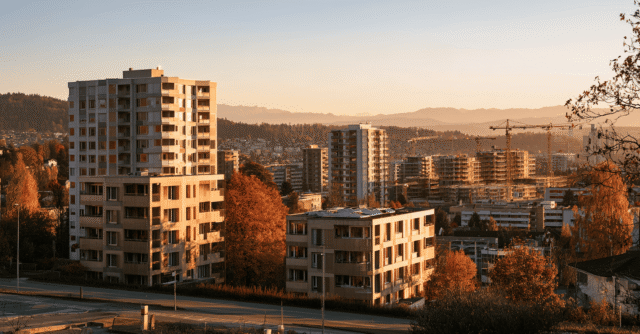

The driving force remains the same. High demand continues to outstrip the limited supply of rental flats, pushing market rents up by 2.7 per cent year-on-year in the new-build segment and by 1.9 per cent in the existing-build segment. Compared with the previous quarter, rents rose again by 1.0 per cent and 0.5 per cent respectively.
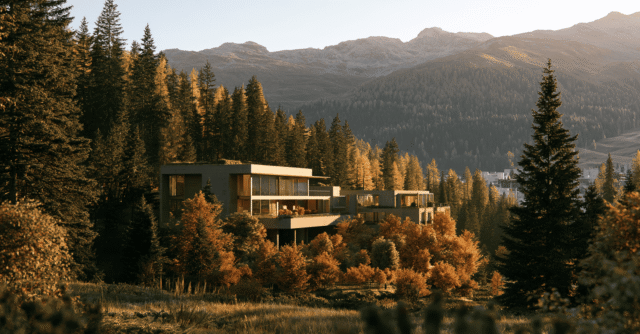
At the same time, prices for multi-family dwellings continue to rise. Across Switzerland, their prices are 7.9 per cent higher than in the same quarter last year and 1.3 per cent higher than in the second quarter of 2026. Prices are thus rising in all eight FPRE regions, particularly sharply in the Alpine region (up 9.8 per cent) and in the Mittelland and Eastern Switzerland (both up 8.7 per cent).
Housing market picks up in all regions
All eight FPRE regions are recording higher residential rents year-on-year. In the new-build segment, the Alpine region leads the way with a rise of 4.9 per cent, followed by Southern Switzerland with a rise of 4.1 per cent. For flats in older buildings, the same regions are also leading the way, with increases of 3.5 per cent and 3.3 per cent respectively. For owners and investors, this means further rising yield expectations for residential investment properties, particularly where supply remains especially tight.
Office space is losing momentum
The office market presents a contrasting picture. Market rents for office space fell by 2.9 per cent compared with the same quarter last year and by 0.9 per cent compared with the previous quarter. Although the market values of office properties were still up slightly year-on-year, at 0.7 per cent, they fell by 0.6 per cent compared with the previous quarter. This points to stable to fragile valuations, whilst peripheral locations and older properties in particular remain under pressure.
Outlook remains mixed
For the remainder of 2026, FPRE expects market rents for flats to continue rising and market values of multi-family dwellings to increase. For office properties, the company anticipates stable market conditions overall, though with continued pressure on outlying locations and older properties. For portfolios with a high proportion of residential properties, this supports the valuation trajectory; for office properties, the situation remains significantly more selective.