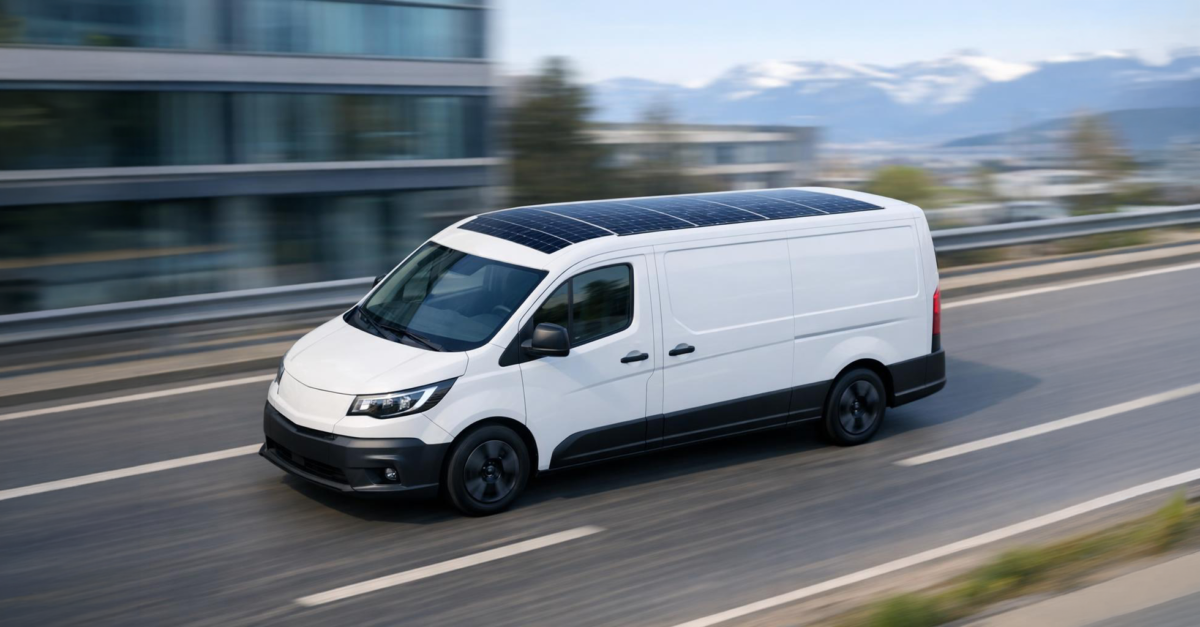

The EU research project SolarMoves brought together renowned partners. On behalf of the European Commission, the companies investigated what they can really achieve. Solar modules are integrated into the roof, hood and side panels. Electricity is generated where it is consumed. No new infrastructure, no additional space required, no additional load on the grid.
Figures that make you sit up and take notice
The results are remarkable. Under favorable conditions, a car in Central Europe can cover up to 55 percent of its annual energy requirements itself. In southern Europe, this figure rises to up to 80 percent. Fraunhofer scientist Christian Braun explains that the study analyzed 23 different vehicle types and evaluated data from 1.3 million kilometers driven, combined with satellite and meteorological data from Amsterdam and Madrid.
An effect worth billions for Europe
The systemic leverage is enormous. If all newly registered vehicles in Europe were equipped with VIPVs from 2024, electricity consumption from the European grid could fall by 15.6 terawatt hours by 2030. This corresponds to the annual production of around 2,200 onshore wind turbines, each with an output of three megawatts. Lenneke Slooff-Hoek from TNO puts it in a nutshell: “Electrification alone is not enough. Innovations are needed that structurally reduce energy requirements.
Logistics as the biggest winner
The transport sector in particular is likely to attract attention. Delivery vans, trucks and trailers offer a lot of roof space and at the same time consume large amounts of energy for cooling, heating and auxiliary units. VIPV extends the daily range of electric trucks by up to 15 percent. A trailer with solar-panelled side walls can generate up to 110 kilowatt hours per day in summer, enough to operate cooling and hydraulic systems completely emission-free. Even with diesel trucks, the investment pays off. According to the study, the payback period is less than two years.
What is needed now
The researchers are appealing to politicians to set the course quickly. VIPV should be included in the global WLTP test procedure so that CO2 savings can be offset against tax. They are also calling for guidelines for solar-powered parking spaces and a clear European framework that anchors VIPV in the Renewable Energy Directive. The technology is ready. Now the ball is in the regulators’ and investors’ court.