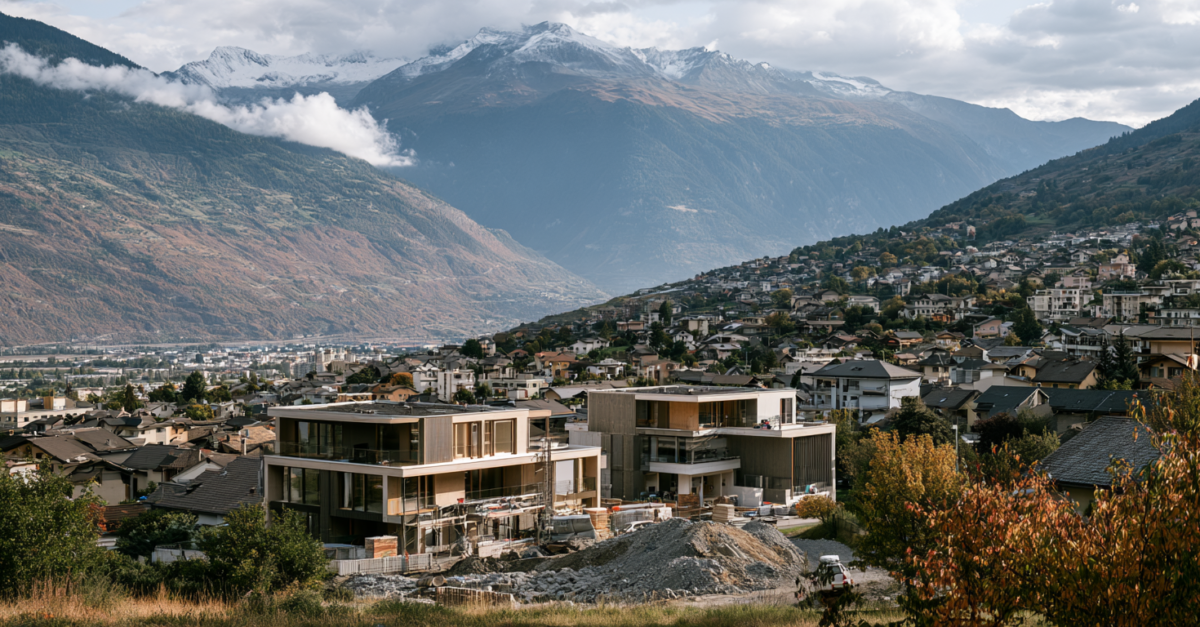

The housing shortage in Valais has long been evident. The vacancy rate stood at just 1.17 percent in 2025, down from a significantly higher level in 2020. At the same time, a model that could create affordable rents and long-term housing stability is, of all things, at a standstill.
This contradiction is particularly evident in Saillon. There, a building permit application for five single-family homes, each with two apartments, was published on July 29, 2025. The applicant is the Société Coopérative d’habitation des Moulins, so the plan is for ten apartments in a zone designated for single-family housing. This very project illustrates how quickly cooperative housing development in Valais runs into planning and political resistance.
The legal framework remains a weak point
The political core of the problem is longstanding and will not be resolved by August 2026. In June 2021, the Valais Grand Council did debate a specific legal framework for promoting housing cooperatives. The parliamentary documents explicitly state that such a framework in cantons like Vaud, Neuchâtel, or Geneva provides technical and financial support for development. In Valais, however, support has been limited to ad hoc assistance without clear legal mechanisms for guarantees, technical support, or targeted funding.
This is crucial for projects. Cooperatives generally need not only building land but also robust procedures, financial security, and political backing at the cantonal or municipal level. Without these tools, every individual case becomes a Herculean task, even when the housing market has long been under pressure.
Geneva Offers an Alternative
A look at Geneva reveals just how significant the difference is. There, even before the September 28, 2025, referendum, the canton had set a goal of increasing the share of cooperative housing to 10 percent of the housing stock by 2030. Official documents had previously estimated the cooperative share at around 5 percent, while the cantonal administration reported nearly 12,000 housing units in 128 cooperatives as of the end of 2021. This is not a footnote but a politically enshrined market mechanism.
In Valais, by contrast, the fundamental question remains: Are cooperatives merely tolerated, or are they taken seriously as an instrument of housing policy? As long as this question remains unanswered, tangible results will not materialize. The Saillon case is therefore more than just a local legal dispute. It demonstrates how a canton with a declining vacancy rate is effectively stifling a proven housing model.