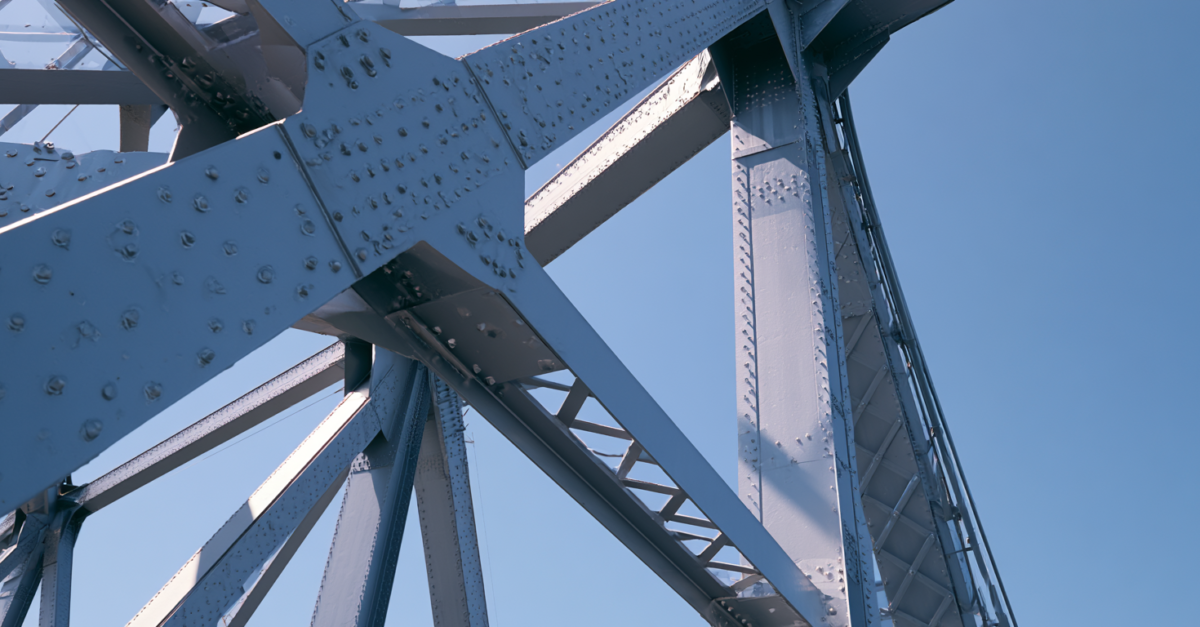

The process is called Wire Arc Additive Manufacturing, or WAAM for short. A welding wire is applied layer by layer directly to the damaged area using an electric arc, creating not just a simple weld bead but a three-dimensionally shaped reinforcement. This allows damaged areas to be repaired locally while the rest of the component remains intact.
Form Trumps Mass
It is not the amount of material applied that determines success, but rather the geometry. Hossein Heydarinouri from Empa’s Engineering Structures Department explains that an optimized shape distributes stresses in such a way that cracks propagate significantly more slowly. In a joint master’s thesis project between Empa and ETH Zurich, this approach extended the service life of damaged steel plates by up to four times.
What the experiments show
In Empa’s construction hall, cracked steel plates were reinforced with different geometries and subjected to repeated loading. All repaired specimens lasted significantly longer than unrepaired control plates; two-layer, stepped geometries proved to be the most effective. However, an incorrectly chosen shape can create new weak points, such as at the interfaces between old and new material, which is why a targeted design remains crucial.
There is still a long way to go before this can be put into practice
Fatigue cracks are among the most common types of damage in steel construction; targeted repairs save significant amounts of material, energy, and costs compared to complete replacement. The biggest hurdle remains the technology itself; current robotic systems are difficult to transport, meaning damaged components would have to be brought to a workshop. While the first mobile systems already exist, further development is needed for widespread use directly on-site.
From Repair to Smart Components
Researchers are already thinking one step ahead. Combined with smart geometries and new materials, future metal structures could yield in a controlled manner under extreme stress and absorb energy—for example, as damping elements against earthquakes or vibrations in buildings and bridges. In addition, Empa scientist Maryam Mohri is researching shape-memory alloys that return to their original shape when heated after being deformed—an approach with potential for material-efficient, adaptive components in mechanical engineering.
Source: Empa, press release “Metal 3D Printing Extends the Life of Steel Components,” author Manuel Martin, June 25, 2026