Condensed, networked, liveable
The Eastern Switzerland University of Applied Sciences OST shows: Inner densification creates new living space - and with good planning can also improve the quality of life in cities and communities.
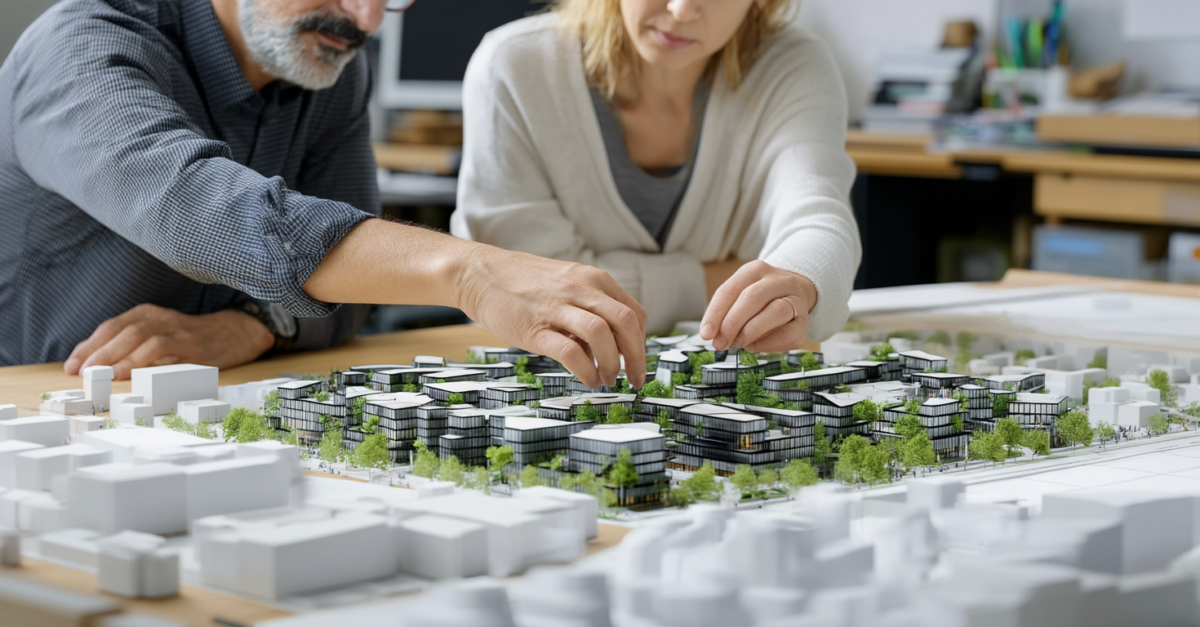

Switzerland currently has over 9 million inhabitants and the population continues to grow. The pressure on the housing market is increasing, while building outside existing building zones has been severely restricted since the RPG revision of 2013. Cities and municipalities must develop inwards. According to Dita Leyh, Professor of Urban Development at the OST, there are sufficient reserves of space. Single-family home neighborhoods near train stations, brownfield sites or unused railroad areas offer great potential. A second revision of the RPG will further tighten the requirements.
Densify where public transport is strong
Inner development at public transport hubs makes particular sense. “Inner densification makes particular sense at public transport hubs,” says Dita Leyh. This is because optimal connections to the bus and rail network create more living space, but not automatically more traffic. Another key lies in the reorganization of stationary traffic. Collective garages on the edge of the neighborhood bundle car traffic, leaving the interior of the neighborhood largely car-free and thus gaining open space for people and nature. “The more densely you build, the more open spaces you have to create at the same time,” says Leyh.
Mix of uses as a quality feature
Densification is far more than just stacking up apartments. A diverse mix of uses, from bakeries and restaurants to green spaces, revitalizes neighbourhoods and creates added value. High-quality, interdisciplinary planning is needed to create this added value. Urban planning, transport planning and open space planning must sit together at the table from the outset, emphasizes Leyh. The updated Spatial Concept Switzerland 2050, which was adopted by the Federal Council in March 2026, confirms this approach and focuses on regional cooperation, landscape quality and climate-friendly mobility.